
The design of agricultural spraying equipment involves a combination of fluid mechanics, material science, and manufacturing technology. Within this system, a spray pump used in agriculture helps move crop-treatment liquids from storage through the fluid pathway and toward the application components. Its practical operation depends not only on the pumping principle but also on how materials, valves, seals, and mechanical structures are engineered to work together.
A diaphragm-based architecture uses a flexible membrane to create movement within a dedicated fluid chamber. When the diaphragm changes position, the chamber volume changes and creates the conditions for liquid intake or discharge. Valves coordinate these stages by controlling the direction of movement. This relatively direct mechanical principle can be adapted to agricultural equipment while keeping the drive section physically separated from the liquid-handling area.
The diaphragm material is particularly important because it combines flexibility with separation. Repeated movement places mechanical demands on the membrane, while contact with agricultural liquids creates chemical considerations. Material selection may therefore involve flexibility, resistance to repeated deformation, chemical compatibility, and environmental stability. Engineers need to consider how these properties interact rather than selecting a material based on one characteristic alone.
Sealing technology is another important part of the design. The boundary between different sections of the pump must remain appropriately controlled during operation. Seals and related components may encounter the same agricultural liquids as the diaphragm, making their material compatibility relevant to the complete system. Proper manufacturing and assembly can help maintain the intended relationship between the moving membrane, chamber, and surrounding structure.
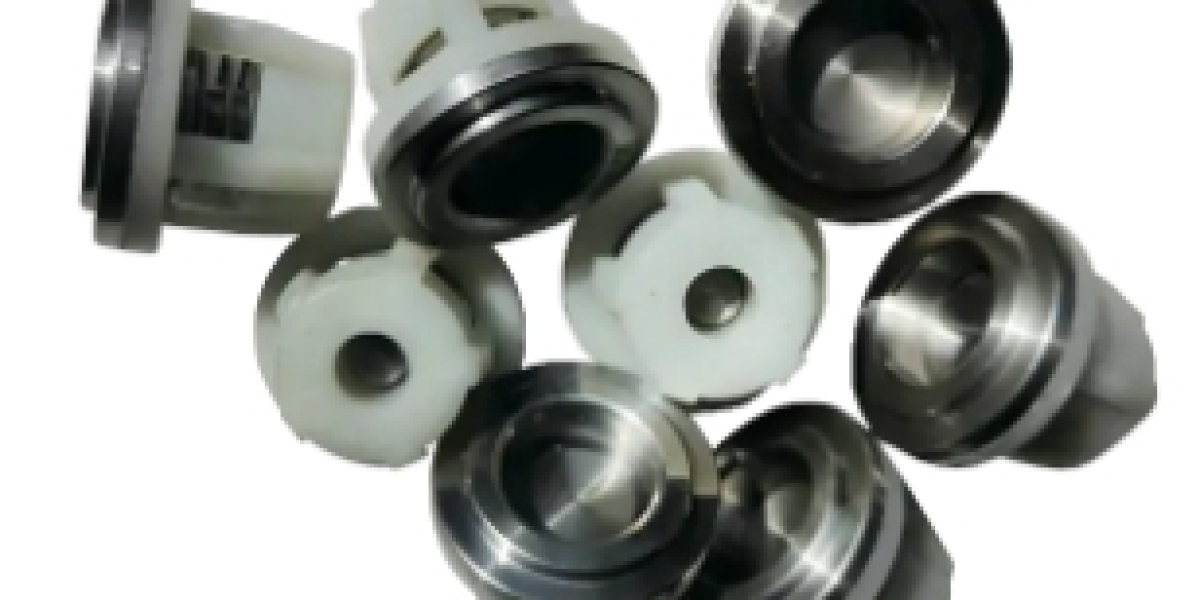
Valve technology determines how effectively the pumping chamber manages liquid movement. The valves need to respond to changes generated by diaphragm motion and guide the liquid through the correct inlet and outlet pathways. Their construction, seating surfaces, and material selection all influence how the mechanism behaves. Consistent manufacturing becomes particularly valuable because variations in valve components can affect the overall pumping cycle.
Housing materials contribute to both structural support and environmental protection. Agricultural machines often operate in conditions involving dust, moisture, soil, cleaning activity, and outdoor exposure. A suitable housing material should be considered according to where it is positioned within the equipment and what conditions it will encounter. Internal areas that contact liquid may require different considerations from external surfaces exposed to the field environment.
The fluid pathway itself deserves attention during system development. A pump usually operates together with a reservoir, filter, hose assemblies, valves, and spray devices. Each connection affects the way liquid travels through the equipment. Engineers can improve overall integration by considering transitions between components, accessibility for maintenance, and the relationship between fluid movement and the application mechanism.
Material compatibility is especially relevant when the equipment handles different agricultural formulations. The working liquid may change according to the crop, treatment objective, or operating process. Because individual formulations can interact differently with engineering materials, manufacturers should consider the complete set of wetted components when developing a fluid-handling system.
Manufacturing technology provides the link between engineering design and repeatable production. Diaphragms require controlled forming so that their physical characteristics remain consistent. Valve components need suitable dimensional control, while housing and sealing surfaces must be manufactured to support proper assembly. Quality control throughout these stages can help maintain consistency between finished pumping units.
Maintenance can also be influenced by material and mechanical design. Agricultural equipment may need regular flushing and cleaning after operation. Fluid pathways that are practical to access can simplify service activities, while suitable materials can support repeated exposure to the intended cleaning process. These considerations can be incorporated into the initial design rather than treated as secondary concerns.
Automation is increasingly connected with agricultural spraying technology. Electronic monitoring and control systems can coordinate application functions, but the mechanical pump remains responsible for physically moving the liquid. A predictable diaphragm cycle and consistent valve response therefore provide an important foundation for automated operation.
For equipment developers, combining material compatibility, diaphragm construction, valve technology, sealing design, manufacturing control, and system integration offers a broader way to approach agricultural fluid handling. A spray pump used in agriculture can then be developed as part of a complete crop-treatment system, and SHUANG DIN Co Ltd provides further information about its agricultural diaphragm pump solutions at https://www.agriculturaldiaphragmpump.com/about/.