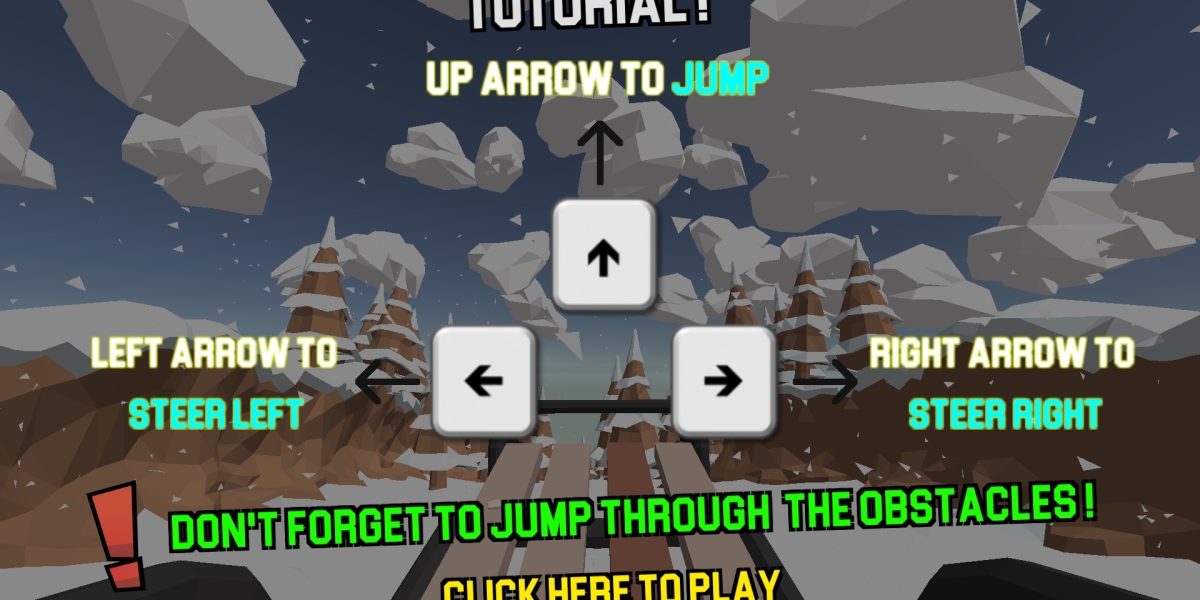

There’s a particular kind of confidence you get in Snow Rider right before everything goes horribly wrong. You’ve slipped between two trees, cleared a gap, and spotted a gift box sitting just off your perfect line. Easy pickup, right?
One tiny steering correction later, you’re decorating a rock.
That’s the downhill rabbit hole I keep falling into. Snow Rider takes a simple idea—stay on a sled, avoid solid objects—and turns it into a personal argument with your own reflexes. Every wipeout feels preventable. Every restart feels justified. And somehow, “five minutes” stops meaning anything.
The Mountain Doesn’t Wait for You
Your sled barrels downhill automatically, so there’s no comfortable pause to reconsider your decisions. Trees, rocks, and snowmen keep arriving, and your job is to steer or jump before they become your entire screen.
The early rhythm can feel almost peaceful. Find an opening, make a small adjustment, glide through. Then the route gets more demanding: narrow sections squeeze your options, gaps interrupt safe-looking lines, and obstacles start presenting questions with extremely short deadlines. Do you steer around that rock, or jump? More importantly, where will you land?
That second question has ended plenty of my runs.
I used to jump whenever things looked crowded. It felt decisive, which is not the same as being smart. Clearing one hazard means nothing if your landing puts you directly in front of a tree. Now I treat every jump as a commitment to a landing zone, not an emergency escape button.
My best runs happen when I look farther down the slope. Watching the sled itself feels natural, but it leaves you reacting late. Scan ahead for open lanes and notice what comes after the next obstacle. Small, early corrections beat frantic zigzagging almost every time.
For gaps, learn the takeoff timing through repetition. Launching too early can leave you landing short; waiting too long can mean never getting airborne. Pay attention to the edge rather than mashing jump and hoping winter physics will forgive you.
Gift Boxes Are Tiny, Beautiful Bad Decisions
Gift boxes are where my survival instincts meet my shopping habits. Collecting them lets you unlock new sled designs, which gives every run a second temptation beyond distance. Suddenly, staying alive isn’t enough. I want that box, too.
The dangerous ones aren’t obviously impossible. They’re just slightly off your route, or hanging over a gap that demands a carefully timed jump. You convince yourself the detour is minor. Then you’re staring at the collectible instead of the snowman behind it.
My rule now: choose the safe route first, then decide whether the gift fits into it. If collecting means a desperate last-second swerve, let it go. A cosmetic unlock can wait. Your run cannot.
I learned that while chasing a personal best. I was close enough that I’d started mentally celebrating. Then I chased a gift box, overcorrected, and crashed with the record still ahead of me. I sat there looking at the score, fully aware that nobody had forced me to do that.
Naturally, I restarted.
Chase the Clean Run
For all the wipeouts, nothing beats threading a chaotic stretch cleanly: a controlled turn, a well-timed jump, a landing with space to breathe. For a few seconds, you’re reading the mountain instead of fighting it.
That’s what keeps me coming back—not just a bigger number, but the feeling that I’m getting sharper. Open your browser, hop on your sled, and give yourself one simple goal: look ahead, stay calm, and survive the next stretch.
Then try just one more run. Leave the tree its personal space this time.