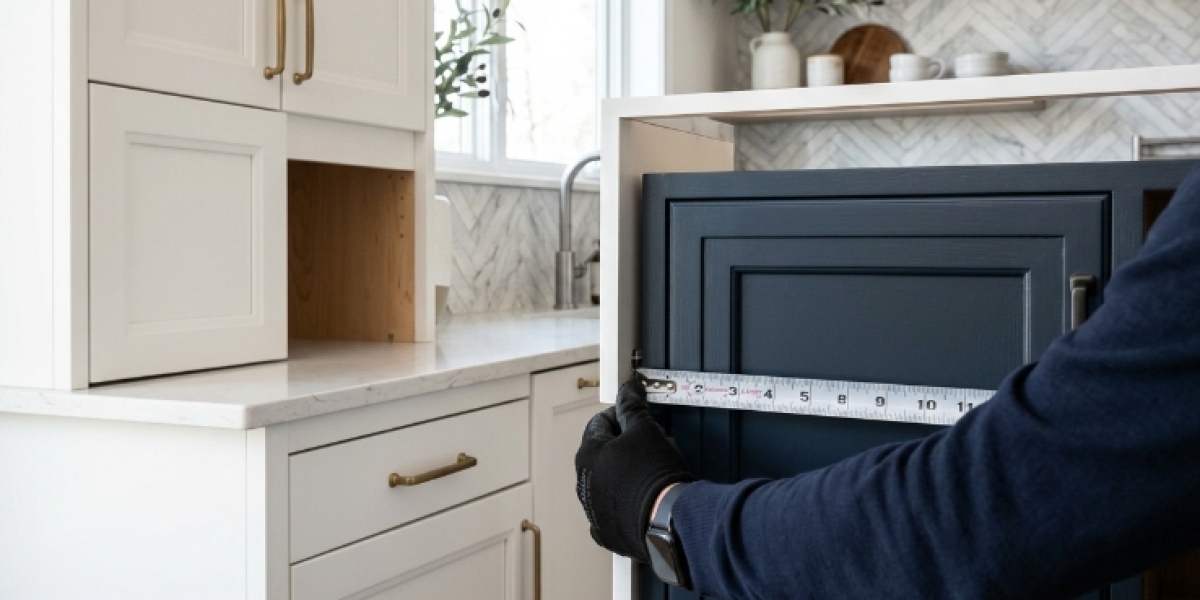

Changing cabinet doors can make an older kitchen look completely different, but the new style still needs to work with the existing cabinet structure. One detail that is easy to overlook is cabinet depth. The depth of the cabinet box affects how far a new door sits from the front edge, how much space is available for hardware, and how the finished cabinets relate to nearby walls and appliances. When the existing depth is not considered carefully, a door style that looks perfect in a sample can create fitting or clearance problems in the actual kitchen.
Cabinet Depth Determines Where New Doors Sit
The depth of the cabinet box creates the space that the new door and its hardware have to work within. A change in door style can alter the position of the front surface, especially when the new door has a different thickness or overlay. If the existing cabinet depth is limited, the new door may sit farther forward or farther back than expected. That small difference can affect the appearance of the entire cabinet run.
Cabinet depth also helps determine how much room remains between the door and surrounding surfaces. Walls, countertops, appliances, and adjacent cabinets can all influence how the new doors need to sit. A door that works well on a deeper cabinet may create clearance issues on a shallower one. Measuring the existing structure first helps prevent those problems from appearing after installation.
Door Thickness Can Change the Final Cabinet Position
Door style is not only about the visible design. Different doors can have different thicknesses, edge details, and construction methods. A thicker door may extend farther from the cabinet face, while a thinner door may sit closer to the existing structure. When the cabinet has limited depth or tight clearances, that difference can become important.
This matters around appliances and walkways where every bit of space counts. A door that projects farther than the original may interfere with an appliance handle or create a tighter passage through the kitchen. During kitchen cabinet refacing, the new door should be selected with the existing cabinet dimensions in mind rather than treating the door as a completely separate component.
Overlay Style and Cabinet Depth Work Together
The way a door sits over the cabinet frame affects how much of the face frame remains visible. Full-overlay doors cover more of the frame, while partial-overlay styles leave more of it exposed. The existing cabinet depth can influence how those options look and function because the door still needs to operate within the space available.
A cabinet with a deeper box may offer more flexibility for certain door and hardware combinations. A shallower cabinet can make the same combination feel crowded or change the visual relationship between the door and the surrounding surfaces. Choosing the style based only on appearance can lead to an installation that technically works but does not look balanced in the kitchen.
Shallow Cabinets Can Create Hardware Clearance Problems
Cabinet depth also affects the space available behind a new door for hinges and other hardware. Some hardware requires more room than others, and older cabinets may not have been built around the same hardware options used in newer designs. If the available depth is limited, the hinge may need to sit differently to allow the door to open correctly.
Clearance becomes even more important near neighboring doors, walls, and appliances. A door can be properly attached and still fail to open to the angle needed for comfortable use. Checking the available space before choosing hardware helps make sure the new door is not only attractive but also practical for daily use.
Countertops and Appliances Can Expose Depth Differences
Cabinet depth does not exist on its own. It interacts with countertops, refrigerators, dishwashers, ranges, and other kitchen features. A small change in door position can become noticeable when a cabinet sits directly beside an appliance or under a countertop edge.
This is especially important in kitchens that have been remodeled more than once. Cabinets may have been installed at different depths, appliances may have been replaced with newer models, and countertops may have been changed since the original installation. A new door style can expose those small inconsistencies if measurements are not taken carefully before the work begins.
Corner Cabinets Need Extra Attention
Corner cabinets can create some of the biggest challenges because two cabinet runs meet in a limited space. The depth of each cabinet affects how the doors open and how much clearance is available at the corner. A door that works normally on a straight cabinet may collide with a neighboring door when both are installed near a corner.
The problem can become more noticeable when changing from one door style to another. A thicker or wider front can reduce the space available for the neighboring door to open. Careful measurements help determine whether the new design needs a different hinge position, a smaller opening, or another adjustment to maintain proper clearance.
Uneven Cabinet Depths Can Affect the Finished Look
Older kitchens do not always have perfectly matching cabinet depths. Extensions, previous renovations, replacement cabinets, and custom modifications can leave one section slightly different from another. Those differences may not have been obvious with the original doors, especially if the kitchen had an older finish or mixed styles.
New doors tend to make these variations easier to see. A clean, uniform exterior can highlight a cabinet that sits farther forward or backward than the rest. That does not necessarily mean the cabinet must be replaced, but it does mean the existing depth should be considered when selecting door styles and deciding how the finished fronts should align.
Existing Cabinet Modifications Can Change Available Depth
Some cabinets have been altered over time to fit plumbing, appliances, shelving, or other kitchen features. A back panel may have been moved, a section may have been trimmed, or an additional layer of material may have been added to the front. These changes can affect the usable depth even when the cabinet still looks normal from the outside.
Previous modifications are especially important when installing new hardware or changing the door style. A cabinet may have enough room in one section but limited space in another because of an old alteration. Identifying those differences before installation makes it easier to choose components that will work across the entire kitchen instead of discovering exceptions one cabinet at a time.
Measuring Depth Should Include More Than the Cabinet Box
Measuring the cabinet box alone is not enough when changing door styles. The measurement should be considered alongside the face frame, existing door position, hardware clearance, countertop edge, nearby walls, and adjacent cabinets. These relationships determine how the new door will actually sit and move once installed.
It is also useful to compare measurements across the kitchen rather than assuming every cabinet is identical. Small differences can come from previous repairs or years of movement. A detailed measurement process makes it easier to spot cabinets that need special treatment before new doors are ordered or prepared.
The Right Door Style Should Work With the Existing Structure
A successful exterior update does not mean forcing the newest door style onto every cabinet. The better approach is to choose a design that works with the dimensions and limitations of the existing structure. That may mean selecting a different thickness, overlay, hinge arrangement, or door profile for certain sections of the kitchen.
The goal is to create a finished appearance that feels consistent while preserving the practical function of the cabinets. When the door style works with the existing depth, doors can open properly, hardware can stay secure, and clearances can remain comfortable. Good design starts with understanding the structure that is already there.
Conclusion
Existing cabinet depth matters because it affects much more than the amount of storage inside the box. It influences door position, hardware clearance, appliance spacing, corner movement, and the overall appearance of the finished kitchen. A new door style may look ideal in isolation, but it still has to work within the dimensions of the existing cabinets.
Understanding the cabinetry structure before changing door styles helps prevent fitting problems and unnecessary adjustments. When measurements, clearances, and existing modifications are considered together, a kitchen update can look clean without sacrificing everyday function. The best result comes from choosing a door style that fits the cabinet structure rather than expecting the structure to fit the door.