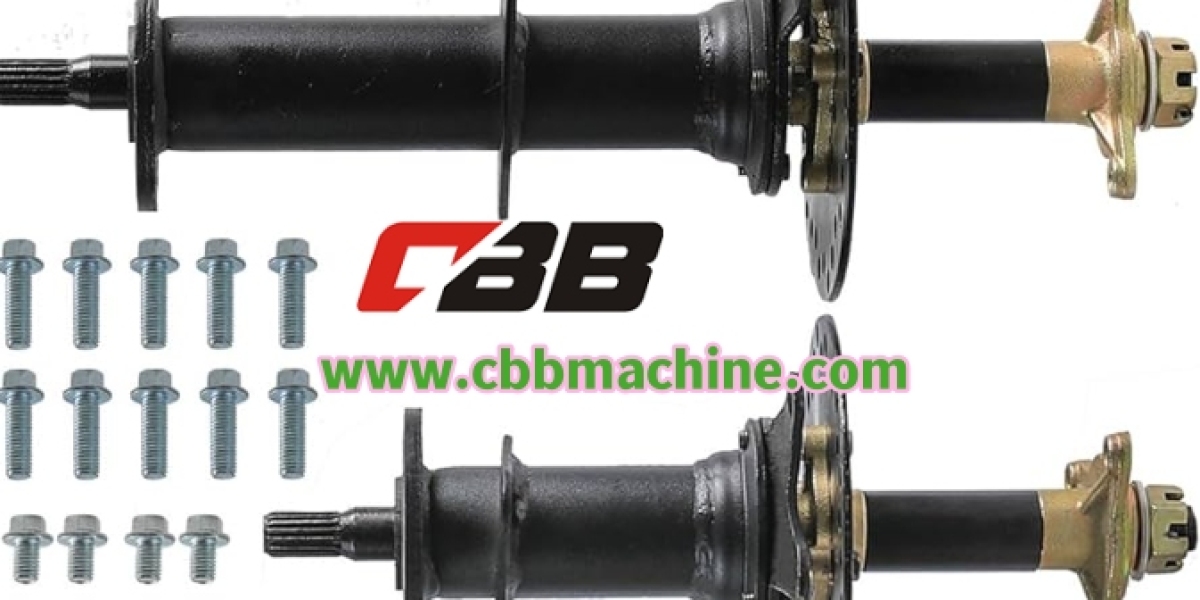

In converting machinery, handling several rolls on a common shaft can become challenging when each roll responds differently during winding or rewinding. Cbbmachine provides a Differential Air Shaft that combines pneumatic core engagement with a mechanism designed to accommodate individual roll behavior. This approach can give machine builders a useful way to coordinate multiple winding positions while allowing each roll to respond to its own operating conditions.
A conventional rigid connection may encourage several rolls to behave as one mechanical load. In real production, however, material thickness, friction, core condition, and winding resistance can vary from position to position. These differences may influence the way individual rolls build up during operation. A differential arrangement allows relative movement between winding positions, helping the system accommodate these variations rather than forcing every roll into exactly the same mechanical response.
The pneumatic expansion principle adds another practical dimension. Air pressure can activate expanding elements around the shaft, allowing them to engage with the inside of the cores. This creates a secure connection between the shaft and the rolls while providing a convenient method for loading and releasing materials. For production environments where roll changes are part of the normal workflow, a straightforward engagement process can contribute to smoother handling.
The combination of independent roll response and pneumatic core holding can be particularly useful in slitting and rewinding applications. After a wide web is divided into narrower sections, each section may develop its own winding characteristics. The differential mechanism allows these positions to accommodate changing conditions while remaining part of the same rotating assembly.
Material protection is another important consideration. Flexible substrates can be sensitive to uneven tension, excessive pressure, or inconsistent winding behavior. A mechanical system that permits controlled differences between winding positions can help reduce the tendency for one roll to dictate the behavior of the others. This creates a more adaptable foundation for processing films, paper, foil, laminates, labels, and other web materials.
Machine integration should also be considered carefully. A shaft is connected to much more than the rolls themselves. Bearings, drive components, frames, pneumatic connections, tension controls, and loading mechanisms all influence how the complete system operates. Proper coordination between these elements can help create a cleaner material path and make the equipment easier for operators to manage.
For equipment designers, flexibility is especially valuable when developing machines for different applications. Production lines may vary in core arrangements, roll dimensions, substrate characteristics, and winding methods. A pneumatic differential configuration can provide a practical foundation for adapting the winding section around these requirements.
Routine maintenance is equally important. Industrial components benefit from designs that make inspection and servicing straightforward. Pneumatic connections should be considered alongside mechanical wear points, mounting arrangements, and surrounding machine components. A well-planned installation can make it easier for maintenance personnel to identify issues and keep the winding section in working condition.
The real value of this type of equipment lies in its ability to treat multiple rolls as related but not identical loads. Instead of demanding uniform behavior from every position, the mechanical design provides room for individual response. This can make the winding process more adaptable and give engineers another tool for addressing complex web-handling requirements.
For manufacturers seeking a more flexible approach to multi-roll winding, the next step is to consider how pneumatic engagement and differential movement could fit the machine architecture. Visit https://www.cbbmachine.com/product/ and take a fresh look at the available solutions. Sometimes the smartest mechanical adjustment begins by giving every roll a little more freedom to behave as it should.