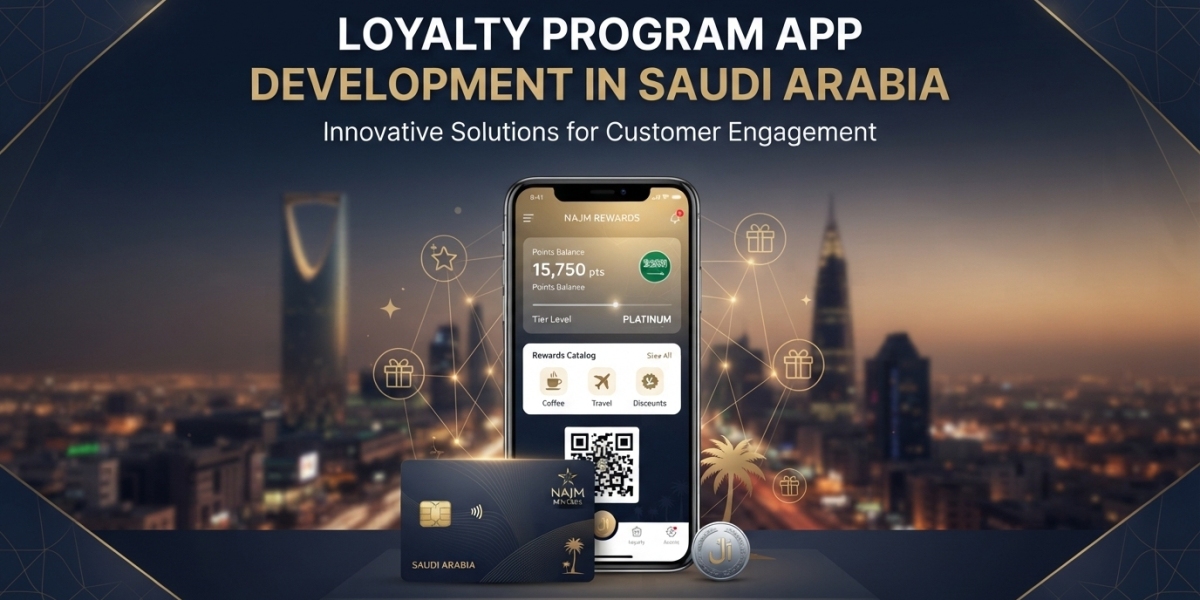

Loyalty Program App Development in Saudi Arabia helps modern retail businesses build direct relationships with customers through mobile technology. Instead of depending only on paper cards, printed coupons, or manual reward records, retailers can offer customers a digital space where they collect points, receive personalized rewards, check offers, and manage their loyalty accounts. A well designed loyalty app can make shopping more convenient while helping retailers encourage repeat purchases and improve customer retention.
Retail customers now shop through different channels. They may visit a physical store, order through a website, use a mobile application, or purchase through social media. A retail loyalty app can connect these activities and give customers a more consistent experience. For businesses, it also provides a practical way to manage loyalty programs, study customer behavior, and create offers based on real purchase activity.
What Is Loyalty Program App Development
Loyalty program app development refers to the process of creating a mobile application that allows businesses to manage customer loyalty activities digitally. The app may be developed for Android, iOS, or both platforms, depending on the target audience and business requirements.
A loyalty app normally connects with a central loyalty management system. This system manages customer profiles, points, rewards, purchase records, membership levels, and promotional rules. Customers use the mobile app to access these benefits, while business teams manage the program through an administrative dashboard.
A loyalty app may include features such as
- Customer registration
- Digital loyalty cards
- Points collection
- Reward redemption
- Personalized offers
- Membership levels
- Digital coupons
- Purchase history
- Push notifications
- Referral rewards
- Store locator
- Product promotions
- Customer feedback
- POS and ecommerce integration
The main purpose is to make loyalty activities easier for both customers and retail teams.
Why Modern Retail Businesses Need Loyalty Apps
Retail competition is strong across many markets, including Saudi Arabia. Customers can compare prices, products, delivery options, and shopping experiences before making a purchase. Because of this, retailers need to give customers more reasons to return.
A loyalty app can become a direct communication channel between the retailer and the customer. Instead of waiting for customers to visit the store or check a website, businesses can share relevant offers through the app.
A loyalty app can help retailers
- Encourage repeat purchases
- Provide exclusive member benefits
- Increase customer participation
- Share new product announcements
- Promote seasonal campaigns
- Reward frequent shoppers
- Support customer retention
- Collect useful loyalty data
For customers, the app provides a simple way to access rewards. For retailers, it creates a structured method for managing customer loyalty.
How a Retail Loyalty App Works
A retail loyalty app usually begins with customer registration. Customers can create an account using information such as their name, phone number, email address, or other required details. After registration, the customer receives a digital loyalty profile.
When the customer makes a purchase, the system records the transaction and applies the relevant loyalty rules. Depending on the program, the customer may earn points based on spending, product categories, purchase frequency, or promotional campaigns.
The customer can then use the app to
- Check the current points balance
- View available rewards
- Redeem eligible offers
- Review purchase activity
- Receive special promotions
- Check membership status
- Use digital coupons at checkout
The process should be easy to follow. If customers need too many steps to earn or redeem rewards, they may stop using the app.
Digital Loyalty Programs for Retail Customers
Digital loyalty programs replace many traditional loyalty methods with mobile based services. A customer does not need to carry a physical card or remember a printed coupon. Their loyalty information is available through their account.
A digital loyalty program can support
Digital Points
Customers can earn points after eligible purchases. The app displays the points balance and may show how many points are needed to receive the next reward.
Digital Coupons
Retailers can provide coupons that customers access through the app. These coupons may be used for selected products, specific branches, or limited time campaigns.
Membership Benefits
Retailers can create different membership levels. Customers who purchase frequently or spend more may receive additional benefits.
Reward Notifications
The app can notify customers when they receive a reward, reach a new membership level, or have points close to expiry.
Referral Programs
Customers can receive benefits when they introduce new shoppers to the business through a referral program.
These features make loyalty programs more visible and easier to use.
Personalized Rewards Through a Loyalty App
Customers do not all have the same interests. Some shoppers may purchase groceries regularly, while others may buy fashion products, electronics, beauty items, or household goods. Sending the same offer to every customer may not provide much value.
Personalized rewards allow retailers to create offers based on customer activity and preferences. A loyalty app can use purchase history and loyalty behavior to support more relevant communication.
For example
- Frequent shoppers may receive extra points
- New customers may receive welcome rewards
- High spending customers may receive premium benefits
- Inactive customers may receive return offers
- Customers interested in a product category may receive related discounts
- Birthday customers may receive a special reward
Personalized rewards should be useful and reasonable. Customers should not feel that the app is sending too many messages or using their information in an unclear way. Retailers should provide suitable privacy information and allow customers to manage communication preferences where required.
Connecting the Loyalty App With Retail Systems
A loyalty app becomes more useful when it connects with the systems a retailer already uses. Without integration, employees may need to enter the same information into several platforms.
Important integrations may include
- Point of sale systems
- Ecommerce platforms
- Payment systems
- Inventory management software
- Customer relationship management systems
- Marketing platforms
- Customer support tools
POS Integration
POS integration allows the retailer to identify customers during checkout and apply eligible loyalty benefits. A customer may scan a QR code, provide a phone number, or show their digital loyalty card.
The system can then update points, apply discounts, and record the transaction.
Ecommerce Integration
When the loyalty app connects with an online store, customers can earn and redeem rewards during online purchases. This helps create a connected experience between physical stores and digital shopping channels.
Inventory Integration
Inventory integration can help retailers create offers based on product availability. For example, a retailer may provide additional points on selected products that have sufficient stock.
Loyalty App Features for Modern Retail Businesses
Retailers should select features based on their customer needs and operating model. Adding too many features can make an app difficult to use, so the first version should focus on the most important customer activities.
Simple Customer Registration
Registration should be quick and clear. Customers may leave the process if it requires unnecessary information.
Easy Reward Redemption
Customers should be able to view and redeem rewards without contacting staff. The app should clearly explain the conditions for each reward.
Customer Purchase History
Purchase history can help customers review their activity and may support more relevant offers.
Push Notifications
Notifications can inform customers about rewards, offers, new products, and important account updates. Retailers should use them carefully to avoid excessive messages.
Store Information
A store locator can help customers find nearby branches, opening hours, contact details, and available services.
Customer Support
The app may include a support section where customers can ask questions about points, rewards, orders, or account details.
Customer Retention Software and Retail Growth
Customer retention software helps businesses encourage existing customers to continue purchasing. A loyalty app can support this goal by keeping the brand connected with customers after a purchase.
For example, a retailer can send a reminder when a customer has unused points. The business may also provide a special offer to customers who have not purchased for a certain period.
Retention activities may include
- Repeat purchase rewards
- Member only discounts
- Personalized offers
- Reward reminders
- Birthday benefits
- Product recommendations
- Referral campaigns
- Loyalty membership upgrades
The purpose is not to send constant promotions. The goal is to provide useful reasons for customers to return when they are ready to shop.
Using Loyalty Data for Better Retail Decisions
A loyalty app can provide valuable information about customer behavior. Retailers can use this information to review program performance and make better decisions about campaigns and rewards.
Useful reports may include
- Number of registered customers
- Active loyalty members
- Repeat purchase frequency
- Average customer spending
- Most used rewards
- Reward redemption rates
- Customer activity by branch
- Campaign performance
- Inactive customer groups
- Membership growth
For example, if customers register but rarely redeem rewards, the retailer may need to simplify the redemption process. If a certain product category receives strong loyalty participation, the business may create more offers related to that category.
Data should be handled responsibly. Retailers should use suitable security measures, limit access to customer information, and follow applicable privacy and data protection requirements.
Choosing a Loyalty App Development Company in Saudi Arabia
Choosing the right development partner is an important step. Retailers should look for a company that understands both mobile app development and loyalty program management.
Before selecting a provider, review the following areas.
Retail Experience
The development team should understand retail operations, customer journeys, POS systems, and ecommerce processes.
Custom Loyalty Features
The app should support the reward rules and membership structure required by your business.
User Friendly Design
Customers should be able to register, collect points, and redeem rewards without confusion.
Integration Capability
The provider should be able to connect the app with POS, ecommerce, CRM, and other required systems.
Security
Customer accounts and transaction information should be protected through secure development practices and appropriate access controls.
App Performance
The application should load quickly, work reliably, and provide a consistent experience across supported devices.
Future Scalability
The system should be able to support more customers, branches, campaigns, and reward types as the retailer grows.
How to Start Loyalty Program App Development
Retailers should begin by defining the main purpose of the app. The goal may be to increase repeat purchases, improve customer retention, promote selected products, or create a stronger digital relationship with shoppers.
Next, identify the main customer activities. For many retailers, the first version should include registration, digital loyalty cards, points, rewards, notifications, and purchase history.
After that, define the loyalty rules. Decide how customers earn points, how they redeem rewards, whether points expire, and how membership levels work.
The development team can then prepare the app design, build the required features, connect the necessary systems, and test the application with real users.
Before launch, train employees and prepare clear customer instructions. After launch, monitor app usage, reward redemption, customer feedback, and technical performance. Regular improvements can help the app remain useful as customer needs change.
Final Thoughts on Loyalty Program App Development in Saudi Arabia
Loyalty Program App Development in Saudi Arabia gives modern retail businesses a practical way to manage customer loyalty through mobile technology. A well designed customer loyalty app can help shoppers collect points, access personalized rewards, receive offers, and manage their accounts from one convenient place.
For retailers, the app can connect loyalty program software with POS, ecommerce, customer relationship systems, and marketing tools. This makes loyalty program management more organized and helps businesses maintain a consistent customer experience across different shopping channels.
The success of a loyalty app depends on simple features, useful rewards, reliable performance, and responsible customer data management. Retailers should focus on giving customers genuine value rather than adding unnecessary complexity.
When digital loyalty programs are planned carefully and supported by suitable customer retention software, businesses can create stronger customer relationships and encourage more repeat purchases. For modern retail businesses in Saudi Arabia, a loyalty app can become an important part of a long term customer loyalty strategy.