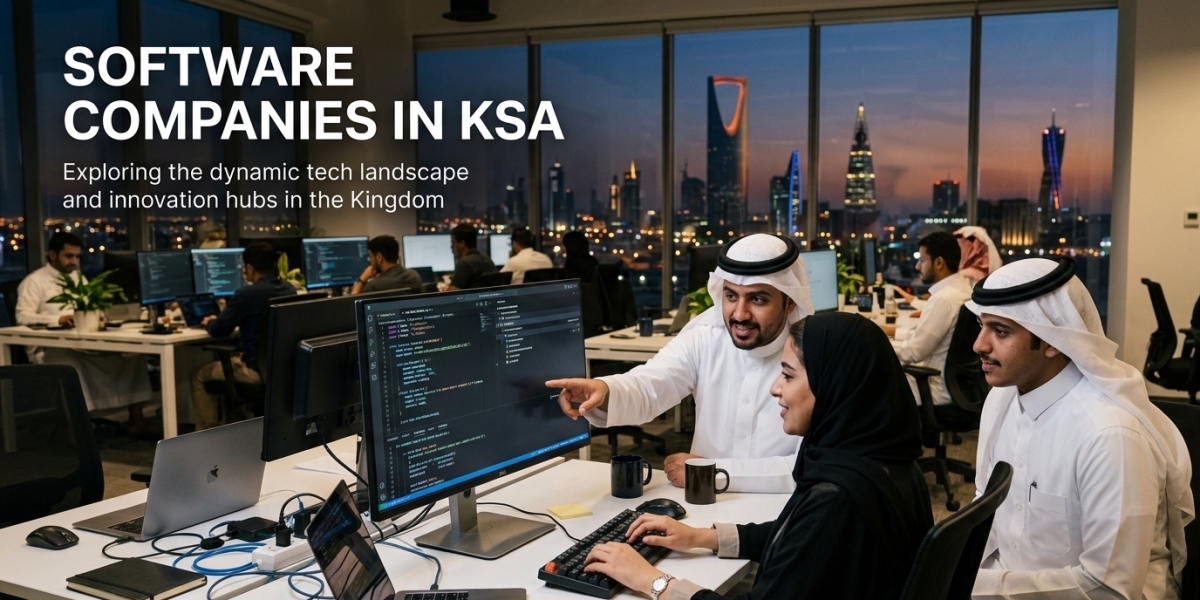

Saudi Arabia’s technology landscape is developing rapidly as businesses adopt cloud computing, automation, artificial intelligence, analytics, and integrated digital platforms. Organizations across industries are moving away from isolated applications and manual processes toward connected software environments that can support larger operations and changing business requirements. In this environment, software companies in KSA are becoming increasingly important in helping organizations develop and implement modern technology solutions.
The shift toward next generation software is not only about adopting new tools. Businesses are also reconsidering how technology supports everyday workflows, employee collaboration, customer experiences, data management, and decision making. Cloud infrastructure and automation are at the center of this transformation, providing organizations with greater flexibility and opportunities to modernize their operations.
The Shift Toward Connected Software
Traditional business systems often operate around individual departments. Finance may use one platform, sales another, while operations and human resources maintain separate applications.
This approach can create information gaps and repetitive manual work.
Modern software environments are increasingly designed around connected processes. Applications can exchange information through APIs, while centralized platforms can provide employees and managers with access to relevant business information.
Connected software can support
• Business management
• Customer relationship management
• Project coordination
• Financial operations
• Employee collaboration
• Inventory management
• Business intelligence
• Document management
The objective is to create a technology environment where different business functions can work together more efficiently.
Cloud Computing Changing Software Architecture
Cloud computing has become a major component of modern software development. Cloud platforms provide infrastructure, storage, databases, computing resources, and development services that can scale according to business requirements.
For Saudi businesses, cloud adoption can support organizations that are expanding operations, adding branches, or serving customers through digital channels.
Cloud environments can also make it easier to deploy applications across different locations. Employees can access approved systems through secure connections without relying entirely on local infrastructure.
Businesses can choose between public cloud, private cloud, and hybrid environments depending on their operational and security requirements.
Hybrid Cloud for Enterprise Flexibility
Not every organization is ready to move its entire technology environment to the cloud.
Some businesses continue to operate legacy applications or maintain systems that require local infrastructure. Others may have specific data management or security requirements.
Hybrid cloud provides a middle path by combining on premises infrastructure with cloud services.
Organizations can gradually move suitable workloads to the cloud while maintaining selected systems locally.
This approach can reduce disruption during modernization and allow businesses to update their technology environment in stages.
Automation Reducing Repetitive Business Work
Automation is another major trend shaping modern software.
Many business activities involve repetitive steps such as sending notifications, approving requests, updating records, moving documents, and assigning tasks.
Automation can turn these processes into structured workflows.
For example, an internal request can automatically move from an employee to a manager for approval. Once approved, the system can notify the relevant department and update the associated record.
Automation can be applied to
• Employee onboarding
• Expense approvals
• Document management
• Customer inquiries
• Task assignments
• Inventory updates
• Service requests
• Internal reporting
This can reduce administrative workload and create greater consistency across business processes.
Artificial Intelligence Expanding Automation
Automation becomes more powerful when combined with artificial intelligence.
Traditional automation generally follows predefined rules. AI can add capabilities such as pattern recognition, natural language processing, prediction, classification, and intelligent recommendations.
Businesses can use AI to analyze customer requests, classify documents, identify unusual activity, summarize information, and support decision making.
AI assisted automation can therefore handle more complex processes than simple rule based workflows.
However, organizations need to maintain appropriate human oversight, especially when automated systems influence important business decisions.
Data Analytics Supporting Better Decisions
Modern software generates large volumes of operational data. Businesses need analytical tools that can transform this information into useful insights.
Business intelligence platforms can provide dashboards and reports covering sales, finance, customers, operations, inventory, and employee performance.
Managers can use analytics to monitor key indicators and identify changes in performance.
For example, an organization may compare branch performance, identify changes in customer activity, or monitor project progress through centralized dashboards.
This shift toward data driven decision making is becoming increasingly important as businesses adopt more connected software environments.
Real Time Information Across Business Operations
Real time information can improve operational visibility.
In traditional environments, employees may rely on manually prepared reports that are updated periodically. This can make it difficult for managers to respond quickly to changing conditions.
Modern applications can provide updated information as business activities occur.
A manager may be able to monitor
• Current sales
• Open tasks
• Inventory levels
• Customer requests
• Project status
• Employee activities
• Operational issues
Real time dashboards can support faster responses and reduce delays between business activity and management decisions.
APIs Supporting Software Integration
Integration is essential for organizations that use multiple business applications.
APIs allow software systems to communicate and exchange information. A company can connect its ERP system with a CRM platform, website, mobile application, payment service, or analytics platform.
Integrated architecture can reduce duplicate data entry and create more consistent information across departments.
For software companies in KSA, integration is becoming an important part of developing business solutions because organizations increasingly need technology environments rather than standalone applications.
Mobile Software Supporting Distributed Teams
Modern businesses often have employees working across offices, branches, project locations, and field environments.
Mobile applications can provide authorized employees with access to important business functions while away from a desktop environment.
Employees can use mobile systems to
• Review tasks
• Submit reports
• Upload documents
• Update records
• Communicate with teams
• Access customer information
• Track field activities
Mobile accessibility can be especially useful for construction, logistics, real estate, retail, hospitality, and service businesses.
Cloud Based Collaboration
Cloud technology is also changing how employees collaborate.
Teams can share documents, communicate, manage projects, and access information through centralized platforms.
Collaboration tools can help reduce dependency on email based processes and improve visibility across departments.
Organizations with distributed teams can benefit from having a shared digital workspace where employees can access the information and applications required for their roles.
Cybersecurity in Modern Software
As businesses move more systems to cloud and connected environments, cybersecurity becomes increasingly important.
Modern software needs protection across applications, identities, devices, networks, and data.
Organizations should consider
• Identity management
• Multi factor authentication
• Role based access
• Data encryption
• Security monitoring
• Application testing
• Backup and recovery
• Vulnerability management
Security should be considered during software architecture and development rather than treated as an additional feature after deployment.
Zero Trust and Identity Management
Cloud environments have changed traditional security assumptions.
Employees may work remotely while applications and data can be distributed across multiple systems. This makes identity and access management increasingly important.
Zero Trust approaches require users and devices to be properly verified before receiving access.
Role based permissions can also ensure that employees only access the information and applications necessary for their responsibilities.
These controls can help organizations reduce unnecessary access while maintaining productivity.
Data Governance Supporting AI and Cloud
Data governance is becoming increasingly important as businesses depend on connected digital platforms.
Organizations need clear rules for collecting, storing, accessing, sharing, and protecting information.
Effective governance can address
• Data ownership
• Data quality
• Access permissions
• Retention policies
• Security requirements
• Compliance responsibilities
Reliable data is particularly important for AI and analytics. Poor quality or inconsistent information can reduce the accuracy of automated systems and business reports.
Industry Applications Across Saudi Arabia
The adoption of cloud and automation is not limited to one industry.
Retail
Retail businesses can connect inventory, sales, customer information, and branch operations through integrated software.
Automation can support stock updates, reporting, and routine administrative activities.
Construction
Construction organizations can use cloud platforms for project collaboration, documentation, task management, inspections, and communication between office and field teams.
Logistics
Logistics companies can connect warehouse operations, transportation, delivery activities, and customer information.
Automation can support shipment updates and operational notifications.
Hospitality
Restaurants and hotels can use digital systems for employee coordination, customer management, inventory, reservations, and operational reporting.
Real Estate
Real estate businesses can integrate property information, customer relationships, documentation, sales processes, and analytics.
Healthcare
Healthcare organizations can use software for scheduling, administration, information management, analytics, and communication while maintaining strong security controls.
Microsoft Technologies in the Modern Software Environment
Microsoft technologies are also contributing to the development of connected business environments.
Organizations can combine Azure cloud services with Microsoft 365, Dynamics, Power BI, SharePoint, and AI capabilities.
These technologies can support cloud infrastructure, collaboration, enterprise applications, analytics, document management, and AI assisted productivity.
The value of these platforms depends heavily on how effectively they are integrated into existing business processes.
Low Code and Faster Application Development
Low code development platforms are helping organizations create certain applications and workflows more quickly.
They can be useful for
• Internal forms
• Approval workflows
• Dashboards
• Task systems
• Department applications
• Data collection
However, low code development still requires consideration of security, integration, scalability, and long term maintenance.
Businesses should evaluate whether a low code approach is suitable for the specific application rather than assuming it is the right choice for every project.
Challenges of Software Modernization
Moving from traditional systems to modern software can involve several challenges.
Organizations may face legacy infrastructure, data migration issues, integration difficulties, employee resistance, cybersecurity concerns, and limited technical expertise.
Poorly defined requirements can also lead to software that does not properly address business needs.
A structured modernization plan can help reduce these risks.
Businesses can begin by assessing existing processes, identifying technology gaps, prioritizing important workflows, and introducing improvements in stages.
Selecting the Right Software Strategy
Technology selection should be based on business requirements rather than trends alone.
Organizations should evaluate software based on
• Scalability
• Security
• Integration
• Usability
• Mobile access
• Analytics
• Customization
• Maintenance
Businesses should also consider future growth. A solution that works for a small operation may require additional capabilities when the organization adds users, branches, customers, or services.
The Growing Role of Software Companies in KSA
The development of Saudi Arabia’s digital economy is creating increasing demand for modern software capabilities.
Software companies in KSA are working within an environment where businesses require cloud based platforms, integrated applications, automation, analytics, mobile systems, and AI capabilities.
Their role increasingly includes more than application development. Modern software projects can involve architecture planning, system integration, cloud migration, cybersecurity, data governance, testing, deployment, and ongoing maintenance.
This broader approach can help businesses create technology environments that remain adaptable as requirements change.
The Future of Saudi Software
The next generation of software in Saudi Arabia is likely to become increasingly cloud based, automated, intelligent, and integrated.
AI will continue influencing application development and business workflows. Cloud platforms will support scalable infrastructure, while automation will reduce repetitive processes.
Analytics will provide greater operational visibility, and integration technologies will connect applications across business environments.
At the same time, cybersecurity and data governance will become increasingly important as organizations depend on larger digital ecosystems.
The future will therefore not be defined by one technology. It will depend on how businesses combine different technologies to create secure and practical systems.
Final Thoughts
Cloud computing and automation are driving important changes across Saudi Arabia’s software landscape. Businesses are adopting connected applications, intelligent workflows, mobile systems, analytics, and cloud infrastructure to support modern operations.
For organizations planning digital modernization, the most effective approach is to focus on business requirements, integration, security, scalability, and reliable data.
As demand for advanced technology continues to grow, software companies in KSA will remain an important part of the digital ecosystem, helping organizations develop and maintain software environments that can adapt to new technologies and changing business needs.