
A leather bag can look beautiful when it is new, but its real character often becomes apparent years later. The surface develops subtle changes, the color gains depth, and small marks begin to tell the story of how the bag has been used. Much of that long-term character comes down to one detail: the type of leather used.
Full-grain leather is widely regarded as one of the most natural and durable forms of leather available. It is particularly associated with premium luggage, heritage travel bags, briefcases, handbags, and other products where longevity and appearance matter. Yet the term is often used without much explanation, leaving shoppers to wonder what full-grain leather actually means and whether it is worth choosing.
Understanding how full-grain leather is made, how it differs from other leather grades, and how it behaves over time can make the decision much easier.
What Is Full-Grain Leather?
Full-grain leather is leather made from the outermost layer of an animal hide, with the natural grain surface left largely intact. Unlike leather that has been heavily sanded or corrected, full-grain leather retains much of the hide's original texture and natural markings.
The grain contains tightly packed fibers that contribute to the material's strength. Because the surface is not extensively buffed to remove imperfections, each piece can have its own variations in texture, pores, scars, and color.
That natural surface is one reason full-grain leather is valued for premium leather goods. It does not aim to look perfectly uniform. Instead, its appeal comes from the combination of durability, texture, and individuality.
For a travel bag, this can be especially meaningful. A well-made leather weekender or heritage travel bag may be carried through airports, hotel lobbies, train stations, and road trips. Over time, the material can develop a distinctive appearance rather than simply wearing out.
How Is Full-Grain Leather Made?
The process begins with an animal hide that is cleaned, treated, and prepared for tanning. Tanning stabilizes the hide so that it becomes durable, flexible leather rather than a material that can easily deteriorate.
With full-grain leather, the natural outer grain is preserved. The surface may receive finishing treatments, but it generally does not undergo aggressive sanding or correction intended to make every section look identical.
This distinction matters because the outer grain contains a dense arrangement of fibers. Removing or heavily altering that surface can change the material's texture and characteristics.
The final appearance depends on several factors, including:
- The quality and condition of the original hide
- The tanning method
- The finishing process
- The thickness of the leather
- The intended use of the finished product
As a result, two full-grain leather bags can look and feel quite different. "Full-grain" describes an important aspect of the leather's construction, but it does not by itself describe every characteristic of the finished product.
Why Is Full-Grain Leather Considered High Quality?
The appeal of full-grain leather comes from more than the label. Its value is closely connected to the fact that the natural grain remains present.
Natural Strength
The dense fibers near the outer surface contribute to the material's structural strength. For products that receive regular handling, this can be a major advantage.
A travel bag, for example, may experience repeated lifting, packing, carrying, and storage. Leather with a strong natural structure can be well suited to this type of use.
Distinctive Texture
Full-grain leather tends to retain more of the hide's natural texture. Small variations can make one panel subtly different from another.
For people who prefer traditional leather craftsmanship, this individuality is part of the appeal.
Aging and Patina
One of the most recognizable characteristics of quality leather is patina. This refers to the gradual change in appearance that can occur as leather is exposed to handling, light, oils, and everyday use.
Instead of simply becoming old-looking, well-maintained leather can develop richer tones and a softer, more distinctive surface. The exact result depends on the leather, finish, color, and conditions in which the item is used.
This is particularly attractive in heritage-inspired travel goods because the bag can acquire a visual history of its own.
Full-Grain vs. Top-Grain Leather: What Is the Difference?
Full-grain and top-grain leather are often confused because both can be associated with premium leather products.
The main distinction is how the outer surface of the hide is treated.
Full-grain leather retains the natural grain surface with minimal alteration. Top-grain leather has also come from the upper portion of the hide, but its surface may be sanded, corrected, or otherwise processed to create a more uniform appearance.
Neither term automatically tells you everything about durability or quality. Construction, tanning, thickness, stitching, hardware, lining, and finishing all affect the performance of a finished bag.
Still, the difference is useful when comparing leather goods. Full-grain leather generally appeals to buyers who appreciate natural markings and long-term character, while top-grain leather can offer a more consistent appearance.
Is Full-Grain Leather Better Than Genuine Leather?
The phrase "genuine leather" can be misleading because it does not identify a single specific quality level in the way many consumers assume.
"Genuine leather" generally means that a product contains real leather, but the term alone does not explain where the leather came from in the hide or how extensively it was processed.
Full-grain leather provides more specific information about the material's surface and construction. However, consumers should still look beyond the label.
A better evaluation considers:
- The leather grade
- The thickness and structure
- The tanning and finishing process
- Stitching quality
- Hardware construction
- Handles and attachment points
- Interior construction
- Intended use
A full-grain leather bag with poor construction may not perform as well as expected. Material quality and workmanship need to work together.
What Makes Full-Grain Leather Suitable for Travel Bags?
Travel puts unusual demands on a bag. It needs to hold its shape, withstand repeated handling, and remain practical while still looking presentable.
Full-grain leather can be a strong choice for this purpose because its natural surface and dense structure suit products designed for repeated use.
A heritage travel bag made from full-grain leather can work particularly well for short trips, business travel, weekend journeys, and other situations where durability and appearance are equally important.
There is also a practical advantage to choosing a material that can develop character. Minor signs of use do not necessarily ruin the appearance of a leather bag. On the right type of leather, they can become part of its visual identity.
That does not mean full-grain leather is indestructible. Excessive moisture, prolonged sunlight, rough handling, and poor storage can still damage it. Good material benefits from good care.
How Can You Tell if a Bag Uses Full-Grain Leather?
A product description that simply says "premium leather" does not provide enough information to determine the leather grade.
If the exact material matters to you, look for clear terminology such as "full-grain leather." Product specifications should ideally explain the material rather than relying only on broad marketing terms.
Physical characteristics can provide clues, although they are not definitive proof.
Full-grain leather may show:
- Natural variations in grain
- Subtle differences in texture
- Small marks or irregularities
- A less artificially uniform surface
- A substantial feel compared with thinner finished materials
Smell and touch are sometimes mentioned as ways to identify leather, but neither should be treated as a reliable test for leather grade. Finishes, dyes, coatings, and other treatments can significantly alter how leather feels and smells.
For that reason, transparent material specifications are more useful than trying to identify the leather solely by appearance.
Do Natural Marks Mean the Leather Is Defective?
Not necessarily.
Natural hides can contain marks caused by the animal's environment and life. Depending on how the leather is processed, some of these characteristics may remain visible.
A completely uniform surface is not automatically a sign of superior leather. In fact, heavily corrected leather may appear more consistent precisely because natural variations have been reduced.
For lovers of traditional leather goods, these small differences can be desirable. They help distinguish natural leather from materials designed primarily for visual uniformity.
That said, there is an important difference between natural character and poor manufacturing. Uneven stitching, weak seams, badly finished edges, or structural flaws are workmanship concerns, not desirable signs of natural leather.
How Should Full-Grain Leather Bags Be Cared For?
Proper care can help a leather travel bag remain attractive for years.
Start by keeping the bag away from unnecessary moisture. If it becomes wet, allow it to dry naturally at room temperature rather than applying direct heat.
Regular cleaning should be gentle. Dust and surface dirt can usually be removed with a soft, dry or slightly damp cloth, depending on the leather's finish and care instructions.
Conditioning may also be appropriate, but more is not necessarily better. Applying an unsuitable conditioner can change the color, finish, or feel of the leather. Always consider the manufacturer's care guidance and test any unfamiliar product on an inconspicuous area first.
Storage matters as well. A leather bag should generally be stored in a cool, dry place away from prolonged direct sunlight. Overloading it for extended periods can also place unnecessary stress on handles, seams, and the overall structure.
Common Mistakes When Buying Full-Grain Leather Bags
The term "full-grain" can make a product sound automatically perfect, but buyers should avoid making decisions based on one material label alone.
Mistake 1: Assuming Full-Grain Means Indestructible
Full-grain leather is durable, but it can still scratch, stain, fade, or develop water damage. Durability does not eliminate the need for care.
Mistake 2: Ignoring Construction
Strong leather cannot compensate for weak stitching or poorly designed handles. Examine how the bag is assembled, especially around stress points.
Mistake 3: Expecting a Perfectly Uniform Surface
Natural leather can contain variations. If you expect every section to have exactly the same texture and tone, a highly corrected leather may suit your preferences better.
Mistake 4: Choosing Only by Appearance
A leather bag should fit its intended use. Consider its size, weight, compartments, carrying method, and structural design alongside the leather itself.
Mistake 5: Overconditioning the Leather
Too much conditioning can leave some leather feeling overly soft, greasy, or altered in appearance. Maintenance should be proportionate to actual need.
What Should You Look For in a Full-Grain Leather Travel Bag?
For a travel bag intended to become a long-term possession, the leather is only part of the equation.
Pay attention to the bag's proportions and construction. Handles should feel securely attached, seams should appear consistent, and hardware should suit the amount of use the bag is expected to receive.
The design should also match the way you travel. A compact weekender may be useful for an overnight stay, while a larger heritage travel bag may make more sense for several days away.
Consider weight, too. Full-grain leather can be substantial, and a beautifully constructed bag that is already heavy before packing may not be comfortable for every traveler.
Finally, think about how you want the bag to age. Some people prefer a polished, consistent appearance. Others specifically want a leather item that becomes more personal through use.
That distinction can help determine whether full-grain leather is the right material for you.
Where Does Lustra Atelier Fit Into the Full-Grain Leather Conversation?
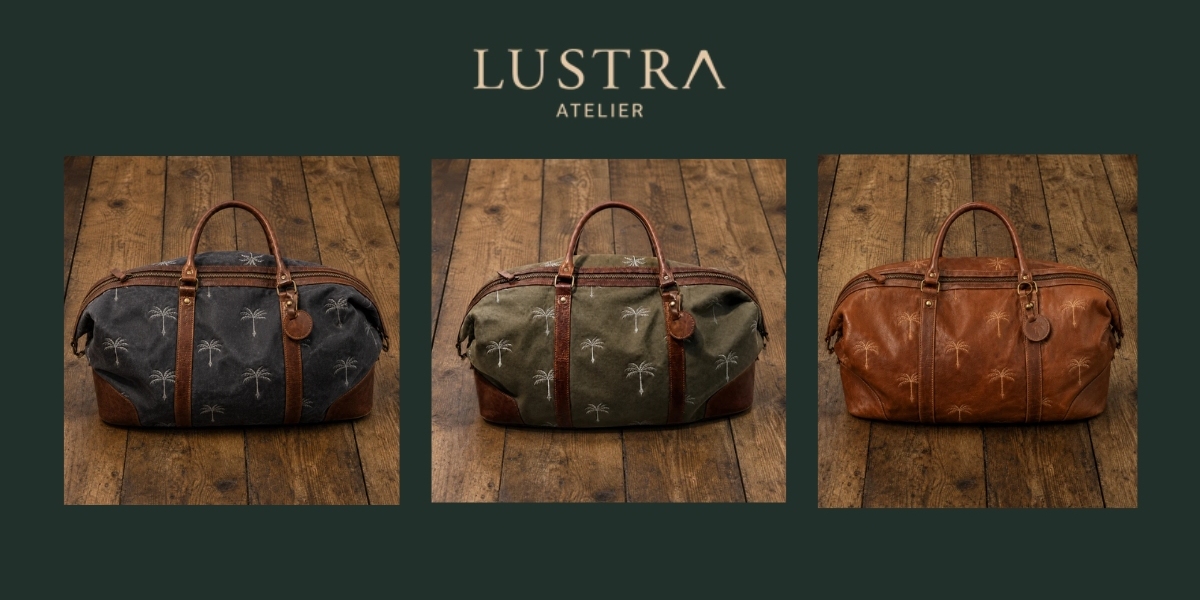
Lustra Atelier bags sit within a broader tradition of heritage-inspired leather travel goods, where material, craftsmanship, and timeless design are central considerations.
The significance of full-grain leather in this category is less about status and more about how a natural material interacts with functional design. A travel bag is handled frequently, exposed to changing environments, and often carried for years. Materials that can develop character through use naturally appeal to people who see luggage as more than a disposable accessory.
That perspective also explains why heritage-style bags continue to attract attention. Their value is often connected to longevity, practical design, and an appreciation for materials that show evidence of use rather than trying to conceal it completely.
Is Full-Grain Leather Worth Choosing?
For many buyers, yes, particularly if they value durability, natural texture, and the way leather develops with age.
It may not be the best option for every situation. Full-grain leather can cost more, require care, and feel heavier than some alternatives. Its natural markings may also be less appealing to someone who wants a perfectly consistent surface.
But for a well-designed travel bag intended for repeated use, full-grain leather offers a compelling combination of strength, character, and longevity.
The most useful way to think about it is not simply as a premium label. Full-grain leather is a material choice with particular characteristics. When paired with thoughtful construction and appropriate care, those characteristics can make a leather bag increasingly distinctive over time.
A good travel bag should do more than survive a journey. Ideally, it should become better suited to its owner with every journey that follows. Full-grain leather, with its natural grain and capacity to develop patina, is one of the materials that makes that possible.