
Buying, using, or planning around commercial freezer requires more than knowing a product name. For restaurants, cafés, bakeries, grocery operations, and foodservice businesses, the right choice affects daily workflow, labor, consistency, maintenance, and the customer experience. The strongest decisions begin with the work that needs to be done, then connect that work to capacity, layout, operating requirements, and long-term value. This guide takes a practical look at those decisions and explains what to consider before making a purchase or changing an existing setup.
A useful starting point is to review the role that commercial freezer plays in the operation and then compare the specifications that directly support that role.
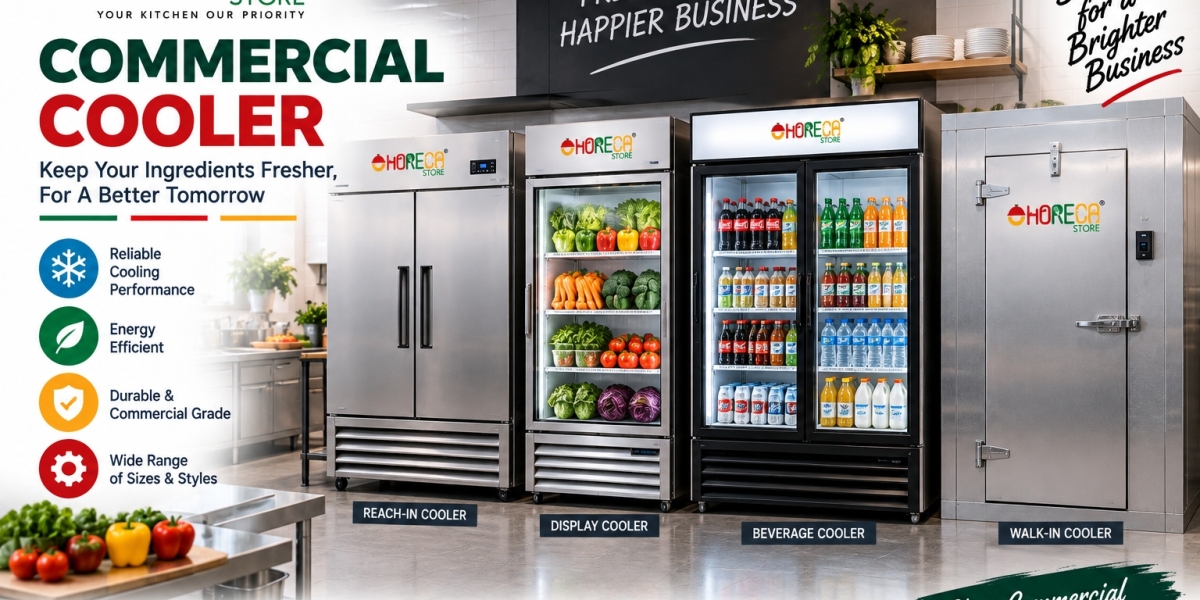
Match freezer type to the operation
Reach-in, undercounter, chest-style, and walk-in configurations solve different problems. A busy line may benefit from immediate access to smaller quantities, while a commissary may need large-volume storage. Start with where frozen ingredients are consumed and how often employees need to retrieve them.
Capacity and shelf organization
Look beyond advertised capacity and consider usable shelf dimensions, door clearance, pan sizes, and the shape of packaged inventory. Adjustable shelving can make a major difference when products change. A freezer that is easy to organize supports faster picking and better stock rotation.
Temperature stability
A freezer must maintain the operating range appropriate to its intended use despite normal door openings and loading. Insulation, door gaskets, airflow, condenser condition, and product placement all influence performance. Establish routine temperature checks and investigate repeated deviations rather than treating them as normal.
Energy and serviceability
Operating cost matters because refrigeration runs for long periods. Consider the equipment's efficiency, installation environment, condenser access, and service support. A design that makes cleaning and technician access easier can be valuable over the equipment's life.
Daily care
Keep the interior organized, clean spills promptly, inspect seals, and avoid overloading shelves or blocking airflow. Follow the manufacturer's instructions for defrosting and maintenance. Preventive care helps protect both the freezer and the inventory inside it.
A Practical Checklist Before You Commit
Measure the actual storage footprint, including shelving and aisle space, instead of relying only on gross cubic capacity. Usable organization is what employees experience every day.
Establish a simple temperature-monitoring and maintenance routine. Repeated small deviations should be investigated rather than accepted as normal operating behavior.
Plan the installation around service access. Condenser, electrical, drain, and refrigeration components may eventually need attention, and technicians need safe access to them.
Making the Decision With Confidence
The best approach to commercial freezer is to connect the product directly to the needs of the business. Start with demand, workflow, available space, utilities, staff use, cleaning, and maintenance. Then compare total ownership cost and serviceability rather than relying on purchase price alone. This process is especially important when the product sits at the center of daily production because a poorly matched choice can create recurring labor and downtime costs. On the other hand, a well-planned purchase can make work easier, improve consistency, and give employees a clearer process to follow.
When comparing options, use the specific requirements of your operation to evaluate commercial freezer rather than choosing on appearance or a single headline specification.
For additional commercial foodservice products and equipment resources, visit The Horeca Store.
Planning for the Next Stage of the Business
Good equipment planning should also consider what happens after the first few months of use. Businesses learn quickly once employees begin working with a new product: certain settings become favorites, certain storage locations prove more convenient, and certain maintenance tasks become especially important. Capture those lessons instead of relying on memory. A short operating guide can document preferred settings, cleaning steps, storage rules, and escalation procedures for problems. For growing operations, this information is useful when training new employees or opening another location. It also helps owners distinguish between a genuine equipment limitation and a workflow problem that can be solved through organization or training. Review the setup periodically, especially after menu changes or major changes in sales volume. If demand rises, the answer may be additional capacity, a different layout, or a complementary piece of equipment rather than immediate replacement. Likewise, if a product is consistently underused, the business may be able to simplify the operation and reclaim valuable space. The goal is not to buy the most equipment possible. The goal is to build a system in which every important piece earns its place.
Documentation also makes purchasing decisions easier in the future. Keep the model information, dimensions, utility requirements, manuals, service contacts, and maintenance history together. When replacement becomes necessary, the next buyer can start with accurate information instead of rebuilding the specification from scratch. This can reduce downtime and improve consistency across the operation.
Documentation also makes purchasing decisions easier in the future. Keep the model information, dimensions, utility requirements, manuals, service contacts, and maintenance history together. When replacement becomes necessary, the next buyer can start with accurate information instead of rebuilding the specification from scratch. This can reduce downtime and improve consistency across the operation.
Finally, review the purchase from the customer's point of view. Faster preparation, better temperature control, cleaner presentation, shorter queues, and more consistent portions can all influence the guest experience. Even equipment that stays behind the scenes can affect what customers see and taste. The strongest investments connect back to that end result while making the work easier for the team.
Another useful practice is to compare the expected operating pattern with the manufacturer's intended application. Commercial equipment is designed around particular loads, environments, and procedures. Using it outside those conditions can affect performance or shorten service life. Staff should therefore know the basic limits of the product and understand which tasks are appropriate. This is especially valuable when multiple shifts or locations share the same equipment.
Another useful practice is to compare the expected operating pattern with the manufacturer's intended application. Commercial equipment is designed around particular loads, environments, and procedures. Using it outside those conditions can affect performance or shorten service life. Staff should therefore know the basic limits of the product and understand which tasks are appropriate. This is especially valuable when multiple shifts or locations share the same equipment.
Documentation also makes purchasing decisions easier in the future. Keep the model information, dimensions, utility requirements, manuals, service contacts, and maintenance history together. When replacement becomes necessary, the next buyer can start with accurate information instead of rebuilding the specification from scratch. This can reduce downtime and improve consistency across the operation.
Documentation also makes purchasing decisions easier in the future. Keep the model information, dimensions, utility requirements, manuals, service contacts, and maintenance history together. When replacement becomes necessary, the next buyer can start with accurate information instead of rebuilding the specification from scratch. This can reduce downtime and improve consistency across the operation.
Finally, review the purchase from the customer's point of view. Faster preparation, better temperature control, cleaner presentation, shorter queues, and more consistent portions can all influence the guest experience. Even equipment that stays behind the scenes can affect what customers see and taste. The strongest investments connect back to that end result while making the work easier for the team.
Finally, review the purchase from the customer's point of view. Faster preparation, better temperature control, cleaner presentation, shorter queues, and more consistent portions can all influence the guest experience. Even equipment that stays behind the scenes can affect what customers see and taste. The strongest investments connect back to that end result while making the work easier for the team.