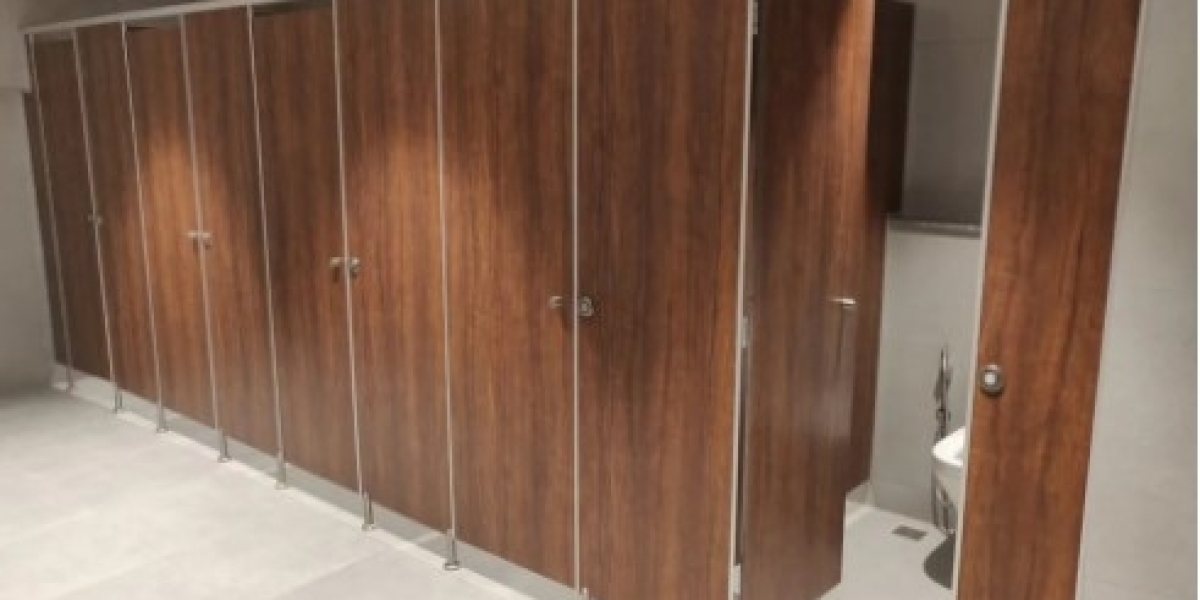

Commercial washrooms experience considerably more use than residential bathrooms. Offices, shopping malls, hospitals, airports, schools, hotels, factories, and other public facilities may have hundreds or even thousands of people using their washroom facilities every day. In such environments, selecting the right Toilet Partitions is important for maintaining privacy, hygiene, durability, and an organized appearance.
A partition system needs to withstand frequent use while remaining easy to clean and maintain. Choosing a suitable material and design at the planning stage can help commercial property owners reduce maintenance requirements and achieve better long-term value.
Why Durability Matters in Commercial Washrooms
High-traffic washrooms are exposed to repeated opening and closing of doors, accidental impacts, moisture, cleaning chemicals, and continuous cleaning. Low-quality partition materials may deteriorate more quickly under these conditions.
Durable partitions can provide several practical benefits, including:
- Better resistance to everyday wear and impact
- Longer service life
- Improved privacy for users
- Easier cleaning and maintenance
- Consistent appearance over time
- Reduced need for frequent replacement
For commercial facilities, durability should therefore be considered alongside appearance and initial purchase cost.
Choosing the Right Partition Material
Material selection is one of the most important factors when designing a commercial washroom. Different environments have different requirements, so the partition material should be selected according to expected usage, moisture exposure, maintenance practices, and project budget.
High-pressure laminate (HPL) is commonly considered for commercial washroom applications because it can provide a combination of durability, moisture resistance, easy maintenance, and design flexibility when properly specified and installed.
Compact laminate solutions can also be suitable for demanding environments where strong and robust panels are required. The final selection should take into account the manufacturer's specifications and the conditions in which the partitions will be used.
Consider Moisture and Humidity
Washrooms naturally have exposure to water and humidity. Areas such as shower facilities and heavily used public washrooms require materials and hardware that can perform reliably in damp conditions.
When evaluating a partition system, consider:
- The moisture resistance of the panel material
- The quality of the edges and finishes
- The suitability of the hardware
- The installation method
- The ventilation available in the washroom
A well-designed installation should minimize areas where water can accumulate and make routine cleaning easier.
Hygiene and Easy Maintenance
Hygiene is another major consideration for high-traffic washrooms. Surfaces that are easy to clean can make routine maintenance more efficient for facility management teams.
Smooth, non-porous surfaces are generally easier to wipe and maintain than materials with complicated textures or exposed joints. Hardware should also be selected with cleaning and long-term use in mind.
For facilities such as hospitals, schools, airports, and shopping centres, washroom maintenance may need to be performed several times throughout the day. A practical partition design can therefore support both cleanliness and operational efficiency.
Privacy and User Comfort
Durability alone does not make a good commercial washroom partition system. Privacy is equally important because users expect individual cubicles to provide an appropriate level of separation.
The overall design should consider:
- Panel height
- Door configuration
- Gaps between panels and doors
- Cubicle dimensions
- Locking mechanisms
- Accessibility requirements
A well-planned layout can provide privacy while making efficient use of the available floor space.
Hardware Is Just as Important as the Panels
A strong panel can still perform poorly if the supporting hardware is unsuitable for the environment. Hinges, locks, brackets, feet, handles, and other components are exposed to repeated use and should therefore be selected according to the expected traffic level.
For busy commercial facilities, hardware should be robust and compatible with the selected partition material. Proper installation is also essential because incorrect alignment or fastening can affect door operation and overall stability.
Design Should Match the Commercial Environment
Modern commercial washrooms are not only functional spaces. Their appearance can also contribute to the overall impression of a building.
Toilet partition systems are available in different colours, finishes, layouts, and configurations. This allows architects, contractors, and facility owners to coordinate washroom interiors with the wider design of an office, hotel, mall, educational facility, or commercial building.
However, aesthetic considerations should not replace functional requirements. A visually attractive partition should also meet the project's durability, hygiene, privacy, and maintenance expectations.
Plan the Layout Before Installation
Proper planning can prevent many problems after installation. Before selecting a partition system, measure the available space and determine the required number and size of cubicles.
The planning process should account for:
- Number of users
- Available floor area
- Cubicle dimensions
- Door swing and circulation
- Accessible toilet requirements
- Plumbing locations
- Cleaning access
- Ventilation
- Future maintenance
For larger projects, coordination between the architect, contractor, plumbing team, and partition supplier can help ensure that the final installation fits the building correctly.
How to Evaluate a Toilet Partition Supplier
Choosing the right supplier is another important part of a commercial washroom project. Instead of comparing suppliers only on price, consider their product specifications, manufacturing capabilities, installation experience, material options, and after-sales support.
Ask potential suppliers about:
- Panel specifications
- Available finishes and colours
- Hardware quality
- Moisture and impact resistance
- Customization options
- Installation process
- Project lead time
- Warranty and support
A supplier that clearly explains these details can make it easier to select a system suited to the project's requirements.
Conclusion
Selecting durable Toilet Partitions for a high-traffic commercial area requires more than choosing an attractive panel. Material quality, moisture resistance, hardware, privacy, hygiene, installation, and maintenance should all be considered before making a decision.
For offices, malls, hospitals, schools, airports, hotels, factories, and other commercial facilities, a properly planned partition system can support long-term functionality while maintaining a clean and professional washroom environment. By evaluating the expected traffic and environmental conditions first, building owners and project teams can choose a partition solution that is appropriate for their specific requirements.