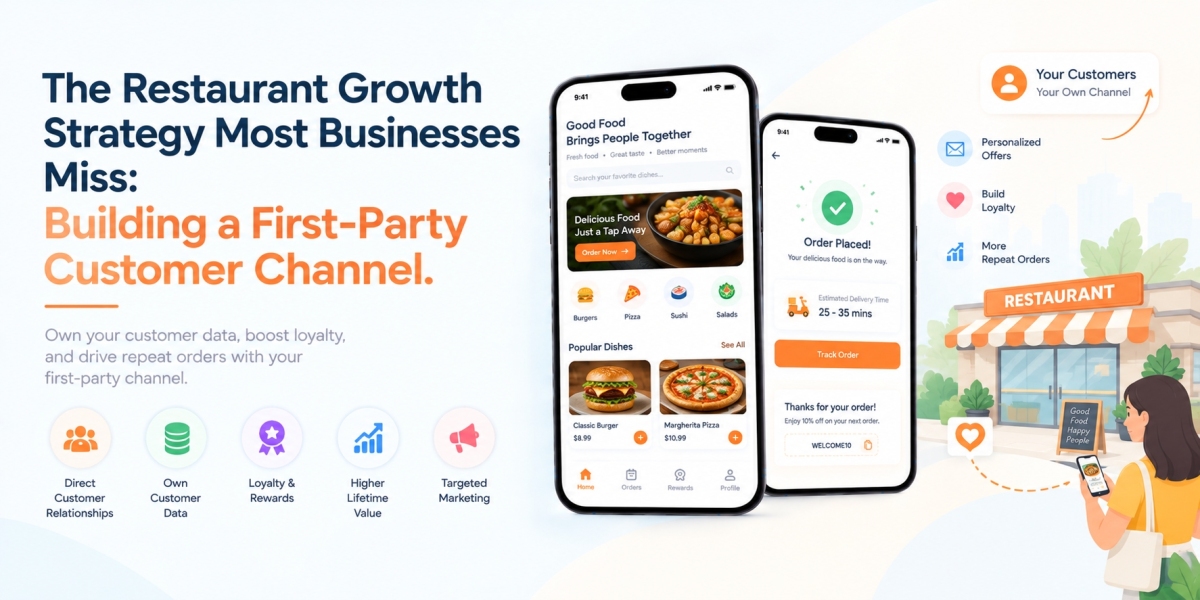

Restaurants spend heavily to attract customers.
But what happens after the first order?
If that customer discovers the restaurant through a third-party aggregator, the restaurant may receive the order—but the relationship often stays with the platform. The next time that customer wants dinner, the restaurant has to compete for their attention all over again.
That is where first-party customer channels become a powerful growth strategy.
Instead of treating every order as an individual transaction, restaurants can use their own digital platform to turn customers into a long-term audience.
The First Order Is Only the Beginning
A customer's first purchase shouldn't be the end goal.
The real opportunity begins when restaurants can understand what happens after that order.
What did the customer buy?
How frequently do they order?
Which dishes do they prefer?
When are they most likely to return?
With a direct ordering channel, this information can help restaurants create more relevant offers and experiences instead of sending the same promotion to everyone.
The objective shifts from getting another order to building another repeat customer.
Your Customer List Can Become a Growth Engine
A restaurant's customer database is more than a collection of names and order histories.
It can become one of its most valuable marketing assets.
Restaurants can segment customers based on ordering behavior and create targeted campaigns around birthdays, favorite meals, inactive customers, lunch habits, weekend orders, or new menu launches.
A customer who hasn't ordered for 30 days might receive a comeback offer.
A regular pizza customer might receive a new-pizza recommendation.
A weekend diner could receive an exclusive Saturday promotion.
That level of personalization is difficult when the restaurant has limited control over the customer relationship.
Turn Marketing From a Cost Into a Repeatable Channel
There is another advantage.
Every new customer acquired through an independent channel can potentially be reached again without starting the acquisition process from zero.
Push notifications, loyalty rewards, personalized offers, referral campaigns, and exclusive app promotions can bring customers back directly.
Over time, this creates a marketing loop:
Acquire → Order → Engage → Reorder → Recommend → Repeat.
The restaurant isn't constantly rebuilding demand. It is gradually building an audience it can communicate with.
The Bigger Opportunity Is Brand Ownership
Third-party marketplaces can provide valuable exposure, but restaurants are still one listing among many.
A first-party channel changes that dynamic.
The customer interacts with the restaurant's branding, menu, loyalty program, promotions, and ordering experience. This creates more opportunities to build recognition and differentiate beyond price or marketplace visibility.
For growing restaurants, that brand familiarity can become a competitive advantage.
Build the Channel Before You Need It
The smartest time to build a direct customer channel isn't when aggregator costs become unbearable.
It's while the restaurant is growing.
A white-label restaurant app gives businesses a ready-made foundation for direct ordering, customer engagement, loyalty, personalized promotions, payments, and order management without developing an entire platform from scratch.
SpotnEats helps restaurants turn this strategy into a branded digital channel, giving businesses greater control over customer relationships while supporting direct ordering, loyalty programs, personalized promotions, payments, analytics, and multi-location operations.
The future of restaurant growth may not simply be about getting more orders.
It may be about owning the channel that brings customers back.