
Introduction
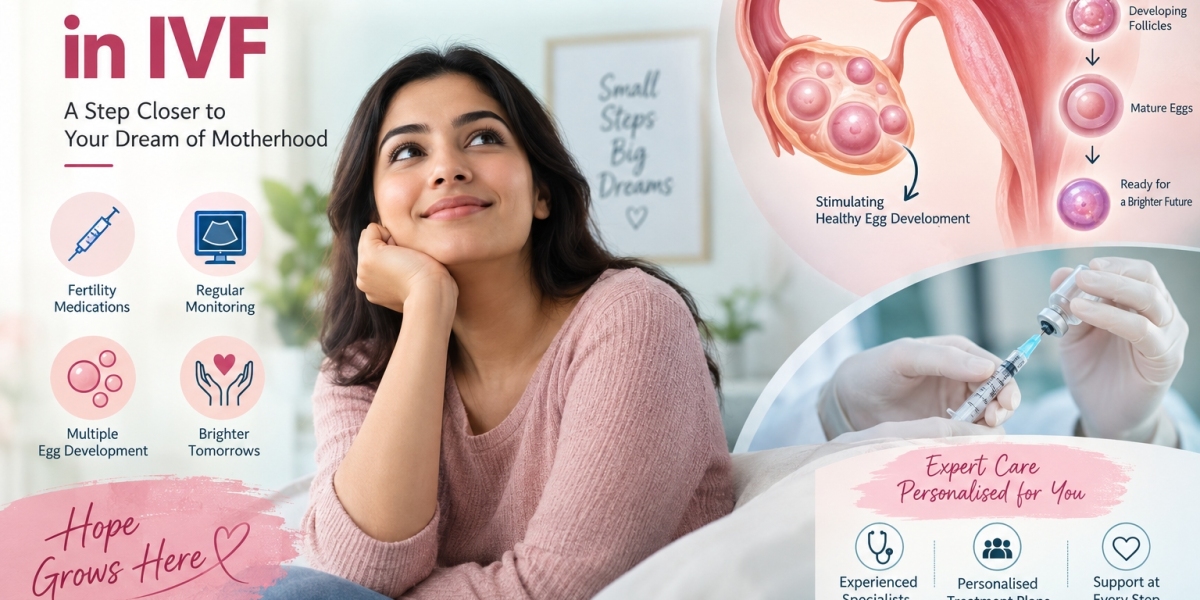
Ovarian stimulation is one of the most important stages of IVF treatment. It uses fertility medicines to encourage the ovaries to develop multiple mature eggs instead of the single egg that usually develops during a natural menstrual cycle. These eggs can then be collected and fertilised in a laboratory.
If you are considering IVF, you may have questions such as: How do the injections work? How many days will I need them? Will they hurt? What happens if my ovaries produce too many eggs?
Understanding the process can make treatment feel much less confusing. Think of ovarian stimulation as preparing a garden for harvest—the goal is not simply to grow as many plants as possible, but to encourage a healthy number of good-quality eggs that can be collected safely.
Learn how ovarian stimulation in IVF works, medicines, monitoring, risks, and what to expect with the best IVF specialist in New Delhi
The exact medicines and doses are personalised according to factors such as age, ovarian reserve, previous treatment response and medical history. Your fertility specialist will monitor your response throughout the process.
Table of Contents
| Sr# | Headings |
|---|---|
| 1 | What Is Ovarian Stimulation in IVF? |
| 2 | Why Is Ovarian Stimulation Needed? |
| 3 | How Ovarian Stimulation Works |
| 4 | Common Medicines Used During Stimulation |
| 5 | When Does Ovarian Stimulation Begin? |
| 6 | How Long Does Ovarian Stimulation Take? |
| 7 | Monitoring During Ovarian Stimulation |
| 8 | What Is the Trigger Injection? |
| 9 | What Does Egg Retrieval Have to Do With Stimulation? |
| 10 | Common Side Effects |
| 11 | Ovarian Hyperstimulation Syndrome |
| 12 | Factors That Affect Your Response |
| 13 | Lifestyle and Self-Care During Stimulation |
| 14 | Choosing an IVF Specialist |
| 15 | Frequently Asked Questions |
What Is Ovarian Stimulation in IVF?
Ovarian stimulation is the use of fertility medicines to encourage the ovaries to develop several follicles. A follicle is a small fluid-filled structure in the ovary that contains an immature egg.
During a natural menstrual cycle, usually one dominant follicle develops and releases an egg. During IVF, the aim is generally to develop multiple follicles so that several eggs may be available for collection.
This is important because not every collected egg will necessarily fertilise, develop into an embryo or result in a pregnancy. Having multiple eggs gives the IVF team more opportunities during the laboratory stages of treatment.
However, more eggs do not automatically mean a higher chance of success. The objective is a safe, personalised response rather than simply producing the largest possible number of eggs.
Why Is Ovarian Stimulation Needed?
IVF involves collecting eggs from the ovaries, fertilising them with sperm in a laboratory and transferring an embryo into the uterus. Because only some eggs may eventually develop into suitable embryos, stimulation helps provide several eggs for the IVF process.
Without stimulation, there may be only one naturally developing egg available for collection.
The main goals of stimulation include:
Developing multiple follicles
Allowing several eggs to mature
Giving the embryology team more eggs to work with
Controlling the timing of egg maturation
Preparing for planned egg retrieval
The treatment must still be carefully controlled. Excessive ovarian response can increase the risk of complications such as ovarian hyperstimulation syndrome (OHSS).
How Ovarian Stimulation Works
The process varies between patients, but a typical IVF stimulation cycle involves several stages.
1. Initial Assessment
Before stimulation begins, your fertility specialist may review your medical history and perform tests such as ultrasound and blood tests. Ovarian reserve assessment can help estimate how your ovaries may respond to fertility medicines.
Factors such as age, ovarian reserve, previous IVF response and certain reproductive conditions may influence the treatment plan.
2. Starting Fertility Medicines
Medicines containing hormones such as follicle-stimulating hormone (FSH), sometimes combined with other hormones, are used to encourage follicular development.
These medicines are commonly administered as injections under the skin.
3. Preventing Premature Ovulation
Depending on the IVF protocol, another medicine may be used to prevent the ovaries from releasing an egg before the planned retrieval.
This gives the medical team greater control over the timing of egg collection.
4. Monitoring Follicle Growth
Ultrasound scans are performed during stimulation to observe follicle development. Blood tests may also be used to assess hormone levels.
The medicine dose may be adjusted depending on how your ovaries respond.
5. Triggering Final Egg Maturation
Once the follicles have developed sufficiently, a trigger medicine is given to help the eggs complete their final maturation before collection.
6. Egg Retrieval
Egg collection is then scheduled at a carefully calculated time. The eggs are collected from the follicles and taken to the laboratory for fertilisation.
Common Medicines Used During Stimulation
Your medication plan should always be prescribed and monitored by your fertility specialist. Do not change the dose or timing yourself.
Common categories of medicines include:
FSH Medicines
FSH stimulates the ovaries to encourage several follicles to grow. In a natural cycle, FSH plays an important role in follicular development; during IVF, medication is used to provide controlled stimulation.
LH-Containing Medicines
Some treatment plans may include medicines containing luteinising hormone (LH), depending on individual circumstances.
Ovulation-Suppressing Medicines
Medicines may be used during certain IVF protocols to prevent premature ovulation.
Trigger Medicines
A trigger injection is given when the follicles are ready. It helps coordinate final egg maturation and allows the clinic to plan egg retrieval.
The right medicine is not necessarily the same for every patient. A protocol that works well for one person may need to be modified for another.
When Does Ovarian Stimulation Begin?
The timing depends on the IVF protocol selected by your fertility team.
Some protocols involve preparing or temporarily suppressing the natural menstrual cycle before stimulation. Other protocols may begin stimulation earlier in the menstrual cycle.
Your clinic will provide a personalised medication calendar showing:
When to start each medicine
How much medicine to use
When to attend ultrasound appointments
When blood tests are required
When to take the trigger injection
When egg retrieval is expected
Following the schedule accurately is extremely important because the timing of medicines can affect the treatment cycle.
How Long Does Ovarian Stimulation Take?
The stimulation phase commonly involves approximately 10 to 14 days of hormone injections, although the exact duration varies from patient to patient. Some treatment protocols also include medicines before or alongside stimulation.
You should not worry if your treatment takes slightly longer or shorter than someone else's.
Why? Because your ovaries may respond differently from another patient's ovaries.
Your doctor may continue stimulation for additional days if follicles need more time to develop, or adjust the medication based on ultrasound and hormone results.
Monitoring During Ovarian Stimulation
Monitoring is a crucial part of IVF stimulation.
During appointments, your fertility team may use ultrasound to assess:
The number of developing follicles
The size of follicles
The appearance of the ovaries
The thickness and appearance of the uterine lining
Whether medication doses need adjustment
Blood tests may also be used to assess hormone levels.
This monitoring helps your doctor balance two goals: obtaining an appropriate number of mature eggs while reducing the risk of an excessive ovarian response.
Regular monitoring is particularly important because ovarian response can change during treatment.
What Is the Trigger Injection?
The trigger injection is given when the follicles have reached an appropriate stage of development.
It helps the eggs complete their final maturation so they can be collected at the planned time.
Timing is extremely important. Your clinic will tell you exactly when to take the trigger injection and when to arrive for egg retrieval.
Patients should avoid changing the timing without speaking with their fertility team.
A trigger injection does not mean that the IVF process is finished. It is the step that prepares the ovaries for the next stage—egg retrieval.
What Does Egg Retrieval Have to Do With Stimulation?
Ovarian stimulation prepares the follicles; egg retrieval collects the eggs.
Egg retrieval is generally performed using an ultrasound-guided procedure in which a needle is passed through the vaginal wall into the ovaries to collect fluid from the follicles. The laboratory team then looks for eggs in the collected fluid.
The retrieved eggs are then assessed and, where appropriate, fertilised with sperm.
Some clinics use conventional IVF, while others may recommend intracytoplasmic sperm injection (ICSI) in selected situations.
After fertilisation, embryos may be monitored in the laboratory before an embryo transfer or freezing, depending on the treatment plan.
Common Side Effects of Ovarian Stimulation
It is normal to experience some physical changes during ovarian stimulation.
Possible symptoms include:
Bloating
Mild abdominal discomfort
Breast tenderness
Headache
Nausea
Mood changes
Feeling tired
A feeling of fullness in the abdomen
These symptoms can occur as the ovaries enlarge and hormone levels change.
Mild discomfort does not necessarily mean something is wrong. However, severe or rapidly worsening symptoms should never be ignored.
Contact your fertility clinic promptly if you experience significant abdominal pain, severe bloating, vomiting, faintness, breathing difficulty or other concerning symptoms.
Ovarian Hyperstimulation Syndrome
One of the complications associated with ovarian stimulation is ovarian hyperstimulation syndrome (OHSS).
OHSS occurs when the ovaries respond too strongly to fertility medicines. The ovaries may become enlarged and, in more serious cases, fluid can move into the abdomen.
People with certain risk factors, including some patients with PCOS, may have a higher risk of excessive ovarian response.
Possible symptoms of OHSS include:
Significant abdominal swelling
Increasing abdominal pain
Nausea or vomiting
Rapid weight gain
Reduced urination
Difficulty breathing
Severe symptoms require urgent medical attention.
Fortunately, fertility teams have several strategies for reducing risk, including individualising medication doses, close monitoring, modifying the stimulation protocol and, in appropriate circumstances, freezing embryos for later transfer.
Factors That Affect Your Response to Stimulation
Not every woman responds to fertility medicines in the same way.
Several factors may influence ovarian response, including:
Age
Age can affect ovarian reserve and egg quality. Your doctor will consider your age when planning treatment.
Ovarian Reserve
Tests such as ovarian reserve assessment can provide information about how the ovaries may respond to stimulation.
Previous IVF Response
If you have undergone IVF previously, your earlier response may help your doctor plan a future protocol.
PCOS
Some women with PCOS may produce a large number of follicles when stimulated and therefore require careful monitoring.
Endometriosis and Other Conditions
Certain reproductive or medical conditions may affect ovarian response and the overall IVF strategy.
There is no single stimulation protocol that is perfect for everyone. Personalisation is one of the most important parts of fertility treatment.
Lifestyle and Self-Care During Stimulation
You do not need to put your entire life on hold during ovarian stimulation. However, your fertility team may recommend some temporary changes.
Stay Hydrated
Drink fluids regularly unless your doctor has advised you otherwise.
Eat Balanced Meals
Focus on nutritious meals containing vegetables, fruits, whole grains, protein and healthy fats.
Avoid Smoking and Recreational Drugs
Smoking can negatively affect reproductive health. Discuss alcohol and other substances with your fertility specialist.
Choose Gentle Physical Activity
Walking and other gentle activities may be suitable for many patients, but your clinic may recommend avoiding strenuous exercise as the ovaries enlarge.
Take Medicines Exactly as Prescribed
This is particularly important during stimulation. Missing or incorrectly timing an injection can interfere with the treatment plan.
Look After Your Emotional Health
IVF can be emotionally demanding. Counselling, support groups, family support or conversations with your healthcare team may help.
Choosing an IVF Specialist
Choosing a fertility specialist is an important decision because ovarian stimulation requires careful planning and monitoring.
If you are searching online for the best IVF specialist in New Delhi, look beyond a title or advertisement. Consider the doctor's qualifications, experience, clinic facilities, laboratory support, communication style and approach to personalised treatment.
Useful questions to ask your fertility specialist include:
What ovarian stimulation protocol is suitable for me?
How will you assess my ovarian reserve?
How frequently will I need ultrasound monitoring?
What side effects should I expect?
Am I at increased risk of OHSS?
What will happen if I produce fewer or more follicles than expected?
What is the plan for egg retrieval?
What additional IVF costs should I expect?
A good consultation should give you an opportunity to understand your treatment rather than simply receiving a list of medicines.
The American Society for Reproductive Medicine also provides patient resources and information about reproductive health and fertility treatment.
Conclusion
Ovarian stimulation is a carefully controlled stage of IVF designed to help the ovaries develop multiple eggs for collection. It involves fertility medicines, regular monitoring and precise timing before egg retrieval.
Every patient's treatment can be different. The goal is not simply to produce the highest number of eggs, but to achieve an appropriate response while maintaining safety. Working closely with an experienced fertility team can help you understand each stage and make informed decisions about your treatment.
If you are considering IVF, speak with a qualified fertility specialist about your individual medical history, ovarian reserve, treatment options and potential risks.
Frequently Asked Questions
1. Is ovarian stimulation painful?
Most fertility stimulation medicines are given as small injections under the skin. Some patients experience mild discomfort at the injection site, while hormonal changes may cause bloating, breast tenderness or mild abdominal discomfort. Your experience can vary.
2. How many days do ovarian stimulation injections continue?
The stimulation injections commonly continue for around 10 to 14 days, although the exact duration depends on how your ovaries respond. Ultrasound and, when appropriate, blood tests help determine when the follicles are ready.
3. Does producing more eggs mean IVF will be more successful?
Not necessarily. The number of eggs is only one part of IVF. Egg maturity, egg quality, fertilisation, embryo development, age and several other factors can influence the overall outcome.
4. What happens if my ovaries respond too strongly?
Your fertility team may adjust the medication dose, change the treatment approach, monitor you more closely or use other strategies to reduce the risk of OHSS. In some cases, embryo transfer may be postponed and embryos frozen for later use.
5. Can I work during ovarian stimulation?
Many people can continue their usual work and daily activities during stimulation, depending on how they feel and the nature of their job. However, your doctor may recommend reducing strenuous physical activity as the ovaries become enlarged. Always follow your clinic's individual advice.