
Metal fabrication continues to evolve as manufacturers look for more precise, efficient, and flexible ways to process different materials. Among the technologies supporting this development, the laser cutting welding machine has become an important solution for workshops, factories, engineering businesses, and industrial production environments. By combining laser cutting and welding capabilities in one system, this type of equipment can support multiple stages of metal processing while maintaining consistent working results.
A laser-based system can be used for applications ranging from preparing metal components to joining finished parts. With the right configuration, operators can process materials such as stainless steel, carbon steel, aluminum, galvanized sheets, and other commonly used metals. This makes laser technology suitable for businesses working with different production requirements.
What Is a Laser Cutting Welding Machine?
A laser cutting welding machine is an industrial laser system designed to perform cutting and welding operations. Cutting is generally used to separate sheets, plates, tubes, or components according to specific dimensions and designs, while welding is used to join two or more metal pieces together.
Traditional fabrication often requires separate equipment for different operations. A combined laser system can bring these processes into a more organized production workflow. Depending on the machine configuration, users can switch between cutting and welding tasks according to the requirements of a project.
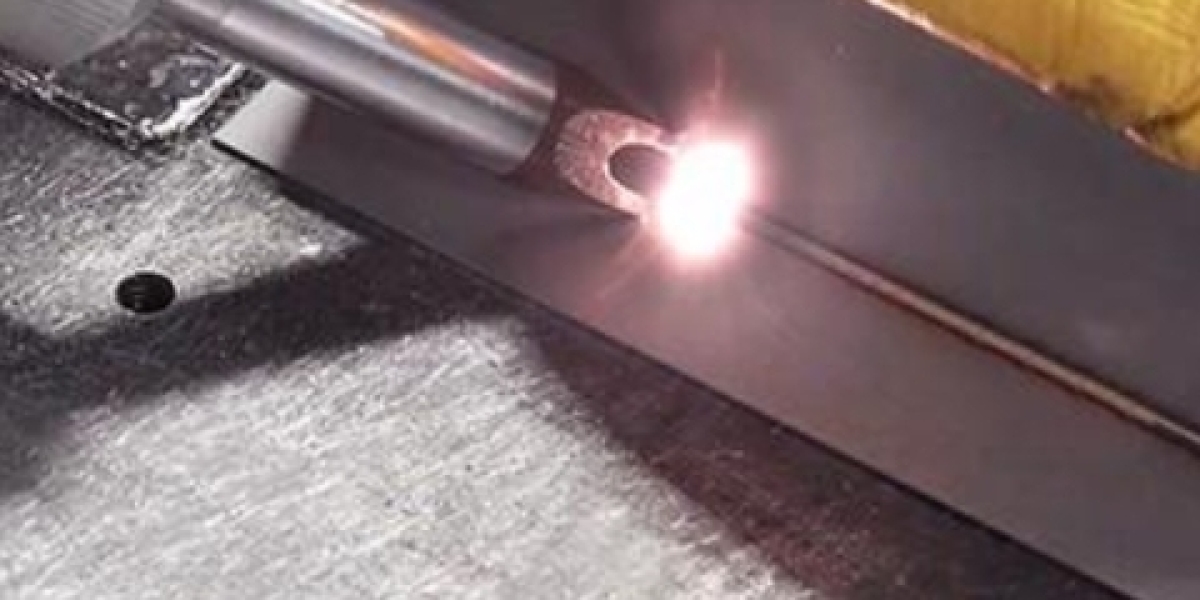
Laser processing works by directing concentrated energy onto the material. During cutting, the laser melts or vaporizes a precisely controlled area to create the required shape. During welding, the laser creates a controlled molten area between metal components, allowing them to form a strong joint as the material cools.
How Laser Cutting Supports Metal Fabrication
Cutting is one of the most important stages in metal manufacturing. Before components can be assembled or welded, they often need to be produced in exact dimensions. A laser cutting system can follow digital designs and produce complex shapes with controlled movement.
The process is suitable for straight cuts, curves, holes, slots, patterns, and customized component designs. Computer-controlled operation allows production teams to prepare repeatable parts without manually marking every cutting line.
For businesses producing brackets, machine components, enclosures, frames, panels, decorative metal products, and industrial parts, accurate cutting can simplify later assembly work. Properly prepared components can also help reduce unnecessary adjustments during welding and finishing.
Laser Welding for Precise Assembly
After components have been cut, welding may be required to create the final structure. Laser welding focuses energy on a relatively small working area, allowing operators to work on detailed joints and components.
Laser welding can be applied to different types of assemblies, including sheet-metal structures, equipment frames, cabinets, mechanical components, and customized products. The exact welding process depends on the material, thickness, joint design, laser power, and production requirements.
For manufacturers dealing with repeated production, controlled laser welding can also help establish consistent working procedures. Operators can follow defined parameters for particular materials and applications, helping maintain uniformity across production batches.
Materials Commonly Processed
A major consideration when selecting a laser cutting welding machine is the material being processed. Different metals respond differently to laser energy, so machine configuration and operating parameters should match the intended application.
Stainless steel is widely used in industrial equipment, kitchen products, architectural structures, and fabrication projects. Carbon steel is common in machinery, construction components, frames, and general manufacturing. Aluminum is frequently used where lightweight structures are required.
Some systems can also process galvanized steel and other metal materials. Before purchasing equipment, manufacturers should confirm the recommended material range, cutting thickness, welding requirements, laser source, and available power configurations.
Digital Production and Machine Control
Modern laser equipment commonly integrates computerized controls into the production process. Designs can be prepared digitally and transferred to the machine's control system for processing.
This approach can make it easier to reproduce parts and adjust designs when production requirements change. Instead of manually creating each component, operators can work from prepared digital files and configure the required cutting paths or welding parameters.
For companies producing customized orders, digital control can be particularly useful. Different customers may require different dimensions, shapes, or designs, and computerized processing allows production teams to move between projects more systematically.
Applications Across Different Industries
The flexibility of laser processing makes combined cutting and welding equipment useful across many industries. Metal fabrication workshops can use these machines for customized components and general manufacturing work.
Automotive-related production can involve laser processing for various metal components and assemblies. Machinery manufacturers can produce frames, covers, brackets, and structural parts. Furniture manufacturers may use laser cutting for metal tables, shelves, frames, and decorative elements.
Construction-related businesses can also require accurately cut metal components for structural and architectural projects. In addition, electrical cabinet production, kitchen equipment manufacturing, agricultural machinery, signage, and customized metal-product businesses can make use of laser processing technology.
Choosing the Right Machine Configuration
Every manufacturing operation has different requirements, so selecting a machine should begin with the intended applications rather than simply focusing on machine specifications.
Businesses should consider the type of metal they regularly process, maximum cutting thickness, required welding thickness, production volume, work area, laser power, automation requirements, and available workshop space.
The machine's control system and operating interface should also be considered. An understandable control environment can make daily operation more manageable, particularly when several operators work with the same equipment.
Another important consideration is after-sales support. Laser equipment requires proper installation, maintenance, consumable replacement, and technical assistance. Choosing a supplier that can provide appropriate support can help businesses manage their equipment over the long term.
Production Planning and Workflow
A successful laser fabrication operation involves more than purchasing equipment. Material preparation, digital design, cutting parameters, welding settings, operator training, inspection, and finishing should all be considered as part of the workflow.
Before production begins, operators should verify the material type and thickness and select appropriate processing parameters. Correct positioning and preparation are also important for obtaining consistent results.
After cutting, components can be inspected before they move to the welding stage. This helps identify dimensional problems early and prevents unsuitable parts from entering further production stages.
For welding operations, clean surfaces and correct joint preparation can contribute to better results. Regular inspection of completed joints can also help manufacturers maintain their required production standards.
Maintenance and Operator Training
Regular maintenance is an important part of operating industrial laser equipment. The machine should be kept clean and inspected according to the manufacturer's maintenance recommendations.
Optical components, protective parts, cooling systems, mechanical movement systems, and other equipment components may require periodic inspection. Following the manufacturer's instructions can help maintain stable machine operation.
Operator training is equally important. Workers should understand machine controls, material handling, operating procedures, maintenance requirements, and workplace safety instructions before using the equipment.
Proper training can help operators work more confidently while reducing avoidable operating errors. Businesses should also establish clear procedures for starting, operating, stopping, and maintaining their laser systems.
Supporting Customized Metal Production
One of the important uses of laser technology is customized manufacturing. Customers may request different sizes, patterns, holes, shapes, or welded structures for individual projects.
A digitally controlled laser cutting welding machine can support these changing requirements by allowing production teams to work with different designs and component specifications.
This can be particularly useful for small and medium-sized fabrication businesses that handle varied orders instead of producing only one standardized product. A flexible production setup allows workshops to serve multiple market segments while organizing different projects through a common manufacturing process.
Future of Laser-Based Fabrication
Laser technology is continuing to develop alongside automation, digital manufacturing, and modern production management. Manufacturers are increasingly looking for equipment that can integrate different processes and support more efficient workflows.
As industrial production becomes more customized, flexible laser systems are expected to remain relevant for businesses that require accurate metal processing. Improvements in controls, automation, machine design, and laser technology can further expand the applications of combined cutting and welding systems.
For businesses planning to upgrade their fabrication capabilities, understanding current production requirements is the first step toward selecting an appropriate machine. The right configuration can then be matched with the materials, products, workload, and workshop environment.
Final Thoughts
A laser cutting welding machine brings cutting and welding processes together within a modern metal fabrication environment. From preparing accurately shaped components to joining metal assemblies, laser technology can support a wide range of manufacturing applications.