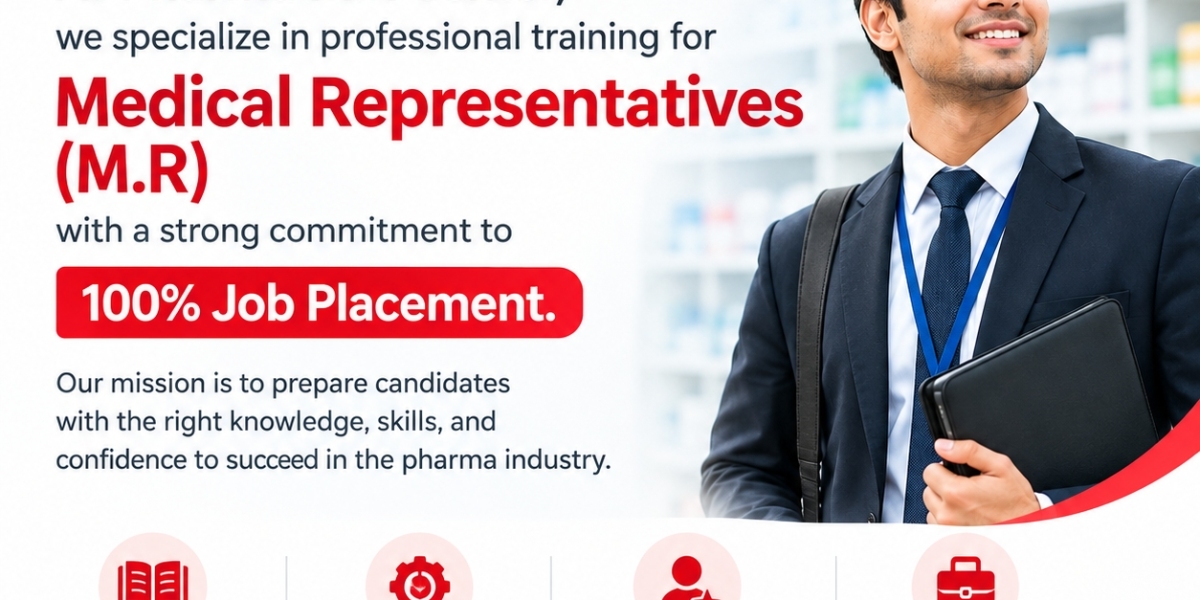

An interview for a pharmaceutical sales position is an opportunity to demonstrate more than your academic qualification. Employers may want to understand how you communicate, how well you understand the responsibilities of the role, whether you are comfortable with fieldwork, and how willing you are to learn.
For a fresher, preparing for a Medical Representative Job interview can seem difficult because there may be uncertainty about the questions that will be asked. However, effective preparation does not require memorising hundreds of answers. It is more useful to understand the position, revise relevant pharmaceutical concepts, research the company, and practise explaining your thoughts clearly.
A medical representative works in a professional environment where communication, product knowledge, planning, and responsible behaviour are important. Your interview preparation should therefore reflect these areas.
Understand the Job Before Preparing Your Answers
Before you begin practising interview questions, understand what the position involves.
A medical representative may be responsible for:
- Visiting healthcare professionals
- Presenting approved product information
- Managing an assigned territory
- Planning daily visits
- Maintaining customer information
- Following up professionally
- Recording field activities
- Preparing reports
- Coordinating with managers
- Working toward assigned objectives
The responsibilities vary between companies.
Read the job description carefully and identify the skills the employer has specifically mentioned. Your preparation should then focus on those requirements.
Research the Company Properly
Company research is one of the simplest ways to improve your interview preparation.
Before attending an interview, learn about:
- Company background
- Main business areas
- Product categories
- Locations
- Target markets
- Position responsibilities
- Training process
- Working environment
Do not attempt to memorise the entire company website.
Instead, understand enough to answer basic questions about why you are interested in the organization and what you know about its business.
If the interviewer asks, "What do you know about our company?" you should be able to provide a clear and specific response rather than saying only that it is a pharmaceutical company.
Prepare Your Introduction
Your introduction often creates the first opportunity to communicate with the interviewer.
Keep it structured and relatively brief.
A useful format is:
Name → Education → Relevant experience or project → Skills → Career interest
A fresher might mention their degree, an internship or academic project, relevant communication skills, and their interest in pharmaceutical sales.
Practise the introduction several times.
However, do not memorise every word. If your answer sounds rehearsed, it can become difficult to respond naturally when the interviewer asks follow-up questions.
Revise Your Academic Subjects
Freshers should expect questions about their educational background.
If you studied pharmacy or a related science subject, revise important concepts from your course.
Focus on areas relevant to pharmaceutical sales, such as:
- Basic pharmacology
- Dosage forms
- Therapeutic categories
- Pharmaceutical terminology
- Active ingredients
- General medicine-related concepts
- Product information
You do not need to revise your entire academic syllabus in one night.
Identify the topics most closely connected with the position and make sure you understand the fundamentals.
Strengthen Your Product Knowledge
If the employer has mentioned specific products or therapeutic categories, research them before the interview using appropriate and reliable sources.
Understand basic information such as:
- Product composition
- Dosage form
- Therapeutic category
- Approved uses
- Relevant precautions
- Important product characteristics
Do not rely on random online information.
For pharmaceutical communication, accuracy is important.
If you are asked something you do not know during the interview, avoid inventing an answer. Explain that you would verify the information through an appropriate source.
This demonstrates responsible communication.
Practise Explaining a Product
Some employers may test your ability to present information.
You may be asked to explain a product as though you were speaking with a healthcare professional.
When practising, concentrate on structure rather than memorizing a sales speech.
You can follow:
Introduction → Relevant product information → Key points → Questions → Professional closing
Keep your explanation concise.
Avoid making unsupported claims or promising specific results.
The interviewer may be more interested in your communication style, organization, listening ability, and confidence than in how aggressively you try to sell the product.
Prepare for Questions About Fieldwork
A Medical Representative Job is generally field-oriented, so be prepared to discuss travel and outdoor work.
Interviewers may ask:
- Are you comfortable travelling?
- Can you manage an assigned territory?
- Are you comfortable meeting healthcare professionals?
- How would you organize multiple visits?
- How would you handle an unexpected schedule change?
Answer honestly.
If you are comfortable with fieldwork, explain why.
If you have concerns about travel, understand the actual territory and working requirements before accepting the position.
Practise Situational Questions
Situational questions are useful because they show how you might behave in practical circumstances.
For example:
A healthcare professional is too busy to speak.
Your response should demonstrate respect for their time and professional behaviour.
Someone asks you a question you cannot answer.
Explain that you would verify the information rather than guessing.
A planned appointment is cancelled.
Discuss how you would reorganize the rest of your schedule.
You receive negative feedback from your manager.
Explain how you would understand the feedback, identify the problem, and work on improving it.
There is rarely one perfect answer to every situation. The interviewer is often looking at your reasoning and professional attitude.
Work on Communication, Not Just Answers
You can prepare excellent answers and still struggle if your communication is unclear.
During practice, pay attention to:
- Speaking speed
- Clarity
- Voice volume
- Word choice
- Listening
- Pauses
- Body language
Avoid speaking extremely fast because of nervousness.
Take a moment to understand the question before responding.
If you do not understand something, politely ask the interviewer to repeat or clarify the question.
Improve Your Body Language
Non-verbal communication can influence the overall impression you create.
During the interview:
- Sit comfortably
- Maintain natural eye contact
- Keep your posture professional
- Avoid constantly moving your hands
- Listen attentively
- Avoid looking at your phone
- Smile naturally when appropriate
Do not try to create exaggerated confidence through aggressive gestures.
Calm and attentive behaviour is generally more appropriate for a professional interview.
Be Ready to Discuss Your Fresher Status
Do not feel uncomfortable about having no professional experience.
If asked about your lack of experience, focus on what you have done to prepare yourself.
You can discuss:
- Academic projects
- Internships
- Presentations
- Training
- Workshops
- Communication practice
- Pharmaceutical knowledge
- Relevant extracurricular activities
The objective is to show that although you are new to professional employment, you have taken steps to become prepared.
Never claim experience that you do not have.
Prepare for Common Personal Questions
Interviewers may ask questions about your career plans and personality.
Examples include:
- Why did you choose your course?
- Why do you want to work in pharmaceuticals?
- Why are you interested in sales?
- What are your strengths?
- What are you currently improving?
- Where do you see yourself developing professionally?
- What motivates you at work?
Keep your answers genuine.
Avoid giving highly polished answers that do not reflect your actual goals.
If you are interested in learning pharmaceutical sales and developing professional communication, explain that honestly.
Know Your Resume Thoroughly
Your resume should be treated as an interview preparation document.
Review everything you have included.
If you mention an internship, know:
- Where you completed it
- What your responsibilities were
- What you learned
- What skills you developed
If you mention an academic project, be prepared to explain its purpose and your contribution.
If you list a skill, be prepared to demonstrate or discuss it.
A simple and accurate resume is easier to defend than one filled with unrelated claims.
Prepare Your Documents
Do not leave document preparation until the last minute.
Depending on the employer's instructions, you may need:
- Resume copies
- Educational certificates
- Identification documents
- Internship certificates
- Training certificates
- Passport-size photographs
- Other requested documents
Keep everything organized in a folder.
Also save digital copies where appropriate.
Plan Your Journey
Arriving late can create unnecessary stress before the interview even begins.
Check the interview location in advance and estimate your travel time.
Allow additional time for:
- Traffic
- Parking
- Public transportation delays
- Finding the office
- Security procedures
Try to arrive with enough time to settle down rather than rushing into the interview.
Dress Appropriately
A professional appearance is appropriate for a pharmaceutical interview.
Choose clean, well-maintained clothing that is suitable for a workplace environment.
Pay attention to:
- Clothing
- Shoes
- Grooming
- Hair
- Personal hygiene
- Overall presentation
You do not need expensive clothing.
Cleanliness, neatness, and appropriate presentation are more important.
Practise a Mock Interview
One of the most effective preparation methods is a mock interview.
Ask a friend, teacher, trainer, or experienced professional to ask you questions.
Include questions about:
- Your education
- Pharmaceutical knowledge
- Communication
- Fieldwork
- Sales
- Company research
- Situational problems
- Career goals
After the mock interview, review:
- Which answers were unclear?
- Did you speak too quickly?
- Did you provide unnecessary information?
- Did you listen properly?
- Were you able to explain your ideas confidently?
Repeat the exercise after making improvements.
Prepare Questions for the Interviewer
At the end of the interview, you may be asked whether you have any questions.
Use this opportunity to understand the role.
You could ask:
- What does the initial training period involve?
- What territory would the position cover?
- How is field travel managed?
- What reporting system does the team use?
- What are the main responsibilities during the first few months?
- How is performance evaluated?
Avoid asking only about salary and leave during the first conversation.
Understanding the actual job responsibilities is equally important.
Understand Salary and Employment Conditions
If compensation is discussed, understand the complete structure rather than focusing only on the headline figure.
Ask about:
- Fixed salary
- Incentives
- Travel reimbursement
- Performance-based payments
- Working hours
- Probation
- Training period
- Other employment conditions
The exact structure varies between companies.
Do not make assumptions about reimbursements, incentives, or working hours without confirming them.
What to Do on Interview Day
On the day of your Medical Representative Job interview, keep your approach simple.
Before entering:
- Turn your phone to silent
- Review your introduction
- Carry your documents
- Take a moment to relax
- Check that your appearance is neat
During the interview:
- Listen carefully
- Answer directly
- Avoid interrupting
- Ask for clarification when necessary
- Be honest
- Maintain professional body language
You do not need to rush through every answer.
A short pause before responding can help you organize your thoughts.
What to Do After the Interview
Your preparation can continue after the interview.
Write down the questions you were asked and identify areas where you struggled.
Perhaps you need to revise pharmaceutical terminology, improve your communication, or learn more about fieldwork.
This reflection can be especially useful if you attend another interview.
If the employer does not select you, treat the experience as information that can help improve your next attempt rather than assuming that one result defines your career prospects.
Seven-Day Preparation Plan
If you have one week before your interview, divide the preparation into manageable tasks.
Day 1: Study the job description and understand the responsibilities.
Day 2: Research the company and its business areas.
Day 3: Revise relevant pharmaceutical fundamentals.
Day 4: Prepare your introduction and practise communication.
Day 5: Practise product presentation and situational questions.
Day 6: Conduct a complete mock interview.
Day 7: Review your resume, documents, route, clothing, and final preparation.
This approach can be more effective than trying to memorise a large list of questions immediately before the interview.
Final Interview Checklist
Before leaving for your Medical Representative Job interview, make sure you have:
Read the job description
Researched the company
Prepared your introduction
Revised relevant pharmaceutical subjects
Reviewed product information where appropriate
Practised communication
Prepared for fieldwork questions
Completed a mock interview
Reviewed your resume
Prepared your documents
Planned your travel
Prepared a few questions for the interviewer
Conclusion
Preparing for a Medical Representative Job interview is mainly about demonstrating that you understand the profession and are ready to learn. Freshers do not need to pretend that they already have extensive pharmaceutical sales experience. Instead, they should show that their education, preparation, communication skills, and attitude provide a foundation for entering the industry.
Research the company, understand the position, revise relevant pharmaceutical concepts, and practise explaining information clearly. Prepare for questions about fieldwork, travel, communication, teamwork, product knowledge, and practical situations.
During the interview, remain honest and professional. If you do not know an answer, avoid guessing. If you need clarification, ask for it politely. Confidence should come from preparation rather than trying to appear perfect.
Finally, remember that interview preparation is a skill that improves with practice. Each interview can help you understand what employers expect and where you need further development. With consistent preparation, realistic expectations, and a willingness to learn, you can approach your first Medical Representative Job interview in a more organized and professional manner.