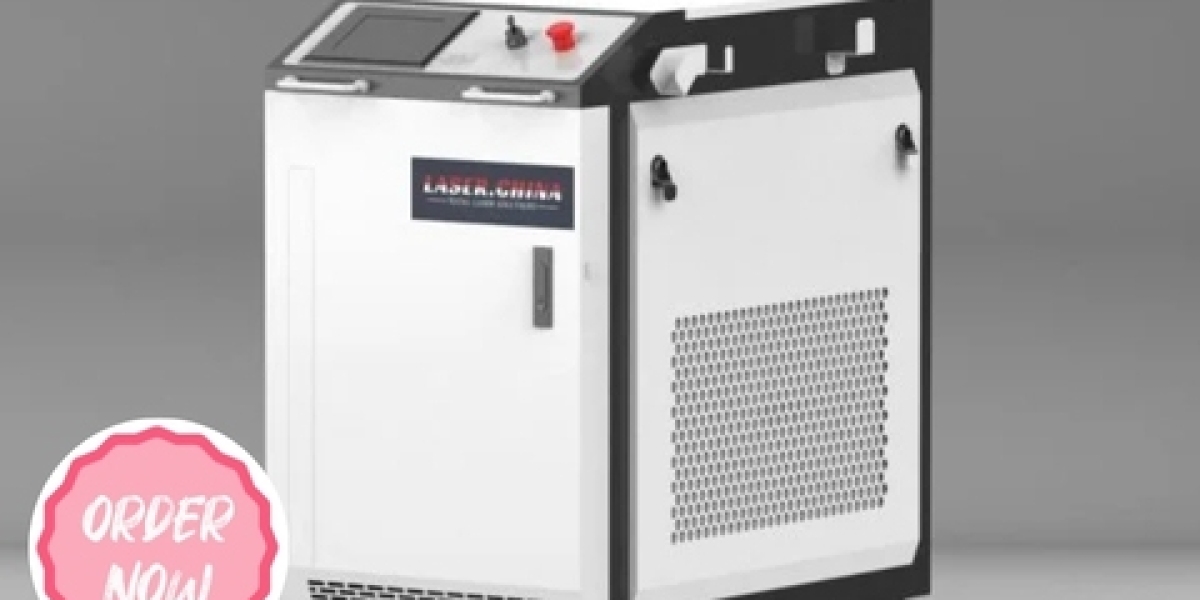

An Industrial laser cleaner is a modern surface-treatment system designed to remove unwanted materials from metal and other suitable surfaces using focused laser energy. Instead of relying on abrasive blasting, chemical solutions, or intensive manual scrubbing, laser cleaning directs controlled pulses or continuous laser energy toward contaminants.
This technology has become increasingly relevant in manufacturing, fabrication, maintenance, restoration, and industrial processing. As businesses look for more controlled and practical cleaning methods, laser-based systems provide a modern approach to surface preparation.
How Does an Industrial Laser Cleaner Work?
The cleaning process begins with a laser source that generates a concentrated beam. The beam is delivered toward the selected work area through an optical system. Operators can adjust parameters such as power, scanning speed, frequency, and other settings according to the material and contaminant being treated.
When the laser reaches the surface, the unwanted material absorbs the laser energy. Depending on the application, the contaminant can be rapidly heated, vaporized, fragmented, or detached from the substrate.
A scanning system moves the laser across the treatment area, allowing operators to clean specific sections or larger surfaces systematically. Different contaminants require different operating parameters, so professional equipment normally provides adjustable settings for various industrial applications.
Removing Rust from Industrial Components
Rust removal is one of the most recognized applications for industrial laser cleaning. Metal components exposed to moisture and air can develop oxidation that affects their appearance and may interfere with further manufacturing processes.
An Industrial laser cleaner can target rust layers on steel, iron, and other compatible metal surfaces. Operators can work across small areas such as tools and components or larger sections such as machinery parts and fabricated structures.
After rust has been removed, the prepared surface can be inspected and, where required, moved directly into subsequent processes such as painting, coating, welding, or maintenance.
Paint and Coating Removal
Industrial production and maintenance frequently require the removal of old paint, coatings, and surface treatments. Traditional methods can involve abrasive materials or chemical products, depending on the application.
Laser cleaning offers another approach by directing energy toward the coating layer. The correct laser parameters can help separate paint from the substrate while providing controlled treatment.
This makes laser technology useful for preparing metal surfaces before repainting, refurbishment, welding, or inspection. It can also be used in selected applications where only particular areas need to be treated rather than removing an entire coating system.
Oil, Grease, and Surface Contamination
Industrial machinery and components can accumulate oil, grease, carbon deposits, and other contaminants during production or operation. Before welding, coating, assembly, or inspection, these substances may need to be removed.
Laser cleaning can be used for targeted treatment of suitable surfaces. By controlling the laser settings and movement speed, operators can address contaminated areas with a highly focused process.
For manufacturing environments, this type of surface preparation can be incorporated into maintenance and production workflows where consistent cleaning is required.
Preparing Surfaces Before Welding
Surface preparation plays an important role in welding. Rust, paint, oxidation, oil, and other contaminants can interfere with the welding area and make preparation necessary before joining metal components.
An Industrial laser cleaner can be used to prepare selected welding areas by removing unwanted surface layers. The operator can focus the treatment on the required zone without mechanically scraping the entire component.
This application is particularly relevant in fabrication workshops, automotive production, machinery manufacturing, and repair environments where clean metal surfaces are frequently required before welding operations.
Industrial Applications Across Different Sectors
Laser cleaning technology can be adapted to numerous industrial environments. Metal fabrication companies can use it for preparing parts and removing oxidation. Automotive businesses can apply it to components, molds, tools, and maintenance tasks.
Manufacturing plants may use laser systems for equipment cleaning and production preparation. Shipbuilding and heavy engineering operations can also require the removal of rust, coatings, and contaminants from large metal surfaces.
Other potential applications include mold cleaning, restoration work, machinery maintenance, weld preparation, oxide removal, and localized paint stripping.
The appropriate system depends on the material, contaminant, surface condition, working area, and required production speed.
Handheld and Automated Laser Cleaning Systems
Industrial laser cleaning equipment is available in different configurations. Handheld systems are suitable for applications where operators need flexibility and direct control over the cleaning area. They can be moved around components and used for maintenance or workshop applications.
For larger production environments, automated laser cleaning systems can be integrated with machinery, robotic equipment, or production lines. Automation can provide repeatable movement patterns and consistent processing when the same cleaning operation is performed repeatedly.
Choosing between handheld and automated equipment depends on production requirements, component dimensions, cleaning volume, and workflow design.
Choosing the Right Laser Cleaning Equipment
Selecting an Industrial laser cleaner requires more than simply comparing laser power. Businesses should consider the materials they intend to process, the type and thickness of contaminants, the size of the working area, and the expected workload.
For example, light surface contamination may require a different setup from heavy rust or thick industrial coatings. A compact system may be appropriate for small components, while larger industrial operations may require equipment designed for extended operation and broader working areas.
It is also important to consider operator controls, scanning capability, cooling arrangements, safety systems, portability, and available technical support.
Testing the equipment on representative materials before purchasing can help determine whether the selected configuration matches the intended application.
Safety and Proper Operation
Laser cleaning equipment must be operated responsibly because industrial laser systems can produce powerful laser radiation. Appropriate protective measures are essential during operation.
Work areas should be arranged according to the equipment's safety requirements, and operators should receive proper training. Suitable protective equipment, controlled access, warning systems, ventilation, and appropriate extraction arrangements may be required depending on the cleaning application and equipment design.
Manufacturers' operating instructions should always be followed, and the system should be maintained according to the recommended schedule.
Integrating Laser Cleaning Into Production
For companies considering laser cleaning, integration should begin with an evaluation of existing cleaning procedures. Identify which processes involve rust, paint, oxidation, grease, oil, or other surface contaminants.
The next step is to determine where laser cleaning could fit into the workflow. It may be used before welding, before coating, during equipment maintenance, or as part of component refurbishment.
A practical evaluation can include cleaning speed, surface condition after treatment, operator requirements, equipment positioning, and compatibility with downstream processes. This approach allows businesses to select equipment based on actual production needs rather than general specifications alone.
Maintenance and Long-Term Equipment Care
Regular maintenance is important for keeping laser cleaning equipment operating consistently. Optical components should be inspected and maintained according to the manufacturer's recommendations. Cooling systems, electrical components, cables, lenses, and other system parts should also be checked periodically.
Keeping the work area clean and following the recommended operating procedures can help maintain reliable performance. Operators should also report unusual sounds, warning messages, reduced cleaning performance, or other irregularities before continuing demanding production work.
Proper care supports consistent operation and helps protect the investment made in industrial laser technology.
The Growing Role of Laser Surface Preparation
As manufacturing processes become more precise, surface preparation continues to play an important role in production quality. Companies need cleaning methods that can be adapted to different materials, contaminants, and production requirements.
Laser technology provides a controlled way to approach many surface-treatment tasks. Its ability to target specific areas makes it suitable for applications ranging from small components to industrial machinery.
An Industrial laser cleaner can therefore become an important part of a modern workshop or manufacturing operation when its capabilities are matched correctly with the required cleaning applications.
Final Thoughts
An Industrial laser cleaner provides a modern method for removing rust, paint, oxidation, oil, grease, and other contaminants from suitable surfaces. From welding preparation and machinery maintenance to manufacturing and refurbishment, laser cleaning can be incorporated into many industrial workflows.