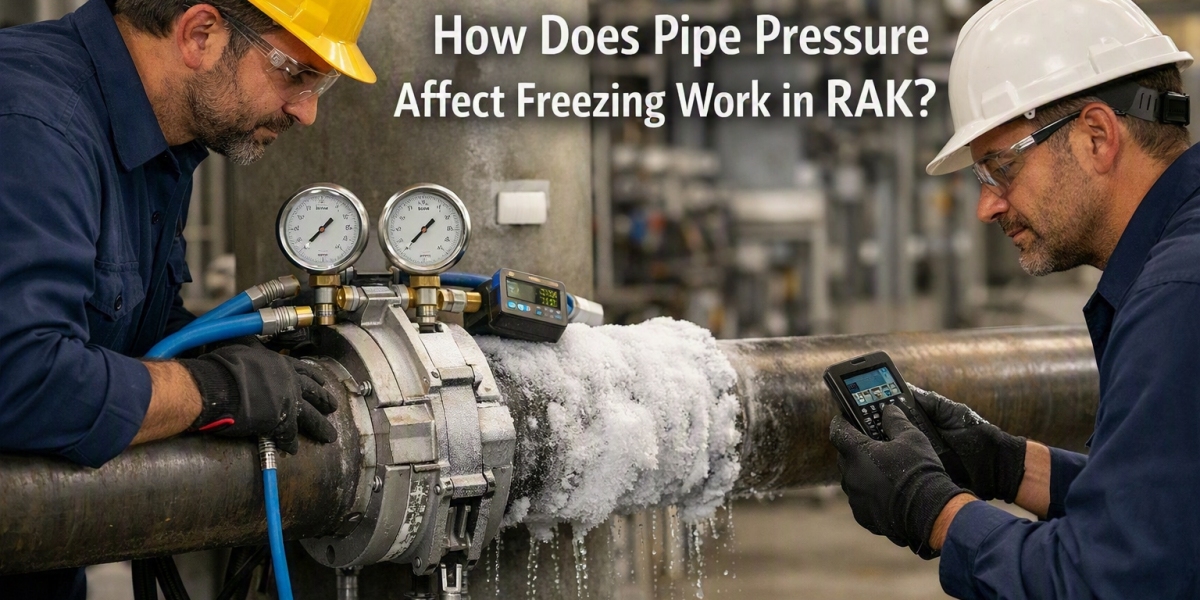

When temporary pipe isolation is needed, understanding pressure is an important part of the process. Pipe freezing Companies in Rak need to consider the pressure inside a pipe before starting a freezing operation. Pressure affects how water behaves, how quickly ice forms, and how safely the frozen section can hold the contents of the pipe.
What Is Pipe Freezing?
Pipe freezing is a method used to create a temporary ice plug inside a water-filled pipe. A cooling system is placed around a selected section of the pipe. As the temperature drops, the water inside the pipe freezes and forms a solid plug.
This plug can temporarily stop the movement of water. It may allow work to be carried out on another part of the system without draining the complete pipe network.
The method works best when the pipe contains a suitable liquid and the conditions are properly checked before freezing begins.
Why Does Pipe Pressure Matter?
Pressure changes the conditions inside the pipe. A pipe with higher internal pressure can place more force on the frozen section. The ice plug must remain stable while the work is being completed.
Before freezing starts, the pressure should therefore be measured and understood. The pipe material, diameter, wall thickness, liquid inside the pipe, and operating conditions should also be considered.
Pressure alone does not determine whether freezing will work. It is one part of a larger assessment.
How Pressure Affects Ice Plug Formation
When water freezes, it changes from a liquid into a solid. The freezing process starts at the cooled area and gradually moves inward.
If the water is under pressure, its freezing behavior can be slightly different from water at normal pressure. However, for practical pipe-freezing work, the more important issue is usually the pressure that the finished ice plug needs to withstand.
A strong and properly formed ice plug can temporarily resist the flow and pressure from the pipe system. If the plug is too small or not fully formed, it may not provide reliable isolation.
Higher Pressure Requires Careful Planning
Higher pipe pressure means that more attention is needed during the freezing process. The frozen section must be long enough and cold enough to create a stable plug.
Technicians may monitor the pressure before and during the operation. Temperature checks can also help confirm that freezing is progressing as expected.
The cooling equipment and freezing position should be selected according to the actual pipe conditions rather than using the same setup for every project.
Pipe Size Also Makes a Difference
Pipe diameter can affect how long freezing takes. A larger pipe contains more water, so more heat must be removed before a solid ice plug can form across the complete internal area.
Pressure and pipe size should therefore be considered together. A large pipe operating under pressure may require careful preparation and longer freezing time than a smaller pipe with similar operating conditions.
The pipe material also affects how quickly heat moves away from the water. Steel, copper, and other materials have different thermal properties.
Monitoring During the Freezing Process
Monitoring is an important part of pipe freezing. Temperature readings can show whether the pipe wall and the water inside are becoming cold enough for ice formation.
Pressure readings can provide additional information about what is happening in the system. Sudden changes may require the process to be checked before work continues.
The frozen area should not simply be assumed to be ready because the outside of the pipe feels cold. The internal ice plug needs enough time to develop properly.
What Happens When the Work Is Complete?
After the required work has been finished, the cooling equipment can be removed gradually. The ice plug then melts as the pipe returns to its normal temperature.
The system should be checked during this stage. Pressure and flow should return in a controlled way rather than changing suddenly.
This helps reduce unnecessary stress on the pipe and connected equipment.
Conditions in RAK
RAK can have high outdoor temperatures, which may affect heat removal from exposed pipework. The surrounding temperature, pipe location, insulation, water temperature, and available cooling equipment can all influence freezing time.
For this reason, freezing conditions should be assessed at the actual work location. A method that works quickly in a cool indoor area may require different preparation for exposed pipework in a hot environment.
Understanding pressure is therefore an important part of planning Pipe freezing Companies in Rak operations, along with pipe size, temperature, material, liquid type, and the required isolation time.