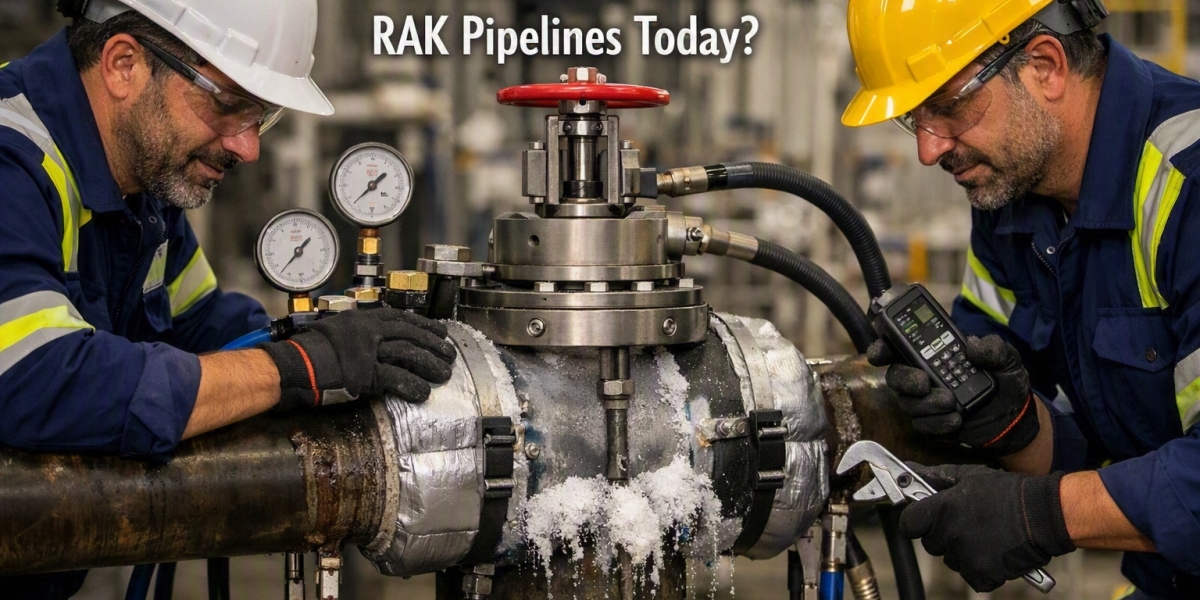

Understanding Hot tapping Companies in Rak can help pipeline operators learn how new connections can be made without always shutting down an active pipeline. Hot tapping is a method used to create a new branch or connection on a pipeline while the existing line remains in service. It is used in water, oil, gas, and industrial systems where stopping the flow may affect normal operations.
What Is Hot Tapping?
Hot tapping is a controlled pipeline connection method. It allows a new branch connection to be installed on an existing pipe while the pipe is still carrying fluid.
A fitting is first attached to the outside of the existing pipe. A valve is then installed on the fitting. After the connection is checked, a cutting machine is used to make an opening through the pipe wall.
The cut section, often called the coupon, is retained by the cutting tool and removed from the pipeline. The valve can then be closed when the cutting operation is complete, leaving a new connection point available for further work.
How Does Hot Tapping Work?
The process normally starts with a detailed inspection of the existing pipeline. The pipe material, size, wall thickness, operating pressure, temperature, and fluid inside the line need to be understood before work begins.
The work generally follows several stages:
1. Pipeline Inspection
The existing pipe is checked to determine whether it is suitable for hot tapping. Engineers may review drawings, operating records, pipe specifications, and inspection data.
2. Fitting Installation
A suitable branch fitting is positioned and secured to the existing pipeline. The fitting must be compatible with the pipe and designed for the operating conditions.
3. Valve Installation
A valve is connected to the branch fitting. This valve provides control of the new branch after the opening has been created.
4. Pressure and Connection Checks
The installed components are inspected and tested according to the applicable procedure. Any leakage or connection problem should be addressed before cutting begins.
5. Cutting the Pipe
A hot tapping machine is attached to the valve. The cutting tool moves through the valve and fitting and cuts an opening in the existing pipe.
The cutting operation needs careful control because the pipeline remains pressurized and may contain flowing material.
6. Removing the Cutting Tool
After the cut is completed, the cutter and coupon are withdrawn through the valve. The valve can then be closed, separating the new branch from the active pipeline when required.
What Equipment Is Used?
Hot tapping equipment depends on the pipe size, pressure, temperature, material, and type of fluid. Common equipment can include a branch fitting, isolation valve, hot tapping machine, cutting tool, pressure gauges, and testing equipment.
Safety equipment is also important. Workers may need protective clothing, face protection, gloves, gas detection equipment, and other site-specific safety equipment.
The equipment should be selected according to the actual pipeline conditions rather than using the same setup for every project.
Why Is Hot Tapping Used?
One reason hot tapping is considered is that it can allow work on an operating pipeline without requiring a complete shutdown of the line.
For some industrial systems, stopping a pipeline can interrupt production, water supply, cooling systems, or other processes. A properly planned hot tap can provide a controlled way to add a connection while the existing system continues operating.
However, hot tapping is not suitable for every pipeline. The condition of the pipe, operating pressure, fluid properties, temperature, pipe thickness, and location all need to be reviewed.
Safety Checks Before Hot Tapping
Safety planning is an important part of the process. The pipeline should be assessed before any cutting begins.
Important checks can include:
- Identifying the fluid inside the pipeline
- Checking operating pressure and temperature
- Confirming pipe material and wall thickness
- Inspecting the pipe condition
- Selecting a suitable fitting and valve
- Checking the cutting equipment
- Reviewing possible leakage or ignition risks
- Preparing an emergency response plan
- Confirming safe working conditions for personnel
Special care may be required when the pipeline contains flammable, toxic, corrosive, or high-temperature materials.
Hot Tapping in RAK Pipelines
Pipeline systems in Ras Al Khaimah can serve different industrial and utility applications, so the hot tapping method must be planned around the specific pipeline rather than following a general setup.
Before starting work, operators should collect accurate information about the existing line and its operating conditions. This information helps determine whether hot tapping is technically suitable and what equipment and procedures may be required.
Understanding Hot tapping Companies in Rak also means looking at how experienced teams approach pipeline inspection, connection preparation, equipment selection, testing, and site safety. The method itself is technical, and each pipeline requires its own assessment.