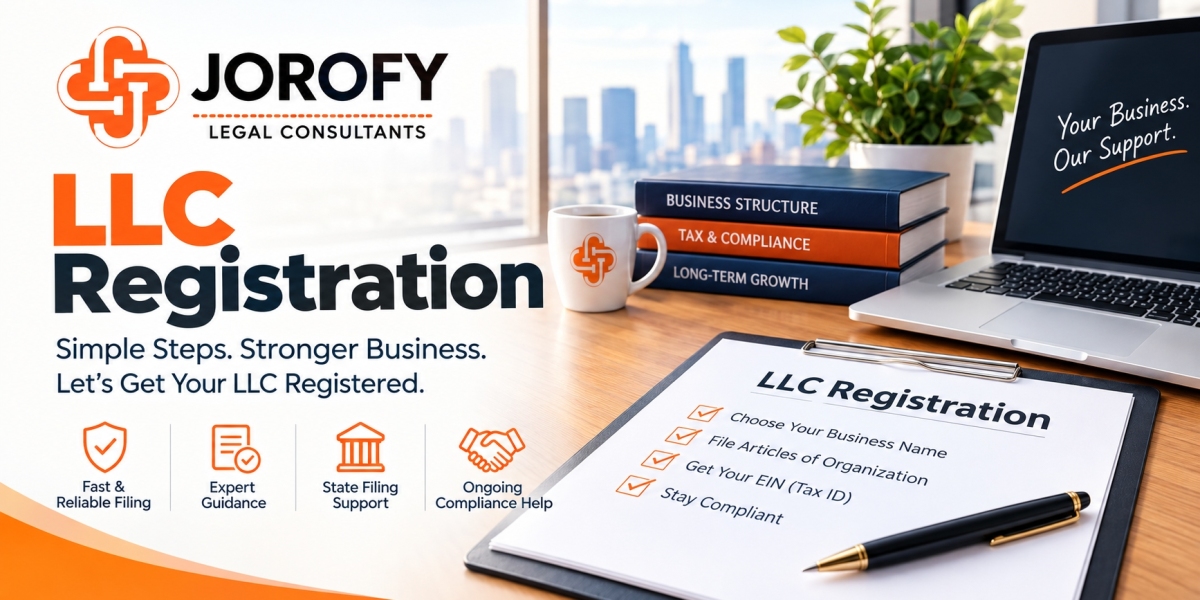

Starting a business in the United States involves several legal and administrative steps. Two terms that often cause confusion are LLC registration and business licenses. While both can be important, they serve different purposes.
LLC registration creates a legal business entity under state law. A business license, on the other hand, gives a business permission to operate in a particular location, industry, or jurisdiction. Depending on the type of business, you may need one, the other, or both.
Understanding the difference can help you avoid unnecessary costs, missed filings, and compliance problems. This guide explains how LLC registration works, what a business license does, and how to determine which requirements apply to your business.
1. What Is LLC Registration?
LLC registration is the process of legally forming a Limited Liability Company with a state in the United States. The process generally involves choosing an available business name, selecting a registered agent, preparing formation documents, and filing Articles of Organization or a similar document with the appropriate state agency.
Once the state accepts the filing, the LLC becomes a legally recognized business entity.
An LLC can provide a formal structure for operating a business and may help separate the owner's personal assets from certain business liabilities. However, liability protection is not absolute. Personal guarantees, fraud, failure to maintain the company properly, and other circumstances can affect the protection available.
LLC registration is also separate from federal tax registration. After forming an LLC, a business may need an Employer Identification Number (EIN), tax registrations, licenses, permits, and other compliance requirements depending on its activities.
For entrepreneurs who are unfamiliar with state filing requirements, professional LLC formation services can simplify the process by helping organize formation documents and required information.
2. What Is a Business License?
A business license is a government authorization that allows a business to conduct certain activities in a particular jurisdiction.
Unlike LLC registration, a business license does not generally create a separate legal entity. Instead, it addresses whether a business is permitted to operate under specific local, state, or industry requirements.
Business licensing requirements vary significantly. A small online business may have different requirements from a restaurant, construction company, medical practice, transportation company, or professional service provider.
Licenses can be issued at different government levels. Depending on the business, requirements may come from a city, county, state, or federal agency.
Some businesses may also need specialized permits. For example, a food business could need health-related approvals, while a professional practice may need an occupational or professional license.
This is why registering an LLC does not automatically mean that the business is ready to begin every type of commercial activity.
3. LLC Registration vs Business License: Key Differences
The easiest way to understand the difference is to look at what each one accomplishes.
| LLC Registration | Business License |
|---|---|
| Creates a legal business entity | Authorizes certain business activities |
| Usually filed with a state agency | May be required by a city, county, state, or other agency |
| Establishes the LLC structure | Confirms permission to operate under applicable rules |
| Connected to the legal structure of the business | Connected to the business activity, location, or industry |
| Does not automatically provide every required permit | Does not create an LLC |
| Usually involves formation documents | May involve applications, fees, inspections, or renewals |
For example, imagine someone starts a local consulting company. They may form an LLC to establish their business structure. Depending on their location and activity, they may also need a local business license.
The two requirements work independently.
A business can be properly registered as an LLC and still need a license. Likewise, obtaining a business license does not necessarily mean the owner has formed an LLC.
4. Do You Need Both an LLC and a Business License?
In many situations, the answer can be yes.
LLC registration and licensing address different legal requirements. Forming an LLC may establish the business entity, but the owner still needs to check whether the business activity requires licenses or permits.
For example, consider a business owner who forms an LLC to operate a retail store. The LLC registration establishes the company. The owner may still need local registration, sales tax registration, zoning approval, health permits, or other requirements depending on the business and location.
An online business may also have licensing or tax obligations even if it does not operate from a traditional storefront.
The important point is that requirements depend on several factors, including:
- Business activity
- State of formation
- Physical business location
- Locations where the business operates
- Industry
- Products or services offered
- Number of employees
- Tax obligations
Before starting operations, business owners should identify all applicable federal, state, and local requirements.
This approach is generally more practical than assuming that LLC registration automatically covers every legal requirement.
5. How to Handle LLC Registration and Licensing Correctly
A good compliance process starts by separating business formation from business operation requirements.
First, determine whether an LLC is the right legal structure for your business. Consider factors such as ownership, liability concerns, taxation, administrative requirements, and where the company will operate.
Next, complete the LLC registration process with the appropriate state. This typically involves selecting a compliant business name, appointing a registered agent, preparing formation documents, and paying the required state filing fee.
After formation, identify federal and state tax requirements. Depending on the business, obtaining an EIN may also be necessary.
Then review local and industry-specific licensing rules. Check the requirements for the city, county, and state where your business operates. If your industry is regulated, look for additional professional licenses or permits.
Finally, keep track of renewal dates and ongoing compliance obligations. Some licenses must be renewed periodically, and LLCs may have annual or biennial reports and other state requirements.
For entrepreneurs who are unsure where to begin, LLC formation services can make the formation process easier by helping with the administrative side of creating the company. However, business owners should still confirm which licenses and permits apply to their specific activities.
Conclusion
LLC registration and a business license are not the same thing. LLC registration creates the legal business entity, while a business license generally gives the business permission to conduct specific activities in a particular jurisdiction.
Depending on the business, you may need both.
Understanding this distinction can help you avoid a common mistake: assuming that forming an LLC automatically gives you permission to operate without additional registrations, licenses, or permits.
If you are planning to start a business in the United States, taking care of formation and compliance requirements from the beginning can make the process much easier. Professional LLC formation services can also help simplify the administrative work involved in setting up your company.
Before operating, make sure you understand the requirements that apply to your business, location, and industry. A properly formed business is only one part of building a compliant operation.
FAQs
1. Is an LLC registration the same as a business license?
No. LLC registration creates a legal business entity under state law. A business license generally authorizes a business to conduct certain activities in a specific location or industry. A business may need both.
2. Can I operate an LLC without a business license?
It depends on the business and where it operates. Some businesses may not need a general local license, while others may require one or more licenses and permits. Forming an LLC does not automatically eliminate licensing requirements.
3. Does every LLC need a business license?
Not necessarily. Business licensing requirements vary based on the business activity, location, industry, and applicable government rules. LLC owners should check federal, state, county, and city requirements.
4. Do I register an LLC before getting a business license?
In many cases, forming the LLC first can make sense because some license applications may require information about the business entity. However, the correct order can vary by location and industry.
5. Can an LLC registration replace a business permit?
No. An LLC registration and a business permit serve different purposes. An LLC establishes the business entity, while a permit generally authorizes a particular activity or ensures compliance with specific requirements.
6. Do online businesses need a business license?
An online business may need licenses, registrations, or permits depending on its location, activities, products, and customers. Operating online does not automatically exempt a business from applicable requirements.
7. Can LLC formation services help with business licensing?
Some LLC formation services may help business owners identify or obtain certain licenses and registrations, while others focus mainly on forming the company. Always check exactly what is included before choosing a service.
8. What happens if I operate without a required license?
Operating without a required license can result in penalties, fees, enforcement action, or other compliance problems. The consequences depend on the applicable jurisdiction and type of business. Checking licensing requirements before starting operations can help prevent these issues.