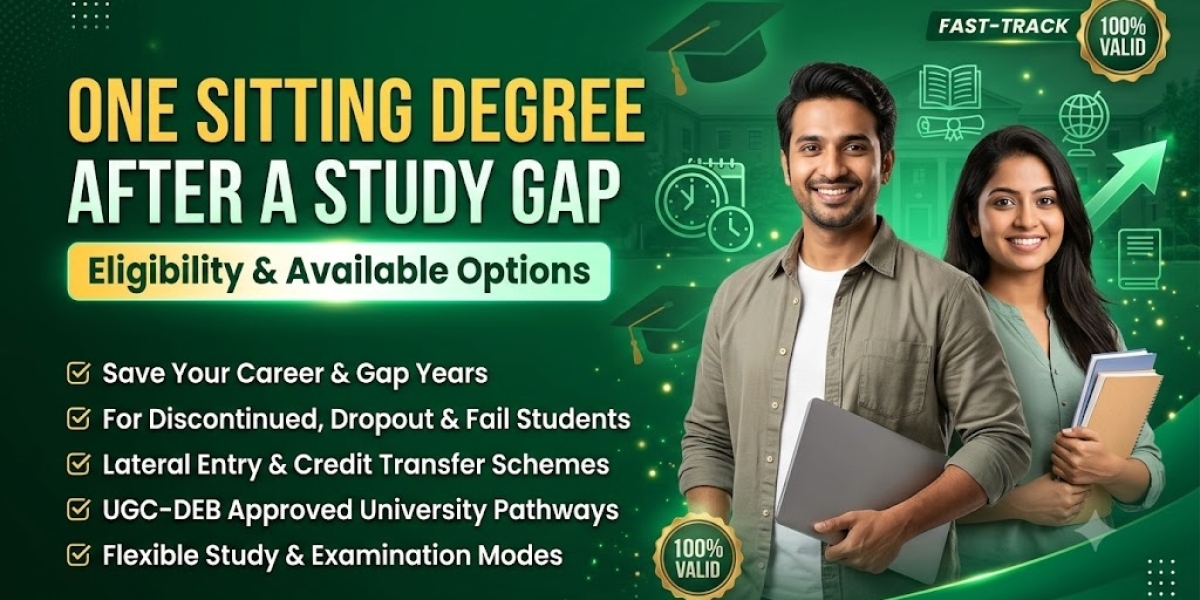

A study gap does not necessarily mean the end of your academic journey. Many students and working professionals discontinue their education because of employment, financial responsibilities, family circumstances, competitive exam preparation, or other personal reasons. After several years, they may want to complete their graduation or post-graduation to improve their career opportunities.
What Is a One Sitting Degree?
The term One Sitting Degree is commonly used to describe programs marketed to learners who want to complete a degree after a study gap or through a shorter or flexible academic route.
However, "one sitting degree" is not, by itself, a standard academic category that guarantees a valid degree. The actual duration, mode of study, credit requirements, examinations, and eligibility depend on the university and the applicable higher-education regulations.
Therefore, students searching for a One Sitting Degree Program should not choose a course simply because it promises a degree in a very short period. They should first verify the university, program approval or recognition, admission requirements, and whether the qualification meets the requirements of the organization where they intend to use it.
Can You Complete a Degree After a Study Gap?
Yes, a study gap does not automatically prevent someone from pursuing higher education.
For example, a person who completed Class 12 several years ago may still be able to apply for an undergraduate program if they meet the admission requirements. Similarly, someone who already holds a bachelor's degree may be eligible for a postgraduate program after a gap.
The exact rules depend on the course and institution. Some programs may have specific subject requirements, minimum marks, entrance examinations, or other conditions.
This makes it important to distinguish between completing a genuine degree after a study gap and obtaining a qualification through an unrecognized or improperly accelerated route.
Eligibility for One Sitting Degree Programs
Eligibility depends on the academic level and the university offering the program.
For Graduation
Students generally need to have completed the required senior secondary education or equivalent qualification before entering an undergraduate degree program.
Depending on the course, eligibility may include:
Completion of Class 12 or equivalent
Required subjects at the senior secondary level
Minimum qualifying marks, where applicable
Entrance examination requirements for certain programs
Submission of academic and identification documents
For example, a student interested in a BA, B.Com, BBA, or other bachelor's degree should check the specific eligibility criteria of the institution.
For Post-Graduation
Students seeking a One Sitting Post Graduation pathway generally need to hold a recognized bachelor's degree in accordance with the requirements of the selected postgraduate program.
Eligibility can differ considerably between programs. An MBA, MCA, M.Com, MA, MSc, or another postgraduate course may have different academic prerequisites.
Students should therefore check the university's current admission notification rather than assuming that every graduate is eligible for every postgraduate course.
Options for Working Professionals After a Study Gap
Working professionals often need flexible education options because leaving employment to attend a full-time college may not be practical.
Depending on their eligibility, they can explore several recognized academic pathways.
1. Distance Education
Distance education allows students to pursue higher education without attending conventional classes every day. It can be suitable for working professionals who need greater flexibility.
Students can study course materials independently and appear for examinations according to the university's prescribed schedule.
2. Online Degree Programs
Online education has become another option for learners seeking flexibility. Students can access lectures, learning materials, assignments, and other academic resources digitally.
An online degree for working professionals may be particularly convenient for learners who have full-time employment or live away from a university campus.
3. Regular Degree Programs
Some students with a study gap may prefer to return to a conventional college. A gap in education does not necessarily prevent admission if the applicant satisfies the institution's eligibility criteria.
A regular degree can provide classroom learning, campus interaction, practical exposure, and other academic experiences.
4. Credit Transfer or Academic Re-entry
In some situations, students who previously completed part of a degree may have options for continuing their education through applicable credit-transfer or re-entry provisions.
The availability of these options depends on the institution, previous academic records, credits earned, and current regulations.
One Sitting Graduation for Working Professionals
The phrase One Sitting Graduation for Working Professionals is frequently used in online searches by people who discontinued their studies and now want to obtain a bachelor's qualification.
Before choosing such a program, working professionals should ask several questions:
Is the university properly recognized?
Is the specific program offered through an approved mode?
What is the official duration of the degree?
Does the program require a minimum period of study?
Are examinations conducted according to prescribed academic rules?
Will the qualification meet the requirements of the intended employer or institution?
Is the university providing official documentation and academic records?
These checks can help applicants avoid programs that make unrealistic promises about completing a recognized degree in an unusually short period.
One Sitting Post Graduation After a Study Gap
Professionals who already have a bachelor's degree may search for One Sitting Post Graduation programs to improve their qualifications.
Possible areas of postgraduate study can include:
MBA
MCA
M.Com
MA
MSc
Other specialized postgraduate programs
However, the appropriate option depends on the student's previous degree, academic background, career objectives, and the admission rules of the selected university.
For example, an applicant considering an MCA should verify whether the university requires specific mathematics or computer-related subjects. Similarly, postgraduate management programs may have their own eligibility requirements.
Documents Required
Students applying after a long study gap may need to provide academic and personal documents during admission.
Depending on the institution and program, these may include:
Class 10 certificate
Class 12 certificate
Previous degree certificate
Mark sheets
Transfer or migration documents, where applicable
Identity proof
Passport-size photographs
Other documents specified by the university
Students should keep their original academic records safely and submit documents according to the university's official instructions.
Benefits of Completing a Degree After a Study Gap
Completing higher education after a study gap can provide several practical benefits.
Career Development
Some jobs require a bachelor's or master's qualification as a minimum educational requirement. Completing a degree can therefore expand the range of positions for which a candidate can apply.
Professional Growth
Working professionals may pursue higher education to meet eligibility requirements for promotions, internal career opportunities, or new roles.
Further Education
A recognized bachelor's degree may provide eligibility for postgraduate education, while a recognized postgraduate qualification can support further academic progression, subject to the requirements of the next program.
Flexible Learning
Online and distance education can allow professionals to continue working while studying, depending on the course structure.
How to Choose a One Sitting Degree Program
Choosing the right program requires careful research. The first priority should be recognition and validity, rather than the speed of completion.
Check the University
Research the institution offering the degree and verify its current recognition and regulatory status.
Verify the Program and Mode
Recognition can depend on the specific program and mode of delivery. Therefore, students should verify the exact course rather than relying only on the university's name.
Understand the Duration
A legitimate degree generally follows the applicable minimum duration and academic requirements. Be cautious of claims that suggest a standard multi-year degree can automatically be converted into a much shorter qualification without an approved academic basis.
Check Your Career Requirements
If the qualification is intended for a government job, promotion, professional course, competitive examination, or higher education, check the eligibility requirements of that specific organization before enrolling.
Compare Fees and Support
Students should compare tuition fees, examination fees, learning resources, student support, documentation, and other applicable costs.
Is One Sitting Degree Valid?
The validity of a qualification depends on the specific university, program, mode of education, and applicable regulations. The phrase "one sitting degree" alone does not establish recognition.
This is one of the most important points for students searching for One Sitting Degree in India.
Before admission, verify the official status of the university and the particular program. Also check whether the qualification is accepted for the purpose for which you need it.
For example, acceptance for higher education may involve different requirements from acceptance for a particular recruitment process. Students should therefore check the rules of the relevant organization rather than relying on general claims made by admission agencies or advertisements.
One Sitting Degree vs Online and Distance Education
The main difference is that online and distance education are established modes of education with defined academic structures, while "one sitting degree" is often a marketing term.
A recognized online or distance program normally has a prescribed duration, curriculum, assessment process, examinations, and academic requirements.
If your primary goal is to complete graduation after a study gap while continuing employment, a recognized online or distance degree may be a more transparent pathway to investigate than choosing a program solely because it promises unusually fast completion.
Final Thoughts
A study gap should not automatically prevent you from continuing your education. One Sitting Degree after a study gap is a popular search term among students and working professionals, but applicants should carefully distinguish between legitimate flexible education and programs that make unsupported claims about accelerated degrees.
If you want to complete graduation or post-graduation after a study gap, explore recognized online, distance, or regular education options based on your eligibility and career goals. Verify the university, specific program, mode of study, duration, admission requirements, and acceptance criteria before making a decision.
For working professionals, a properly structured online degree or distance education program can provide flexibility while allowing them to continue their careers. The right choice ultimately depends on your previous qualification, desired course, career objective, and the academic requirements applicable to your situation.