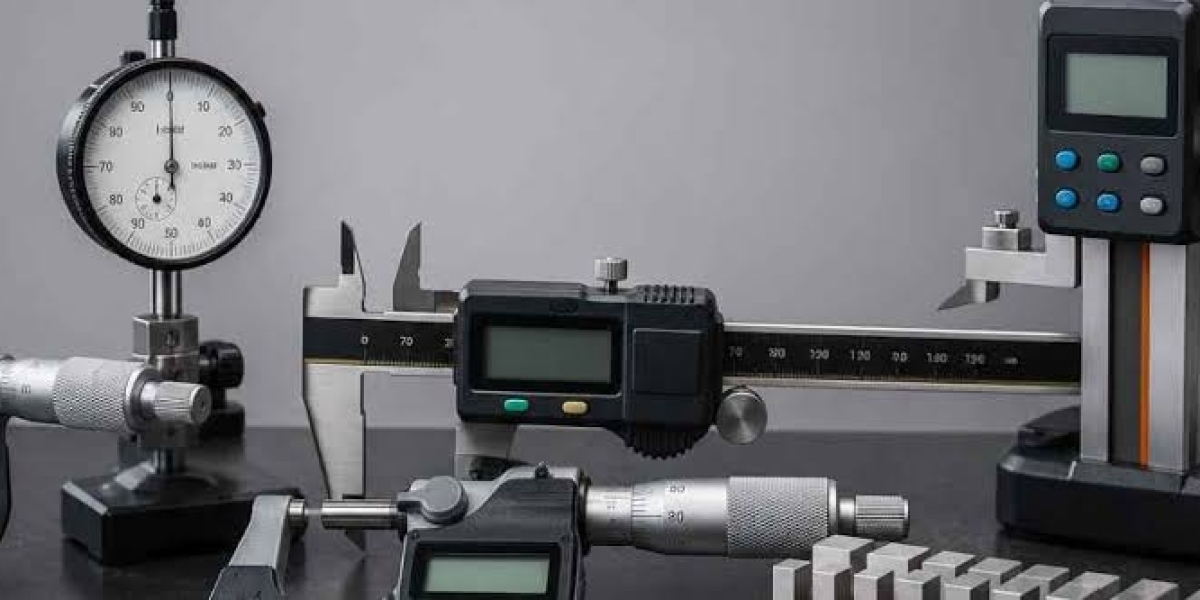

Modern workshops depend on accuracy to produce reliable parts, maintain quality, and reduce unnecessary material waste. Whether a workshop handles machining, fabrication, maintenance, or inspection, even a small measurement error can affect the final result. This is why using suitable measuring equipment has become an important part of daily workshop operations.
The Importance of Accurate Measurements
Every manufacturing process starts with accurate dimensions. Workers need to check lengths, widths, depths, diameters, thicknesses, and other specifications before, during, and after production. Reliable measuring equipment helps workers compare actual dimensions with required specifications.
Accurate measurements also help identify problems early. If a component is outside the required tolerance, it can be corrected before additional time and materials are invested in the production process. This approach helps workshops maintain consistent quality while reducing avoidable rework.
Supporting Better Quality Control
Quality control is one of the main areas where measurement tools make a difference. Workshop teams can inspect finished components and confirm whether they meet engineering drawings and production requirements.
Tools such as calipers, micrometers, gauges, and other precision instruments allow workers to perform different types of dimensional checks. Regular inspection can help maintain consistency when producing multiple components with similar specifications.
For businesses supplying parts to different industries, maintaining consistent measurements is especially important. Reliable inspection processes can support better product quality and help reduce customer complaints caused by dimensional errors.
Reducing Production Errors
Measurement errors can lead to incorrect machining, fitting problems, material wastage, and production delays. Using appropriate measuring equipment at different stages of a project can help reduce these risks.
For example, measurements can be taken before machining to verify raw material dimensions. Additional checks can be completed during machining to confirm progress, followed by final inspection before the component is delivered or installed.
This step-by-step approach gives workers more opportunities to identify dimensional issues before they become costly problems.
Improving Workshop Efficiency
Accuracy and efficiency often work together. When measurements are reliable, workers spend less time correcting mistakes or producing replacement parts. Clear measurement procedures can also make inspection tasks easier to repeat across different projects.
Modern workshops may handle several types of components and materials in a single day. Having suitable measurement tools available allows workers to select the right instrument for each task instead of relying on estimates or unsuitable tools.
Choosing the Right Measuring Tools
Different applications require different measurement capabilities. A workshop should consider factors such as measurement range, required tolerance, resolution, durability, and frequency of use when selecting equipment.
For precision applications, workers may need instruments designed for highly accurate dimensional inspection. For general workshop tasks, practical and easy-to-use tools may be more suitable.
The condition of the instrument is also important. Measuring tools should be stored properly, handled carefully, and checked regularly to maintain dependable results.
Supporting Modern Manufacturing Standards
As workshops become more focused on quality and repeatable production, accurate measurement continues to play an important role. Consistent inspection helps businesses maintain production standards and identify process issues.
Good measurement practices also create a more organized approach to quality control. Instead of relying on visual judgment alone, workers can use measurable data to make decisions about components and production processes.
Conclusion
Accurate measurement is a fundamental part of modern workshop operations. The right measuring equipment helps workers verify dimensions, reduce production errors, improve quality control, and minimize material waste. By selecting suitable tools and maintaining them properly, workshops can create more consistent results and support efficient manufacturing processes.