
Venous leak is a term commonly used to describe a type of erectile dysfunction (ED) in which a man can achieve an erection but has difficulty keeping it firm. The erection may begin normally but gradually become softer during sexual activity.
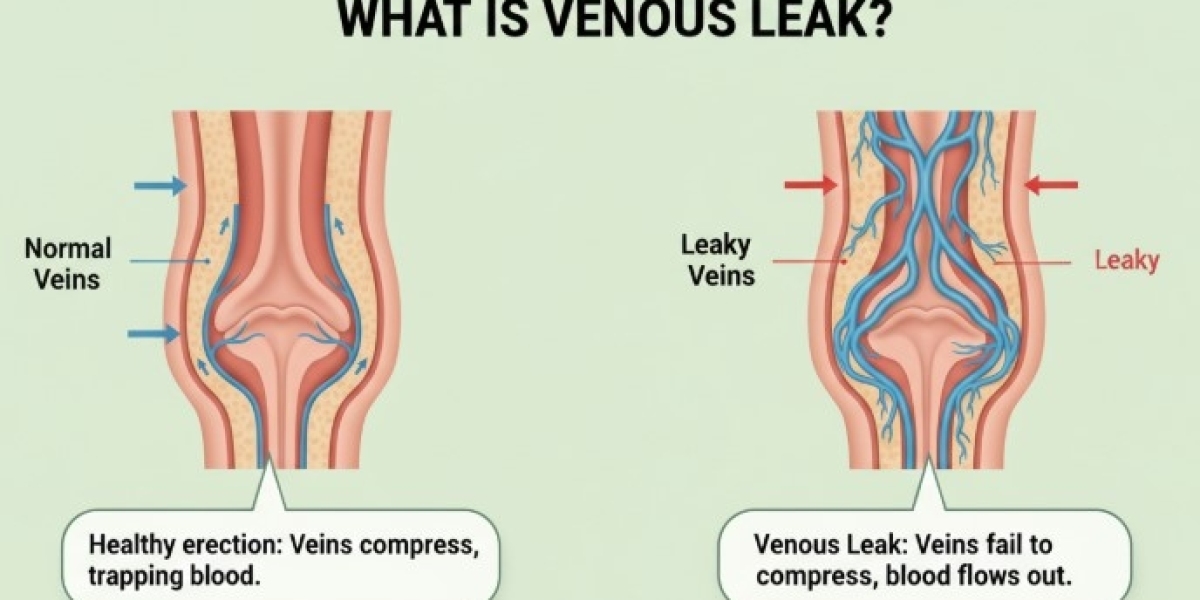
The medical term for this condition is veno-occlusive erectile dysfunction. During a normal erection, blood enters the penis and the veins responsible for draining blood away become compressed. This helps keep blood inside the erectile tissues and maintains firmness. If this mechanism does not work properly, maintaining an erection can become difficult.
Venous leak can be associated with vascular conditions, diabetes, injury, certain medical conditions, and other factors. However, difficulty maintaining an erection does not necessarily mean that a person has venous leak. A proper medical evaluation is important to determine the actual cause.
This guide explains venous leak, its symptoms, possible causes, diagnosis, treatment options, lifestyle measures, and frequently asked questions.
What Is Venous Leak?
A normal erection involves a complex interaction between the brain, nerves, blood vessels, hormones, and penile tissues.
When a man becomes sexually aroused, the arteries supplying the penis relax and allow increased blood flow into the erectile tissues. As the tissues fill with blood, they expand and compress the veins that normally allow blood to leave the penis.
This process is called the veno-occlusive mechanism.
The mechanism helps maintain pressure inside the penis so that the erection remains firm.
With veno-occlusive erectile dysfunction, this mechanism may not function effectively. Blood may leave the erectile tissues too quickly, making it difficult to maintain adequate firmness.
A simple explanation
A normal erection can be thought of as a system involving:
Increased blood flow in + restricted blood flow out = maintained erection
When the blood-retention mechanism is impaired, maintaining the erection can become more difficult.
What Does Venous Leak Feel Like?
The experience varies from person to person, but many men describe being able to achieve an erection but losing firmness relatively quickly.
Common experiences include:
- An erection develops normally but becomes soft
- Difficulty maintaining firmness during intercourse
- Losing an erection when stimulation decreases
- Needing continuous stimulation to remain erect
- An erection that does not remain firm long enough for intercourse
- Repeated frustration or anxiety surrounding sexual performance
It is important to remember that these symptoms can occur with many forms of erectile dysfunction.
Symptoms alone cannot confirm venous leak.
Main Causes of Venous Leak
There may not be one specific cause in every case. Factors affecting blood vessels, nerves, erectile tissues, hormones, or general health can contribute to erection problems.
1. Diabetes
Diabetes is an important risk factor for erectile dysfunction. Over time, high blood sugar can affect blood vessels and nerves involved in sexual function.
Good diabetes management can help reduce the risk of complications.
2. Cardiovascular Disease
Erections depend on healthy blood vessels and adequate circulation. Conditions affecting cardiovascular health can therefore contribute to erectile difficulties.
3. High Blood Pressure
Long-term high blood pressure can affect blood-vessel health and may increase the risk of erectile dysfunction.
4. Smoking
Smoking can damage blood vessels and interfere with healthy circulation. It is one of the modifiable risk factors associated with ED.
5. Penile Injury
Trauma to the penis may sometimes affect the tissues involved in maintaining an erection.
6. Pelvic Injury or Surgery
Certain pelvic injuries and surgical procedures can affect the nerves, blood vessels, or tissues involved in erectile function.
7. Penile Structural Conditions
Some structural conditions affecting the penis may be associated with erection problems.
For example, Peyronie's disease can cause scar tissue and penile curvature and may be associated with erectile dysfunction.
8. Aging
Changes in blood-vessel function and erectile tissues become more common with age.
However, persistent erectile dysfunction should not simply be dismissed as an unavoidable part of getting older.
9. Other Health Conditions
Several other conditions can contribute to ED, including:
- Obesity
- Metabolic disorders
- Neurological conditions
- Hormonal abnormalities
- Kidney disease
- Certain medications
- Psychological conditions
Venous Leak vs. Erectile Dysfunction
Venous leak is not the same thing as erectile dysfunction.
Erectile dysfunction is a general term for difficulty achieving or maintaining an erection sufficient for satisfactory sexual activity.
Venous leak is one possible vascular mechanism associated with erection-maintenance problems.
Other causes of ED can include:
- Reduced arterial blood flow
- Diabetes
- Nerve damage
- Hormonal problems
- Medication side effects
- Anxiety
- Depression
- Performance anxiety
- Cardiovascular disease
- Lifestyle factors
A man can also have more than one contributing factor.
Symptoms That May Look Like Venous Leak
Several situations can cause a man to lose an erection without having a structural venous problem.
For example:
Performance Anxiety
Worrying about sexual performance can interfere with the body's normal erectile response.
Stress
Work-related stress, financial concerns, relationship problems, and other sources of stress may affect sexual performance.
Alcohol
Excessive alcohol consumption can interfere with erections.
Medication
Some prescription medicines can contribute to ED.
Hormonal Problems
Low testosterone and other hormonal abnormalities can affect sexual function.
Because so many conditions can cause similar symptoms, professional assessment is important.
How Is Venous Leak Diagnosed?
A doctor will usually begin with a detailed medical and sexual history.
Questions may include:
- When did the problem start?
- Can you achieve an erection?
- How long does the erection normally last?
- Do you have morning erections?
- Can you maintain erections during masturbation?
- Do you have any medical conditions?
- Are you taking medications?
- Do you smoke?
- How much alcohol do you consume?
- Have you experienced penile or pelvic injury?
- Are anxiety or relationship issues affecting sexual activity?
A physical examination may also be performed.
Depending on the findings, additional tests may be recommended.
Penile Doppler Ultrasound
A penile duplex Doppler ultrasound can be used to evaluate penile blood flow when a vascular cause of ED is suspected.
During the test, medication may be administered to produce an erection. Ultrasound is then used to evaluate blood flow through the penile vessels.
The examination can provide information about:
- Arterial blood flow
- Blood entering the erectile tissues
- The veno-occlusive mechanism
- Possible vascular causes of ED
Doppler findings should be interpreted by an experienced clinician. Test results can be affected by several factors, including the degree of erection, medication response, timing, and technical considerations.
Blood Tests for Erectile Problems
Blood tests may also be recommended depending on the patient's symptoms and medical history.
A doctor may check:
- Blood glucose
- HbA1c
- Cholesterol
- Testosterone
- Thyroid function
- Other relevant hormones or metabolic markers
Not every patient needs every test.
Treatment for Venous Leak
Treatment depends on the underlying cause and the severity of erectile dysfunction.
A doctor may recommend one or more approaches.
Lifestyle Improvements
Healthy lifestyle habits can support vascular health and overall erectile function.
Important steps include:
- Stop smoking
- Exercise regularly
- Maintain a healthy weight
- Manage diabetes
- Control blood pressure
- Maintain healthy cholesterol levels
- Limit excessive alcohol
- Get adequate sleep
- Manage stress
Lifestyle changes may improve erectile health but should not be considered a guaranteed cure for confirmed veno-occlusive dysfunction.
Oral ED Medications
PDE5 inhibitors are commonly used to treat erectile dysfunction.
Common examples include:
- Sildenafil
- Tadalafil
- Vardenafil
- Avanafil
These medications work by enhancing the natural blood-flow response involved in erections.
Some men with difficulty maintaining erections may experience improved erectile function with these medicines.
However, they do not necessarily correct an underlying structural problem with the veno-occlusive mechanism.
Important safety point
PDE5 inhibitors can interact dangerously with nitrate medications. Men taking nitrates should not use these medicines without appropriate medical guidance.
Vacuum Erection Devices
A vacuum erection device uses controlled negative pressure to draw blood into the penis.
Once an erection is achieved, a constriction ring can help maintain it by slowing blood outflow.
Vacuum devices can provide a non-surgical treatment option for some men with erectile dysfunction.
They should be used according to appropriate instructions.
Injection Therapy
Intracavernosal injection therapy involves injecting prescribed medication directly into the erectile tissue.
These medicines can increase blood flow and produce an erection.
Injection therapy can be effective for some men, but it must be used under medical supervision.
Using too much medication can cause priapism, a prolonged erection that requires urgent medical attention.
Counseling and Sex Therapy
Sometimes erection problems are partly or completely related to psychological factors.
Examples include:
- Performance anxiety
- Chronic stress
- Relationship difficulties
- Depression
- Fear of sexual failure
Counseling or sex therapy may help address these factors.
Psychological treatment can also be combined with medical treatment when both physical and psychological contributors are present.
Penile Implant Surgery
A penile implant may be considered when severe erectile dysfunction persists despite other appropriate treatments.
Penile prostheses are surgically implanted devices that allow a man to create an erection when desired.
Two common categories are:
- Inflatable penile implants
- Malleable or semirigid implants
Because implantation requires surgery, potential benefits and risks should be discussed carefully with a qualified urologist.
Can Venous Leak Be Cured?
There is no single answer for every patient.
The outcome depends on the underlying cause.
If contributing factors such as smoking, diabetes, medication effects, cardiovascular risk factors, or psychological problems are identified, addressing those factors may improve erectile function.
Some men may require ongoing medical treatment or other forms of management.
Therefore, it is better to identify the underlying cause than to rely on claims of a universal or guaranteed "venous leak cure."
Can Venous Leak Be Treated Without Surgery?
Yes.
Many men with erectile dysfunction can be treated without surgery.
Possible non-surgical options include:
- Lifestyle changes
- Oral ED medications
- Vacuum erection devices
- Injection therapy
- Counseling
- Sex therapy
- Treatment of underlying medical conditions
The appropriate treatment depends on the diagnosis.
Can Exercise Improve Erectile Function?
Regular physical activity is beneficial for cardiovascular health and may support healthy erectile function.
Activities such as:
- Walking
- Running
- Swimming
- Cycling
- Strength training
can improve general fitness.
Exercise cannot be guaranteed to correct a structural venous problem, but maintaining cardiovascular health is an important part of managing erectile dysfunction.
Can Diet Help?
A balanced diet can support cardiovascular and metabolic health.
A healthy diet can include:
- Vegetables
- Fruits
- Whole grains
- Beans
- Nuts
- Seeds
- Fish
- Lean protein
- Healthy fats
Reducing excessive processed foods, added sugars, and unhealthy fats may also benefit general health.
Diet should be considered part of a broader approach to erectile health rather than a standalone cure for venous leak.
Does Masturbation Cause Venous Leak?
Normal masturbation is not established as a cause of structural venous leak.
It is also normal for an erection to disappear after ejaculation or when sexual stimulation stops.
Persistent difficulty achieving or maintaining erections should be medically evaluated rather than automatically attributed to masturbation.
Does Pornography Cause Venous Leak?
Pornography does not physically create a leak in the penile veins.
However, psychological factors, sexual expectations, anxiety, and individual sexual habits may affect sexual performance in some people.
These issues are different from medically diagnosed veno-occlusive erectile dysfunction.
Venous Leak and Infertility
Venous leak and infertility are two different medical issues.
A man with erectile dysfunction may have normal sperm production and fertility.
Likewise, a man can have fertility problems without experiencing erectile dysfunction.
If both erection problems and fertility concerns are present, they should be evaluated separately by an appropriate healthcare professional.
Venous Leak and Age
Erectile dysfunction becomes more common with increasing age because conditions associated with ED, such as diabetes, cardiovascular disease, hypertension, and vascular problems, also become more common.
However, persistent ED should not automatically be considered a normal consequence of aging.
A medical evaluation can identify potentially treatable factors.
How Can Erectile Dysfunction Be Prevented?
While every case cannot be prevented, healthy habits can support sexual and cardiovascular health.
Quit Smoking
Stopping smoking can benefit blood-vessel health.
Exercise Regularly
Regular physical activity supports circulation and cardiovascular fitness.
Maintain a Healthy Weight
A healthy weight can reduce the risk of several conditions associated with ED.
Manage Diabetes
Good blood-sugar control can help reduce complications affecting nerves and blood vessels.
Control Blood Pressure
Keeping blood pressure within a healthy range can support vascular health.
Manage Cholesterol
Healthy cholesterol levels can support cardiovascular health.
Limit Alcohol
Excessive alcohol can interfere with sexual performance.
Manage Stress
Reducing chronic stress can support both mental and sexual well-being.
Prioritize Sleep
Adequate sleep contributes to overall physical and hormonal health.
When Should You See a Doctor?
You should consider seeing a healthcare professional if erection problems:
- Happen frequently
- Continue for several weeks
- Interfere with sexual activity
- Are affecting your confidence or relationship
- Appear suddenly
- Occur alongside diabetes or cardiovascular risk factors
- Develop after starting a new medication
A urologist or sexual-medicine specialist can evaluate the problem and determine whether further testing is necessary.
Frequently Asked Questions About Venous Leak
What is venous leak?
Venous leak is a commonly used term for veno-occlusive erectile dysfunction, where the penis has difficulty retaining enough blood to maintain an erection.
What is the main symptom?
The main symptom is difficulty maintaining an erection after it has initially been achieved.
How is venous leak diagnosed?
Diagnosis may involve a medical history, physical examination, blood tests, and penile Doppler ultrasound when clinically appropriate.
Can venous leak be treated?
Yes. Depending on the underlying cause, treatment may include lifestyle changes, medication, vacuum devices, injections, counseling, or surgery in selected cases.
Can Viagra or similar medicines help?
PDE5 inhibitor medications may improve erections in some men with ED. They do not necessarily correct an underlying structural veno-occlusive abnormality.
Is venous leak permanent?
Not necessarily. The outlook depends on the underlying cause and the individual's response to treatment.
Can venous leak cause infertility?
No direct connection should be assumed. Venous leak and infertility are separate conditions.
Which doctor treats venous leak?
A urologist, particularly one experienced in male sexual medicine, can evaluate suspected venous leak and other causes of erectile dysfunction.
Does masturbation cause venous leak?
Normal masturbation is not established as a cause of structural venous leak.
Final Thoughts
Venous leak, or veno-occlusive erectile dysfunction, is associated with difficulty maintaining a firm erection because the normal mechanism for retaining blood inside the erectile tissues may not function effectively.
The most important point is that difficulty maintaining an erection does not automatically mean that venous leak is the cause. Many conditions, including diabetes, cardiovascular disease, medications, hormonal problems, stress, anxiety, and other forms of erectile dysfunction, can produce similar symptoms.
A proper medical evaluation can help determine the underlying cause. Depending on the diagnosis, treatment may include lifestyle changes, oral medications, vacuum erection devices, injection therapy, psychological support, or penile implant surgery for selected patients.
If erection problems are persistent, consulting a qualified urologist or sexual-medicine specialist can help identify the cause and develop an appropriate treatment plan.