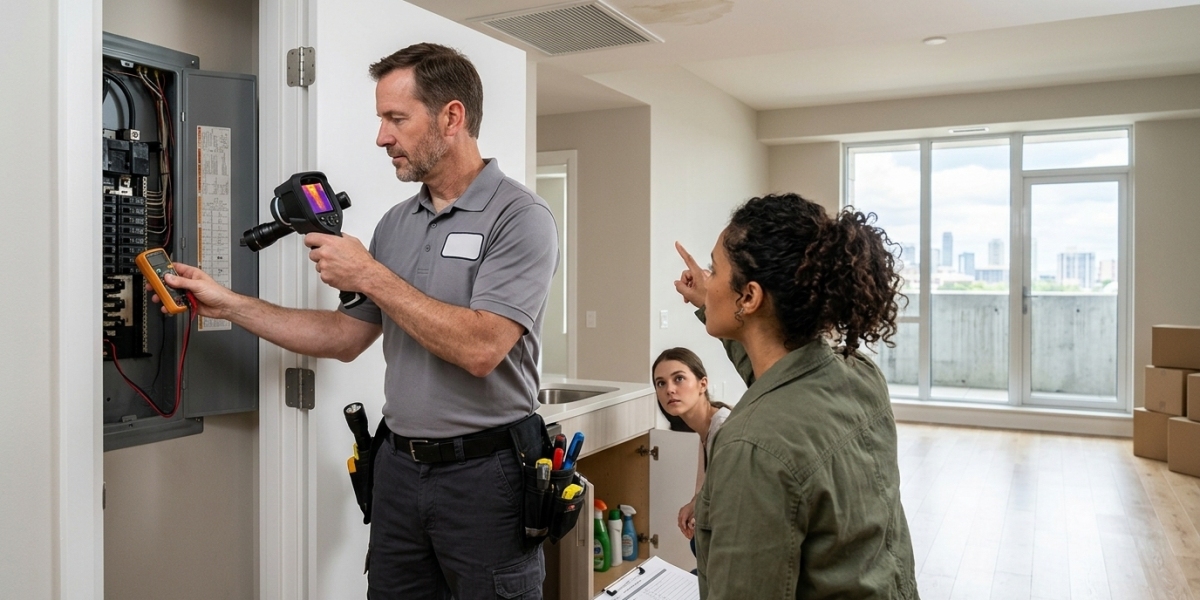

Buying a condo is different from buying a detached house. You may not be responsible for the roof, exterior walls, landscaping, or other shared parts of the building, but that does not mean the unit itself needs less attention. Plumbing fixtures, electrical components, windows, heating and cooling equipment, ceilings, floors, appliances, and signs of moisture can all affect your future ownership experience.
A condo inspection checklist helps buyers organize what should be reviewed before closing. It also helps separate the condition of the individual unit from issues that may belong to the building or association. Knowing that difference can prevent buyers from overlooking a problem simply because they assume the homeowners association will handle it.
What Does a Condo Inspection Check?
A condo inspection generally focuses on visible and accessible parts of the individual unit. The inspector may review interior walls and ceilings, floors, doors, windows, electrical components, plumbing fixtures, heating and cooling equipment, ventilation, and other accessible systems included within the inspection scope.
The exact inspection coverage depends on the property and what can be safely accessed. Some components may be shared by the building, hidden behind finished surfaces, or outside the scope of a standard inspection. That is why buyers should understand what the inspection includes before scheduling it. A clear scope makes the final report much easier to use.
Why Should a Condo Buyer Get an Inspection?
A condo can look clean and updated while still having maintenance issues. Fresh paint may cover small wall defects, attractive flooring may hide damage underneath, and recently remodeled bathrooms can still have plumbing concerns. A walkthrough gives you a general impression, but it is not the same as a detailed inspection.
An inspection can help identify conditions that are easy to miss during a showing. It also gives the buyer a written record of visible findings before closing. For someone purchasing in Chicago or the surrounding suburbs, that extra information can be useful when deciding what needs attention now and what should simply be monitored later.
What Should Be on a Condo Inspection Checklist?
A useful condo inspection checklist should cover the major parts of the unit that the inspector can reasonably observe. The focus should be on condition, safety, function, and signs that a component may need repair or further evaluation.
Important areas often include:
- Electrical outlets, switches, fixtures, and visible panels
- Plumbing fixtures, drains, supply lines, and visible leaks
- Heating and cooling equipment
- Windows, doors, locks, and visible seals
- Walls, ceilings, floors, and visible damage
- Kitchen appliances and fixtures, when included in the inspection scope
- Bathrooms and visible plumbing connections
- Moisture signs, staining, or unusual odors
- Attic, utility, storage, or mechanical spaces when accessible
The list should be treated as a framework rather than a guarantee that every component can be examined. Access and building design can affect what the inspector can actually see.
Should You Check the Electrical System in a Condo?
Yes. Electrical systems deserve attention even in newer or recently renovated units. An inspector may review accessible outlets, switches, fixtures, wiring that can be seen, and other components within the inspection scope. Signs of damage, improper installation, or other visible concerns may need further evaluation.
The age of the building can also matter. Older Chicago-area condos may contain a mix of original components and later upgrades. A unit could have newer lighting and outlets while other parts of the electrical system are much older. A visual inspection can identify observable concerns, but specialized electrical work may require a qualified electrician.
What About Plumbing and Water Leaks?
Plumbing problems can create some of the most frustrating condo repairs because even a small leak may damage cabinets, flooring, walls, or belongings. An inspection may look at sinks, toilets, tubs, showers, drains, visible supply lines, and accessible plumbing connections.
Moisture deserves special attention around kitchens, bathrooms, laundry areas, ceilings, and walls. A stain does not always prove that an active leak is present, but it can be a useful clue. The inspector may recommend further evaluation when the cause is unclear or when the visible evidence suggests a larger issue.
Are Windows Part of a Condo Inspection?
Windows are commonly reviewed when they are accessible. The inspector may look for visible damage, operational problems, deterioration, moisture signs, or other conditions affecting the window assembly.
Window responsibility can be more complicated in condominium buildings. The association's governing documents may determine who maintains certain exterior components. Buyers should not assume that a window issue automatically falls on the unit owner or the association. The inspection reports the physical condition, while the ownership and maintenance responsibilities depend on the property's rules and documents.
What Should You Look for in Condo Ceilings and Walls?
Ceilings and walls can provide clues about past or current problems. Discoloration, cracking, bubbling paint, damaged drywall, patching, or other unusual conditions may deserve attention, especially when they appear near bathrooms, kitchens, balconies, exterior walls, or mechanical areas.
In a multi-unit building, a ceiling stain can have more than one possible source. The issue may originate within the unit, above the unit, or from a shared building component. An inspector may identify the visible condition without being able to determine the full source. When that happens, additional investigation may be needed.
Does a Condo Inspection Check Heating and Cooling?
It can include accessible heating and cooling components within the unit, depending on the property's design and the inspection scope. This may involve furnaces, air-conditioning equipment, thermostats, vents, visible ductwork, or other accessible components.
Condo buildings vary widely. Some have individual HVAC systems inside each unit, while others use a shared system or another building-level arrangement. A buyer should understand which equipment actually serves the unit and which equipment is controlled by the building. This can affect both maintenance expectations and future repair responsibilities.
What About the Kitchen and Bathroom?
Kitchens and bathrooms contain several systems in small spaces, which makes them useful areas to inspect carefully. Plumbing fixtures, drains, cabinets, countertops, outlets, ventilation, appliances, flooring, and visible moisture conditions can all be reviewed within the inspection scope.
Look for signs that something is not functioning properly rather than focusing only on appearance. A cabinet may look new while a sink connection below it leaks. A bathroom may have attractive finishes while ventilation is inadequate. A condo inspection can help identify visible conditions that a buyer might not notice during a short tour.
Should You Inspect the Balcony?
A balcony may deserve attention when it is part of the unit or accessible during the inspection, but responsibility for it can vary by building. Visible cracking, deterioration, damaged surfaces, drainage concerns, or railing issues may warrant further review.
Condominium balconies can also involve shared structural components or association maintenance responsibilities. Because of that, buyers should use the inspection findings together with the association's documents rather than assuming that the unit owner is responsible for every balcony-related issue.
Does the Inspection Cover the Building's Exterior?
Usually, a unit inspection is not the same as a full building inspection. The inspector's access to common areas, exterior walls, roofs, elevators, parking structures, mechanical rooms, and other shared components may be limited or outside the agreed scope.
This distinction is especially important for condo buyers. A unit can be in good condition while the larger building has maintenance needs. Buyers should review the condominium association's records, budgets, meeting information, reserves, and other available documents as part of their broader due diligence. The inspection and document review answer different questions.
For buyers comparing inspection expenses, the existing guide on condo home inspection costs explains another part of the buying process without replacing the need to assess the individual property's condition.
Can an Inspector Find Mold or Water Damage in a Condo?
An inspector may observe visible signs of moisture, water damage, staining, or conditions that suggest a possible mold concern. However, a general home inspection is not the same as a specialized mold assessment or laboratory testing process.
This distinction matters because visible discoloration can have several causes. A moisture concern may come from a plumbing leak, condensation, a building envelope problem, or another source. When the inspection reveals signs that require a more detailed assessment, the buyer may need a specialist to determine the source and scope.
What Should Buyers Know About Shared Building Problems?
One of the biggest condo-specific issues is deciding whether a problem belongs to the unit or the larger building. Roofs, exterior walls, common plumbing lines, structural components, heating systems, garages, and other elements may be governed by association rules.
The inspection can identify physical conditions that are visible from the unit, but it may not determine ownership responsibility. Buyers should read the condominium declaration, bylaws, maintenance provisions, and related documents carefully. These documents can explain how certain repairs are assigned and what costs may be shared among owners.
What If the Condo Has Recently Been Renovated?
A renovated condo still deserves an inspection. New cabinets, flooring, paint, fixtures, and appliances can improve the appearance of the unit, but they do not guarantee that every underlying component was updated.
A recent renovation can actually make some areas harder to inspect because finished surfaces may conceal plumbing, wiring, framing, or other components. Buyers should compare the visible condition with available renovation records and ask questions when a major change is not clearly documented.
Can an Inspection Identify Problems With a Condo Before Closing?
Yes, an inspection can identify many visible and accessible concerns before closing. That information gives the buyer a chance to understand the condition of the unit and determine whether any findings deserve additional attention.
Not every finding will justify a request for repair or a change in the purchase. Some may be routine maintenance items, while others could call for specialist evaluation. The value of the report comes from helping the buyer understand those differences before ownership changes hands.
How Should You Review a Condo Inspection Report?
Start with the findings that involve safety, active water concerns, major systems, or conditions that may need specialist review. Then look at routine maintenance items and cosmetic observations separately.
It also helps to pay attention to patterns. One small moisture mark may be minor, but multiple signs of water around a bathroom or ceiling could justify more investigation. Several electrical observations may also tell you more than one isolated note.
The goal is not to count defects. It is to understand which findings could have practical consequences for the property.
What Questions Should You Ask Before Closing?
After reviewing the report, buyers should clarify anything they do not understand. Ask what was observed, where it was located, whether it appears active, and whether additional evaluation was recommended.
For condo purchases, there is another layer of questions: Who is responsible for this component? Is it part of the unit or a common element? Has the association addressed similar problems elsewhere in the building? Does the association's documentation mention upcoming maintenance?
Combining the inspection report with the building's records can give a more complete picture than using either one alone.
FAQs
Do condos need a home inspection?
Yes. A condo unit contains many of the same electrical, plumbing, heating, cooling, and interior components found in other homes, so an inspection can help identify visible concerns before closing.
What does a condo inspection not cover?
The scope varies, but common-area systems, concealed components, and certain building-level elements may not be included in a standard unit inspection.
Does a condo inspection check the roof?
A unit inspection does not necessarily include a full roof inspection, especially when the roof is a common element or inaccessible. Buyers should confirm the inspection scope and review association records for building-level maintenance.
Should I inspect a newly renovated condo?
Yes. Renovated finishes do not guarantee that all underlying systems are new or properly maintained. An inspection can review accessible conditions after the renovation.
Can a condo inspection find water leaks?
It can identify visible leaks and signs of moisture in accessible areas. Hidden leaks may require additional investigation by an appropriate specialist.
Who pays for repairs found during a condo inspection?
Responsibility depends on the purchase agreement and the condominium's governing documents. Not every inspection finding automatically becomes the seller's or association's responsibility.
Final Thoughts
A condo inspection checklist should go beyond walls, floors, and fresh finishes. Buyers need to understand the condition of the unit's plumbing, electrical components, HVAC equipment, windows, bathrooms, kitchen systems, and visible signs of moisture or damage.
The other key is understanding where the unit ends and the building begins. Some problems may involve shared components and association responsibilities rather than the individual owner. Reviewing both the physical condition of the condo and the building's documents gives buyers a stronger foundation for decisions before closing.