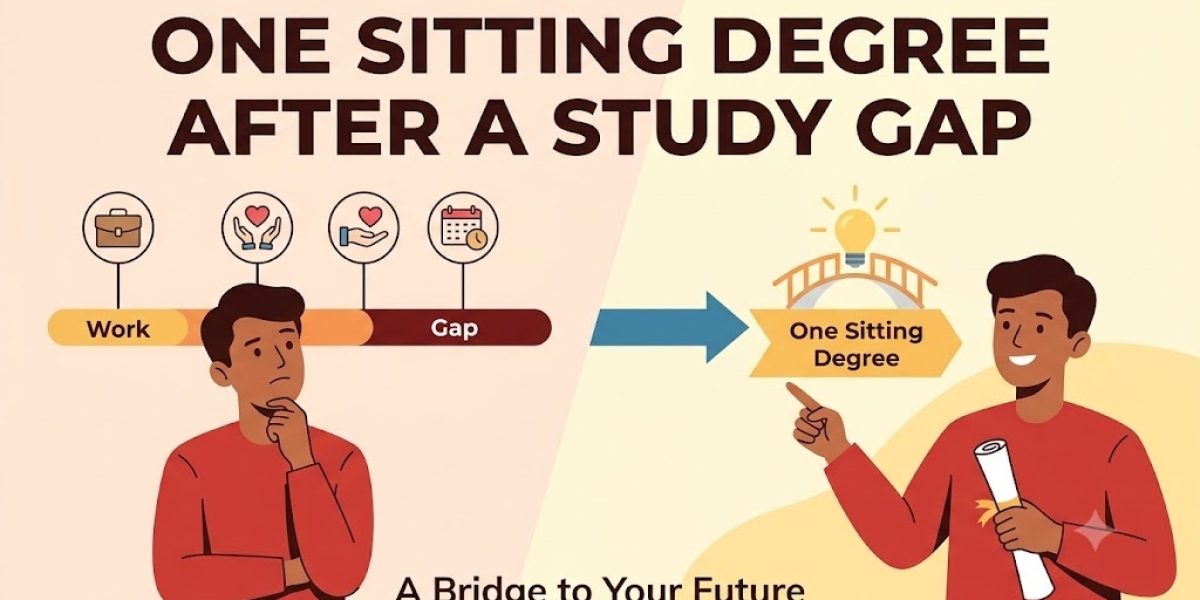

A study gap does not necessarily mean the end of your academic journey. Many learners take a break from education because of work, personal responsibilities, financial circumstances, relocation, or other reasons and later decide to complete their graduation. For such learners, flexible and recognised higher-education pathways can provide an opportunity to continue their studies.
The term One Sitting Degree 2026 is often used online for programmes advertised as allowing students to obtain a graduation qualification in a shortened period. However, students should understand that the recognition and validity of any degree depend on the university, programme, mode of study, applicable regulations, and the learner's eligibility. A legitimate degree should be awarded by a recognised institution through an approved programme rather than simply being purchased or issued without meeting academic requirements.
This guide explains what students with a study gap should know about One Sitting Degree After a Study Gap, available options, eligibility, recognition, and safer ways to complete higher education.
What Is a One Sitting Degree?
One Sitting Degree is a commonly used term for accelerated or alternative degree arrangements promoted to students who want to complete graduation after a long academic break. The phrase itself does not establish that a degree is officially recognised.
In India, students should distinguish between:
A recognised degree programme offered through an approved mode
A credit-transfer or lateral-entry pathway, where applicable
Recognition of previous academic credits
Regular, online, or distance learning programmes
Unrecognised or misleading "fast-track" degree offers
A student should therefore verify the institution and programme before paying fees or submitting documents.
Can You Complete a Degree After a Study Gap?
Yes. A study gap by itself does not generally prevent a person from returning to higher education. The actual eligibility depends on the course and university.
For example, students who discontinued their graduation several years ago may have options such as:
Rejoining an eligible undergraduate programme
Applying for an online degree programme
Applying for an approved distance-learning programme
Seeking credit transfer, where permitted
Using a university's re-admission or academic continuation provisions
Completing the required qualifications through another recognised route
The best option depends on how much education the student has already completed and whether previous credits can be accepted.
One Sitting Degree Eligibility After a Study Gap
There is no single eligibility rule for every programme marketed as a One Sitting Degree 2026. Students should check the rules of the specific university and programme.
For an undergraduate degree, eligibility commonly depends on the candidate's Class 12 qualification or equivalent. Some programmes may have additional subject requirements.
Students who have already completed part of a degree may have different possibilities. Depending on institutional regulations, previous coursework or credits may be considered for transfer or continuation.
Important factors may include:
Previous qualification
Year of passing
Subjects studied
Credits already earned
Previous university or institution
Programme equivalence
University regulations
Applicable recognition requirements
A long study gap does not automatically make a learner ineligible, but the student should obtain written confirmation from the university regarding the applicable admission route.
Options for Students With a Study Gap
Students looking for a One Sitting Graduation Degree should also consider recognised flexible education options.
1. Online Degree Programmes
Online undergraduate programmes can be suitable for students who need flexibility because of employment or other commitments.
Students can generally access learning resources digitally and complete academic requirements according to the programme structure. Before admission, verify whether the university and specific programme are recognised and whether the programme meets the requirements for your intended career or higher studies.
2. Distance Education
Distance education is another option for learners returning to education after a study gap. It can allow students to study without attending a conventional full-time campus programme.
However, recognition should be checked carefully. Students should verify the institution and programme through the relevant official regulatory or university sources.
3. Credit Transfer
Students who previously completed some semesters or years of a degree may be able to explore credit transfer or academic continuation.
Credit transfer is not automatic. The receiving institution determines whether previously earned credits can be accepted based on its rules, course equivalence, credit validity, and other conditions.
This option can be particularly relevant for students who left a degree programme before completion.
4. Re-Admission or Rejoining a Programme
Some universities provide mechanisms through which eligible former students can continue or rejoin their studies.
Students should contact the original institution and ask whether their previous registration, credits, and academic records remain valid. If continuation is not possible, another recognised programme may be considered.
Is a One Sitting Degree Valid?
The validity of a degree cannot be determined simply by the words "one sitting."
A student should examine:
Name of the awarding university
Recognition of the university
Recognition or approval status of the specific programme and mode
Admission eligibility
Duration of the programme
Examination requirements
Credit requirements
Academic records
Applicable regulations
Students should be particularly cautious about advertisements promising a degree without classes, examinations, academic work, or eligibility requirements.
A recognised degree normally involves prescribed academic requirements. Therefore, anyone offering a graduation certificate simply in exchange for a fee should be carefully evaluated.
One Sitting Degree for Working Professionals
Working professionals are among the learners who frequently search for One Sitting Degree for Working Professionals because attending a conventional full-time programme may be difficult.
Instead of focusing only on completing a degree quickly, working professionals should consider flexible recognised programmes that fit their schedules.
An online or distance programme may provide greater flexibility while allowing the learner to follow a structured academic curriculum. Students should compare programme duration, examinations, assignments, attendance requirements, fees, university recognition, and career relevance before applying.
Documents Required After a Study Gap
The exact documents depend on the university and programme. Commonly requested documents may include:
Class 10 certificate
Class 12 certificate
Previous degree or marksheets, where applicable
Transfer or migration documents, if required
Identity proof
Passport-size photographs
Previous academic records
Credit or semester records for transfer cases
Students with a long study gap should maintain copies of their previous academic documents because these may be required when applying for a new programme or requesting credit transfer.
How to Choose a Degree Programme After a Study Gap
Choosing the right programme requires more than searching for a One Sitting Degree Admission 2026 advertisement.
Check University Recognition
Verify that the awarding institution is recognised and that the specific programme and mode of delivery meet applicable requirements.
Check Course Duration
Understand the officially prescribed duration. Be cautious of claims that a full degree can always be completed in an unusually short period.
Check Eligibility
Confirm that your previous qualification satisfies the admission requirements.
Verify the Learning Process
Ask about classes, assignments, examinations, projects, practical requirements, and other academic components.
Check Career Requirements
If you need the degree for a government job, private employment, promotion, professional qualification, or higher studies, verify that the qualification meets the requirements of the organisation or institution concerned.
One Sitting Degree and Higher Studies
Students planning to pursue a master's degree after graduation should check the admission requirements of the intended postgraduate institution before enrolling in any undergraduate programme.
For example, a university may specify particular eligibility conditions, minimum marks, subject requirements, or recognition criteria for postgraduate admission.
Therefore, if your objective is graduation after a study gap, plan backward from your long-term academic goal. This can help you choose a degree programme that supports your future plans.
Benefits of Completing a Degree After a Study Gap
Returning to education can provide several practical benefits when the programme is appropriately recognised.
A completed undergraduate qualification may help learners meet educational requirements for certain employment opportunities, promotions, competitive examinations, postgraduate programmes, or career changes.
Flexible learning options can also make it easier for working professionals and adult learners to balance education with other responsibilities.
However, the actual benefit depends on the recognition of the qualification and the requirements of the organisation where it is used.
Things to Avoid When Searching for One Sitting Degree 2026
Students should be careful about advertisements containing claims such as:
Guaranteed degree without examinations
Degree without eligibility
Degree issued immediately
Backdated degree certificates
Guaranteed government job acceptance
Guaranteed UGC approval without evidence
No academic requirements whatsoever
Such claims should be independently verified before making any payment.
A legitimate admission process should clearly explain the university, programme, eligibility, duration, fees, examinations, and certification process.
Final Thoughts
A One Sitting Degree After a Study Gap can be an attractive search term for learners who want to restart their education, but students should focus on recognised degree programmes rather than simply looking for the fastest qualification.
Depending on their academic background, learners may explore online education, distance education, credit transfer, re-admission, or other approved academic pathways. The right option depends on previous qualifications, completed credits, university rules, and future career or education plans.
Before applying for a One Sitting Degree 2026, verify the awarding university, programme recognition, eligibility, duration, academic requirements, examination process, and acceptance for your intended purpose. Taking these steps can help students avoid misleading claims and choose an education pathway that supports their long-term goals.