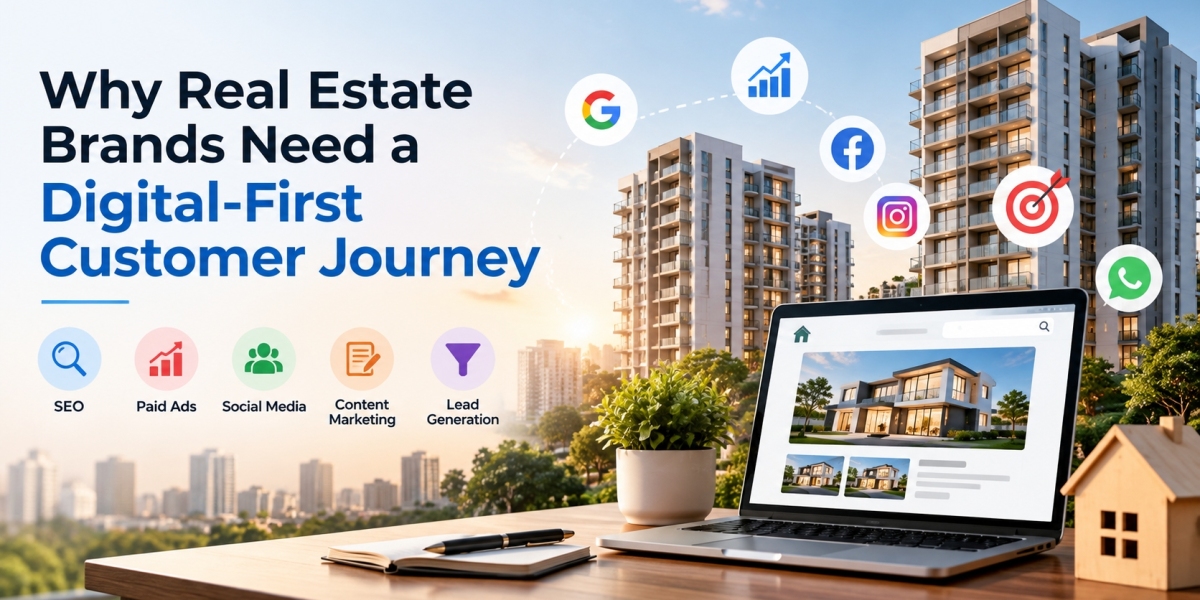

Buying property is no longer a decision that begins with a site visit. Today, potential buyers often discover a project online, compare multiple properties, check reviews, explore location details, watch videos, and contact a business only after building enough confidence. This shift has made digital presence an important part of modern real estate marketing.
A strong online strategy can help builders, developers, brokers, and property consultants stay visible throughout this journey. Instead of focusing only on advertisements, businesses can combine search visibility, useful content, social media, paid campaigns, landing pages, and lead nurturing to create a smoother path from discovery to enquiry.
The Real Estate Buyer Journey Starts Before the Enquiry
A property buyer may search for terms related to apartments, commercial spaces, plots, investment opportunities, or properties in a particular location. At this stage, they may not be ready to contact a salesperson.
This is where informative content becomes valuable.
Property businesses can create location guides, project comparisons, investment information, neighbourhood content, FAQs, and property-specific pages. Such content can answer early questions while helping the brand become visible when potential customers are researching their options.
Why Search Visibility Matters for Property Businesses
Real estate searches are often highly location-specific. Users may search for properties in a particular city, sector, neighbourhood, or price range.
A well-structured SEO strategy can help businesses target these different search intents through dedicated pages and useful content.
For example, a real estate website can build content around:
- Property and location-based searches
- Residential and commercial property searches
- Investment-related queries
- Project-specific searches
- Local property information
This approach allows a business to reach users at different stages instead of depending entirely on paid advertising.
Paid Campaigns Can Capture High-Intent Buyers
Search and social advertising can bring faster visibility when campaigns are properly planned. However, sending every visitor to the same homepage can make the journey less relevant.
Dedicated landing pages can be created for different campaigns. A residential project, commercial property, luxury apartment, or investment campaign can have its own page with relevant information, images, location details, amenities, and enquiry options.
This creates a more focused experience for visitors and makes it easier for businesses to understand which campaigns are generating enquiries.
Social Media Builds Interest Before the Sales Call
Real estate is a visual industry, which makes social media particularly useful for showcasing projects.
Instead of posting only promotional messages, property businesses can share construction updates, walkthrough videos, neighbourhood information, project features, customer questions, and educational content.
Short-form videos can also introduce a property to users who may not have actively searched for it yet. Consistent content helps keep the project visible while potential buyers continue researching.
The Website Should Work Like a Sales Assistant
A real estate website is more than an online brochure. It should help visitors find the information they need without unnecessary friction.
Important elements can include clear project information, location details, property specifications, image galleries, FAQs, enquiry forms, mobile-friendly navigation, and prominent contact options.
A fast and responsive website is also important because many property searches happen on mobile devices.
Businesses investing in digital marketing company for real estate strategies should therefore connect website improvements with their broader marketing campaigns rather than treating the website and marketing as separate activities.
Lead Nurturing Is Where Many Opportunities Are Lost
Not every property visitor is ready to purchase immediately.
Someone may enquire today but make a decision weeks or months later. Regular follow-ups through appropriate channels can keep the business connected with these prospects.
Email campaigns, WhatsApp communication, remarketing, useful property updates, and personalised follow-ups can help maintain the relationship without repeatedly sending the same sales message.
The goal is to provide relevant information at the right stage of the buyer journey.
Local Marketing Can Strengthen Property Visibility
For businesses operating in specific cities or regions, local marketing can make their digital presence more relevant.
Location-focused website pages, Google Business Profile optimisation, local content, customer reviews, and location-specific search campaigns can help businesses communicate where they operate and what markets they serve.
This becomes particularly useful for developers and property consultants competing within specific local markets.
Why an Integrated Strategy Works Better
Real estate marketing rarely depends on one channel.
SEO can support long-term search visibility. Paid advertising can provide targeted traffic. Social media can build awareness. Content can answer buyer questions. Landing pages can support campaigns, while remarketing and follow-ups can keep potential customers engaged.
An integrated approach allows these channels to support one another instead of working independently.
For businesses looking for a best digital marketing agency for real estate, it is useful to look beyond individual services and consider how the agency connects SEO, paid advertising, content, social media, website optimisation, and lead management into one customer journey.
Final Thoughts
Real estate marketing is moving from simple property promotion toward a complete digital customer experience. Buyers want information before they make contact, and businesses that provide clear, useful, and accessible information can create more opportunities throughout the decision-making process.
The focus should not only be on generating traffic. It should be on attracting relevant visitors, answering their questions, building trust, and making the next step simple.
A well-planned digital strategy can therefore become an important part of how modern real estate brands attract and nurture potential buyers.