
Toddlers develop new skills rapidly as they learn to communicate, move, play and become more independent. While children do not all develop at exactly the same pace, certain milestones can provide useful guidance about development. Developmental milestones describe skills that most children can do by a particular age across areas such as movement, communication, learning and social interaction.
When a toddler consistently struggles with age-appropriate activities or loses skills they previously had, it may be appropriate to discuss these concerns with a healthcare professional. Early developmental monitoring and screening can help identify areas where additional assessment or support may be useful.
What developmental delay can look like
Developmental delay does not always appear in the same way. Some toddlers may have difficulty with movement, while others may struggle with communication, play, attention or everyday activities.
Parents may notice that a child has difficulty:
Sitting, standing, walking or climbing compared with expected milestones
Using their hands to manipulate toys or everyday objects
Holding or using a spoon, cup or other age-appropriate items
Scribbling, drawing or completing simple hand-based activities
Following simple instructions
Participating in age-appropriate play
Engaging with others during play or everyday routines
Managing dressing, feeding or other self-care activities
Maintaining attention during simple activities
Coping with sensory experiences such as particular sounds, textures or movements
For example, by 18 months, the CDC lists skills such as walking without holding on, scribbling, feeding with fingers, trying to use a spoon and climbing on and off furniture as developmental milestones. These milestones are useful reference points, but they are not intended to replace a professional developmental assessment.
When should parents seek advice?
A single missed milestone does not necessarily mean that a child has a developmental disorder. However, persistent concerns should not simply be ignored.
Parents can keep track of the skills their child is developing and discuss anything unusual with their child's doctor. Concerns may be more significant when a child is having difficulty across several developmental areas, is struggling with everyday activities, or has lost a skill they previously used.
The CDC recommends discussing developmental concerns with a child's healthcare provider and asking about developmental screening when appropriate. The American Academy of Pediatrics also recommends developmental screening at specific ages and further evaluation when concerns are identified.
How occupational therapy can support toddlers
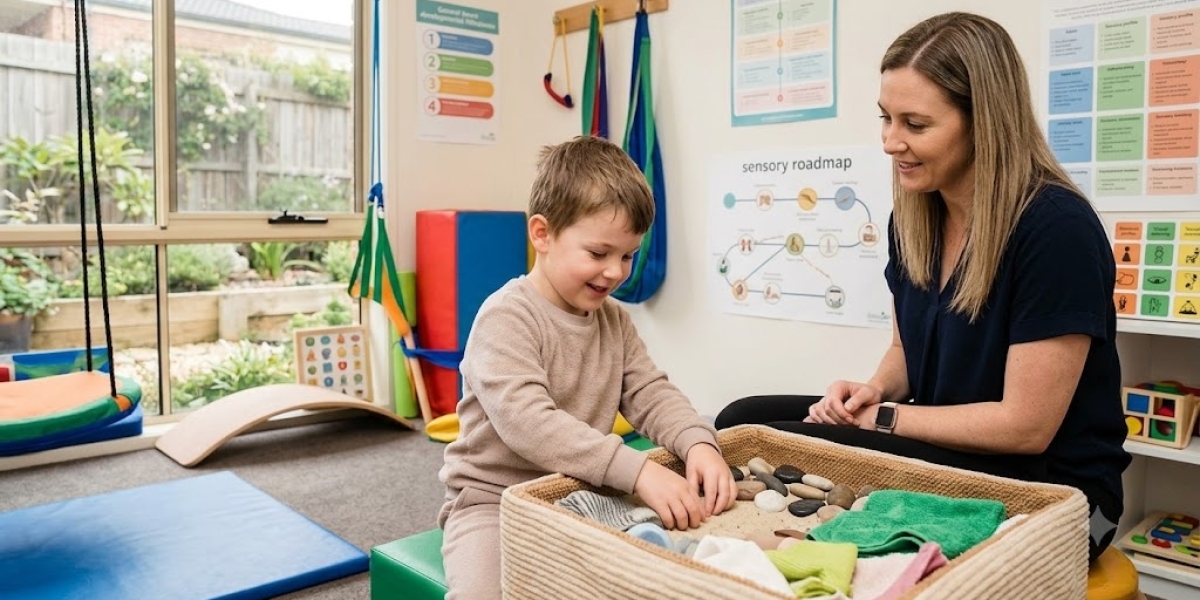
Occupational therapy focuses on helping children participate in everyday activities that are important for their development and independence. For toddlers, these activities may include playing, feeding, dressing, using their hands, interacting with their environment and developing age-appropriate motor skills.
A child may benefit from pediatric occupational therapy UAE when developmental concerns affect participation in everyday activities. An occupational therapist can assess areas such as fine motor skills, coordination, sensory processing, attention and functional abilities, depending on the child's individual needs.
The assessment process can help identify which activities are difficult for the child and what skills may need additional support. Therapy activities can then be structured around meaningful tasks and age-appropriate play.
Areas occupational therapy may address
Occupational therapy for toddlers can involve several areas of development. These may include fine motor coordination, hand strength, visual-motor skills, balance, body awareness and participation in daily routines.
For example, a toddler who finds it difficult to use a spoon may work on hand coordination and grasp through play-based activities. A child who struggles with dressing may practise individual steps of the routine. Another child may need support with activities that involve attention, movement or sensory experiences.
The specific approach depends on the child's developmental profile and the concerns identified during assessment.
Why early support matters
Recognising developmental concerns early gives families an opportunity to discuss them with appropriate professionals. Early intervention may include developmental assessment and support from different professionals depending on the child's needs. The American Academy of Pediatrics notes that early developmental intervention can be particularly valuable when a child is identified as being at risk for delayed development.
Occupational therapy may be one part of a multidisciplinary approach. Depending on the concerns, a child may also require input from paediatricians, speech and language professionals, psychologists or other specialists.
Parents can also support development at home by providing opportunities for age-appropriate play, encouraging participation in simple daily routines and observing how their child responds to different activities.
What parents can do if they are concerned
If you notice that your toddler is consistently struggling with skills expected for their age, start by documenting what you have observed. Note which activities are difficult, when the difficulty occurs and whether the child has previously demonstrated the skill.
Discuss these observations with your child's healthcare provider and ask whether developmental screening or further assessment would be appropriate. If additional support is recommended, an occupational therapy assessment can help explore how developmental difficulties may be affecting everyday participation.
For families exploring OT for children UAE, understanding the child's individual developmental needs is an important first step. Occupational therapy can focus on practical skills and activities that are relevant to the child's daily life.
Supporting development without comparison
Children develop at different rates, so comparing one toddler with another can sometimes create unnecessary concern. At the same time, persistent developmental concerns deserve attention rather than being dismissed as something a child will simply outgrow.
Monitoring milestones, discussing concerns with healthcare professionals and seeking assessment when appropriate can help families understand a child's developmental needs. When occupational therapy is recommended, the focus can be on supporting participation in everyday activities while considering the child's individual strengths and areas requiring support.
Developmental monitoring is an ongoing process, and parents play an important role because they see their child's abilities and challenges across everyday situations. If concerns arise, raising them early can help guide the next appropriate step.