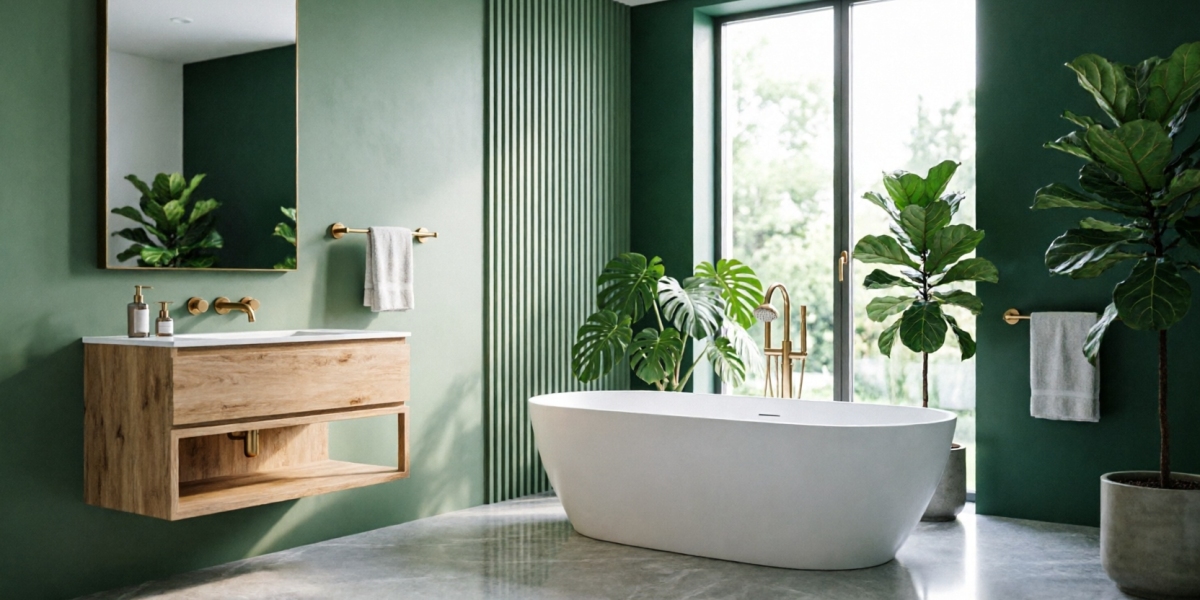

Green has moved on from being a trendy bathroom colour to a staple, in part because it offers such a versatile palette. Green is restful, works well with natural textures and looks good in both traditional and contemporary settings. The challenge is that there is such a wide varietiy of greens, and it can be difficult to know which will suit the lighting in your bathroom, which patterns look best, and how best to use and care for them once installed. Panels offer a good way to try out a particular green without the commitment of painting, or the expense of tiling. This guide looks at the different options available and offers advice on choosing and putting together schemes with green bathroom panels.
Choosing the best green for your bathroom
Lighting will have the biggest impact on the appearance of any particular green. Greens are notoriously variable, which means that a shade that looks beautiful in the showrooms may appear grey or washed out when there is less natural light. Always test a sample at home before choosing a particular green.
Sage and pale eucalyptus are safest starting points, as they work well in any size room and with white sanitaryware. Mid-tones like olive and moss are less subtle but more warming and work well in a bathroom with plenty of natural light. Darker shades such as forest green, bottle green or dark fern have a more enclosed, steamy feel and can overwhelm a small bathroom without much in the way of illumination, but can be fabulous in a larger bathroom or as an accent.
Greens with a blue undertone such as teal or sea glass will look cooler, while those with a yellow undertone are more traditional in feel. In either case, consider the overall colour scheme of the room, with particular attention to the floor and sanitaryware.
Patterns in green
Plain panels in pale sage or mid-green look good when painted in a flat or satin finish, but there are a number of patterns that use natural materials as inspiration.
• Green marble effects echo real stone in a range of tones from pale to dark, and often have white or gold veins for contrast, but always look out for variation in the pattern so that the design is not obtrusive.
• Botanical prints usually feature large leaves or foliage patterns, and can be a good choice for a feature panel alongside the bath, but keep the rest of the room simple so that the print does not become distracting.
• Fluted patterns have vertical lines in a lighter shade of green to give the illusion of depth and shadow, and work well in a more spa-like bathroom, though will need regular wiping to prevent soap build-up.
• Plaster effects in a lighter or mid green give a mottled finish similar to limewash, and work well in both modern and traditional bathrooms.
• Incorporating wood effect panels in pale wood with green can give a nice woodland effect without the problems of moisture in a bathroom.
One patterned wall with the rest in plain panels is a good start if you are looking to experiment with styles.
Finishes that enhance green
The finish will also affect the overall impression of any green bathroom panel. Satin and matt finishes are best for neutral and pale shades, to give a more natural appearance reminiscent of stone or plaster. Gloss enhances the green, which can be desirable in a dark shade, but will also show imperfections, water spots and limescale more easily. If you have hard water which is common in the UK, this may not be the best option.
The finish also affects the overall feel and practicality of the panel. A textured finish in a lighter or mid green will pick up and accentuate the grain, but the same texture in a dark green will trap soap. Always bear in mind that a textured panel will need more regular cleaning.
Complementary schemes with green panels
Green is a very versatile colour, but there are some choices that work better than others. Light wood effect panels, shelves or stools add warmth to a green bathroom scheme. Brushed brass, bronze and gold fittings look nice in contrast with dark greens while chrome or brushed nickel fittings provide a nicer balance with light greens. Taps and showerheads in matte black can be a striking contrast with lighter sage or olive panels.
White sanitaryware is always a good choice, providing a pleasant contrast and keeping the bathroom looking light and airy. Cream towels and accessories in sand or warm greige add warmth to the scheme. Plants that tolerate higher humidity such as ferns and spider plants are also appropriate for a green bathroom theme, assuming there is enough light for them to survive. Limit the number of contrasting colours in the scheme to avoid creating confusion, as greens go well with neutrals, but look less good alongside bright colours. Similarly, warm white lighting will complement most greens better than cool white bulbs, and using a mix of lights such as downlights, a mirrored light and wall lights can give more flexibility.
Care and maintenance
Green panels are generally straightforward, though like any other coloured surface they will require some cleaning and maintenance. Mid-tones and lighter greens are more forgiving and will hide water spots better than dark greens, black or very pale panels. A soft cloth and a gentle cleaner is best, but always check the manufacturer’s recommendations. Wiping the panels dry after use will usually be enough to prevent spotting, though very dark panels or those with a gloss finish may need more thorough cleaning.
Avoid using scouring pads or abrasive cleaners which may damage the finish. Pay particular attention to the sealant lines where water can run down and get trapped. These can look particularly unpleasant against a light or mid-tone panel, and should always be replaced if they become discoloured or damaged. Use a suitable bathroom sealant with anti-mould properties where necessary and allow it to cure before using the shower. A powerful extractor fan or open window will always be more effective at removing moisture from the air than any number of cleaning products.
Installation considerations
Your bathroom wall should be dry and in good condition before any panels are fitted. Make sure that the panel joints fall at logical places such as around pipework, and take extra care when installing around corners. If you are thinking about fitting a shower enclosure choose a panel that is suitable for wet rooms and take particular care when considering the fit around corners. If you are looking at options for a shower wall panels in green you should also consider the trims, as colour-matched ones will give a more uniform appearance while those in a contrasting metal can set off your fittings nicely.
Considering the overall scheme
It is often helpful to see a completed scheme to get an idea of how different styles and finishes might look together. The guide to the Best Shower Panels for Modern Bathrooms showcases a number of panel styles and how they can be used in combination with fittings and sanitaryware to create a contemporary bathroom scheme.
Next steps
Choose two or three greens that you think would work in your bathroom, in different finishes if possible. Get samples and test them out in the room at different times of day, seeing how they look against your tiles, sanitaryware and floor. Look at the appearance when wet, noting any water spots or other issues. Check the manufacturer’s recommendations for any particular care or installation requirements. A green that you still like after living with the sample for a week or so is likely to be a good choice.