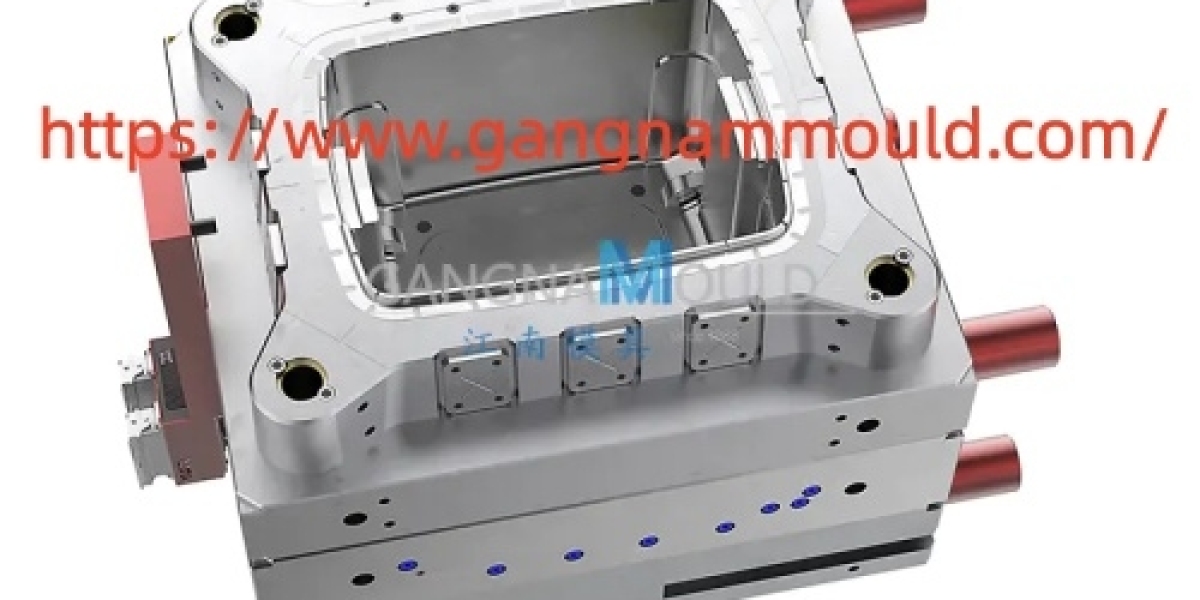

Storage Box Injection Mould selection requires careful attention to product structure, plastic material, dimensional requirements, production volume, cooling design, ejection methods, and maintenance needs. Buyers should evaluate these factors together instead of focusing only on the initial quotation. A clear technical review can help manufacturers choose tooling that matches the intended product, machine conditions, and production plan.
The first point to examine is the shape of the finished container. Plastic containers can have straight walls, tapered sides, rounded corners, reinforced edges, internal ribs, snap fit sections, or integrated handles. Each feature affects how the cavity and core should be arranged. Complex geometry may require additional mechanisms to achieve smooth release. Reviewing the three dimensional drawing before manufacturing gives engineers an opportunity to identify difficult areas and suggest practical adjustments.
Material selection is closely connected with tooling preparation. Common plastics used for household containers can have different shrinkage rates, flow characteristics, processing temperatures, and cooling behavior. These differences can influence final dimensions and appearance. Buyers should provide accurate resin information during the early design stage. If recycled content, additives, or alternative materials may be used, these factors should also be discussed because they can affect processing conditions.
Steel selection should match the expected workload and product requirements. Buyers can ask about cavity and core materials, hardness, surface treatment, and replaceable components. The appropriate specification depends on expected production quantity, resin characteristics, product complexity, and maintenance plans. There is no single configuration suitable for every project, so technical recommendations should be based on actual working conditions.
Cooling deserves particular attention when large plastic containers are involved. Sections with different wall thicknesses may release heat at different rates. An uneven thermal layout can contribute to deformation or longer cycles. Engineers should therefore consider channel placement according to the product geometry. Buyers can request information about cooling coverage and expected processing conditions before approving the final tooling design.
Ejection is another practical area to review. A container with deep walls or internal features needs sufficient draft and an appropriate release arrangement. If the release process is not properly planned, finished parts may show marks or experience deformation. Ejector locations should be positioned with both product appearance and structural stability in mind. This is particularly useful when visible exterior surfaces need a clean appearance.
Surface treatment should be confirmed before machining is completed. Different products may require smooth, textured, matte, or patterned surfaces. The desired appearance can affect finishing methods and preparation time. Buyers should identify visible areas and provide reference samples or digital specifications where possible. Clear information at this stage can reduce misunderstandings during sampling.
Production requirements also influence cavity configuration. A manufacturer producing several thousand units periodically may have different needs from a factory running continuous production. Buyers should provide expected monthly or annual quantities, available machine specifications, target cycle conditions, and possible future demand. This information gives the supplier a clearer basis for discussing cavity numbers and overall tooling construction.
Maintenance should not be overlooked during supplier selection. Regular cleaning, inspection, lubrication, adjustment, and replacement of wear components are normal parts of tooling management. Easy access to service areas can make these tasks more convenient for factory technicians. Buyers may also ask whether spare components and technical documentation can be supplied with the finished tooling.
Trial production provides another useful checkpoint. Before moving into regular manufacturing, buyers can inspect sample parts for dimensions, appearance, wall distribution, fit, release marks, and assembly performance. Any reasonable adjustments can then be discussed with the engineering team. Keeping approved samples and dimensional records can also provide a useful reference for later production runs.
Communication remains an important part of the purchasing process. Drawings, resin specifications, machine parameters, appearance requirements, production quantities, and packaging considerations should be reviewed before fabrication begins. Gangnammould can work with manufacturers to discuss these technical factors and develop tooling arrangements around individual product requirements.
For buyers preparing a new plastic container project, comparing technical details can make supplier evaluation more practical. Gangnammould provides related product and tooling information at https://www.gangnammould.com/product/ where manufacturers can review available solutions and consider suitable options for their production plans.