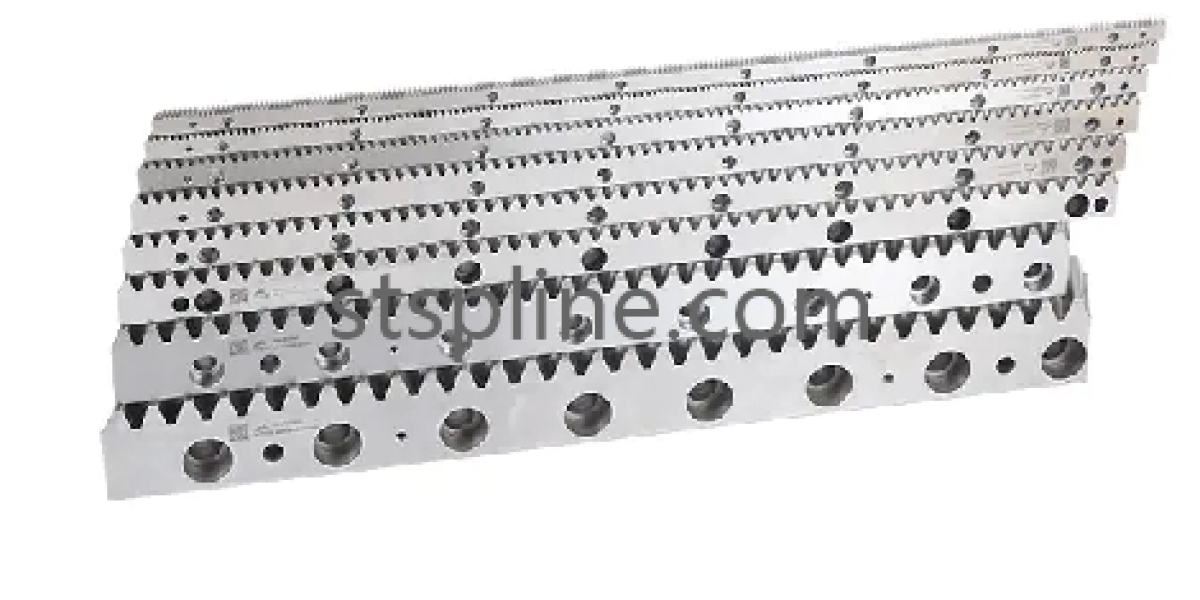

Milling is an important machining process for producing mechanical components with defined dimensions and functional surfaces. In industrial transmission systems, a properly manufactured Milled Rack provides a toothed linear element that works with a pinion to convert rotary input into straight-line movement. This mechanism is widely used in CNC machine tools, laser cutting machines, gantry equipment, automated production lines, and material handling systems. The final performance depends on the selected material, tooth geometry, machining accuracy, dimensional consistency, and the way the rack is installed in the complete machine.
Material preparation influences both the machining process and the performance of the finished component. Carbon steel is commonly considered for general industrial applications because it offers useful strength and machinability. Alloy steel may be selected for applications involving more demanding loads or wear conditions. Before milling begins, the material and blank dimensions should be checked against the drawing. Adequate preparation helps establish a stable reference for subsequent operations and reduces the likelihood that dimensional errors will carry through the production process.
The milling process forms the required tooth geometry according to the component's design. Tool selection, cutting conditions, machine rigidity, workpiece clamping, and tool condition can all affect the finished profile. Inconsistent setup or tool wear may contribute to variations in tooth spacing, surface finish, and dimensional accuracy. For this reason, machining parameters should be selected according to the material, tooth geometry, and specified tolerances. Stable production conditions help improve repeatability and reduce the need for excessive correction during later finishing operations.
Tooth geometry must remain compatible with the mating pinion. Module, pressure angle, pitch, and tooth profile influence how the components engage and transfer force. If these characteristics do not match the design requirements, the transmission may develop excessive backlash, irregular contact, noise, or premature wear. In CNC equipment and automated positioning systems, such problems can affect motion consistency. The rack should therefore be designed and inspected as part of a complete drive assembly that includes the pinion, motor, reducer, mounting structure, and linear guide.
A properly produced Milled Rack can be adapted to different equipment dimensions and transmission arrangements. Rack length, mounting holes, end features, and interface dimensions may vary according to the machine design. Some applications use a single rack section, while larger systems require multiple sections to create an extended travel path. In these installations, joint positioning and overall straightness are important. Poorly aligned sections may interrupt smooth pinion engagement, causing local changes in movement resistance. Careful dimensional control and suitable installation procedures help reduce these risks.
Additional finishing operations may be required depending on the intended use. Deburring removes unwanted sharp edges created during machining, while grinding may be considered when tighter dimensional tolerances or improved surface conditions are needed. Heat treatment can be incorporated when specified material properties or wear requirements call for it. However, these operations should be selected according to the application rather than added automatically to every component. The manufacturing route needs to balance technical requirements, process stability, production efficiency, and cost.
Quality inspection provides evidence that the finished rack conforms to its technical specifications. Common checks include tooth profile, pitch consistency, straightness, overall dimensions, mounting-hole positions, and surface condition. Hardness testing may also be required when heat treatment is part of the production process. Inspection equipment and acceptance criteria should be appropriate to the specified accuracy. Reviewing the mating pinion dimensions and installation interfaces before production can help prevent assembly problems, especially for components manufactured to customer drawings.
Different industrial applications impose different operating demands. CNC routers and machining centers require controlled axis movement, while laser cutting machines need coordinated travel to follow programmed cutting paths. Robotic manipulators and gantry systems use linear transmission for positioning tools and workpieces. Packaging and material handling equipment may prioritize repeatable movement and dependable operation over long production cycles. Load, speed, duty cycle, travel distance, and environmental conditions should all be considered when selecting the rack and its supporting components.
Installation and maintenance are essential to achieving consistent operating performance. The rack should be fixed to a stable mounting surface, aligned with the intended movement direction, and checked for suitable pinion engagement across the full travel range. Appropriate lubrication helps reduce friction and tooth wear. Protective measures can limit contamination from dust, metal chips, and moisture. Periodic checks of fasteners, backlash, noise, and tooth contact can reveal developing problems before they affect equipment availability.
For industrial buyers, supplier evaluation should cover machining capability, material options, production consistency, inspection procedures, and technical communication. SOTER manufactures rack and pinion products for industrial automation and mechanical transmission applications. Buyers seeking straight-tooth configurations can explore https://www.stspline.com/product/straight-teeth-rack/ to compare available product options with their equipment drawings, installation requirements, and intended operating conditions.