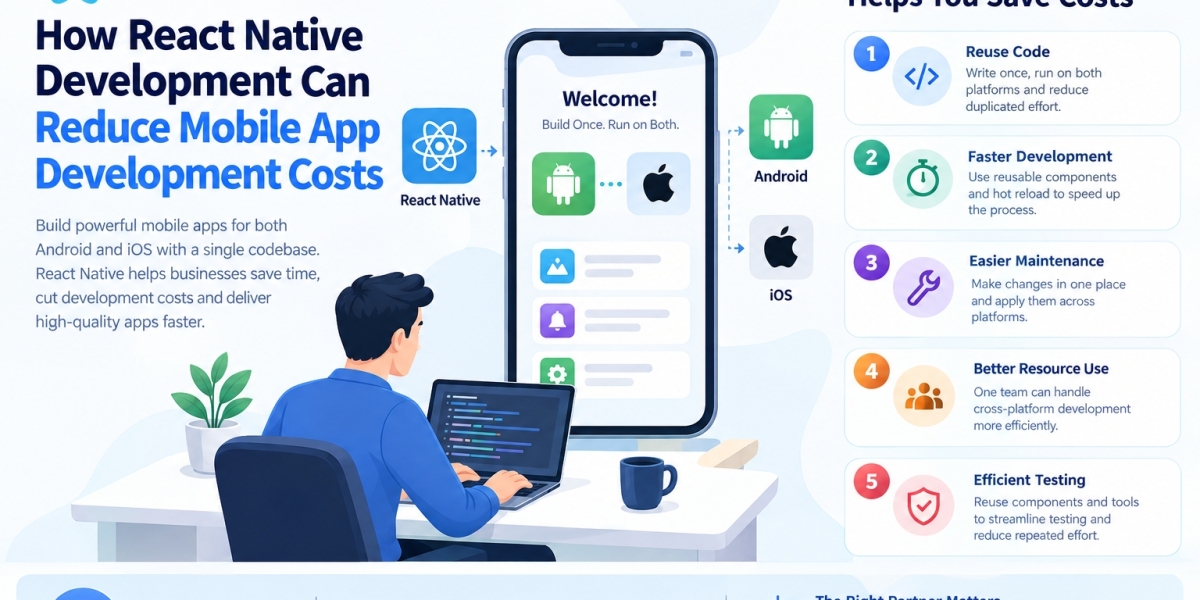

Building a mobile app for both Android and iOS can require significant time, technical expertise, and budget. For businesses working with limited resources, choosing the right development approach is essential. React Native offers a practical way to build apps for multiple platforms while reusing much of the same code.
According to the official React Native documentation, developers can create native apps for Android and iOS using React, with shared components and platform-specific code where needed. This approach can help businesses manage Mobile App Development Costs without compromising essential app functionality.
Why React Native Is a Cost-Effective Choice
React Native allows developers to reuse code across platforms instead of building every feature separately. As a result, businesses may reduce development effort, simplify maintenance, and bring their apps to market more efficiently.
Here are the key ways React Native can help control costs.
1. Reuse Code Across Android and iOS
Developing separate Android and iOS apps often requires platform-specific code and additional development work. React Native allows teams to share many components, screens, and business logic across both platforms.
This reduces duplicated effort and helps developers focus on improving the app rather than rebuilding the same features twice. However, some features may still require platform-specific implementation.
2. Reduce Development Time
Time directly affects project budgets, especially when developers charge hourly or work under a fixed project agreement. React Native supports faster development through reusable components and tools such as Fast Refresh, which lets developers see many code changes quickly.
With a well-planned project, teams can build and refine features more efficiently. This can be particularly helpful for startups and businesses that need to launch an app within a defined budget.
3. Simplify App Maintenance
Maintaining two completely separate codebases can increase the effort required to fix bugs, update features, and improve performance. Since React Native supports shared code, developers can often make changes in one place and apply them across platforms.
Nevertheless, teams must still test the app on Android and iOS to identify platform-specific issues. Regular maintenance planning helps prevent unexpected costs as the app grows.
4. Make Better Use of Development Resources
Hiring separate teams for each platform may increase project complexity and coordination costs. React Native can allow a team with suitable cross-platform expertise to handle much of the shared development work.
Businesses considering React Native app development services should evaluate the provider's technical skills, testing process, and experience with native integrations. The right team can help reduce duplicated work while maintaining a reliable user experience.
5. Build and Test Features Efficiently
Testing is essential for delivering a stable mobile app. React Native supports reusable components and established development tools that can help teams organize testing and debugging.
A shared codebase can reduce repeated testing effort for common features, although device testing remains important. Apps that use payments, GPS, cameras, or complex animations may require additional platform-specific checks.
When Should You Choose React Native?
React Native can be a strong option for the following types of projects:
- Startups developing their first mobile application.
- Businesses launching an app on Android and iOS.
- Ecommerce companies building shopping applications.
- Service providers creating booking or customer-support apps.
- Companies looking to maintain and expand an existing cross-platform app.
However, highly specialized apps that depend on intensive graphics, complex native functionality, or demanding hardware integrations may need a different approach or additional native development.
How to Choose the Right React Native Development Company
Selecting an experienced React Native app development company is just as important as choosing the framework. Before making a decision, review the provider's portfolio, development process, testing standards, and post-launch support.
Ask for a clear estimate covering design, development, third-party integrations, testing, deployment, and maintenance. Also, confirm which features can share code and which may require separate implementation. A transparent estimate helps you understand the actual project cost instead of focusing only on the initial development price.
Final Thoughts
React Native can help businesses control Mobile App Development Costs through code reuse, faster development, simplified maintenance, and more efficient use of development resources. However, the final savings depend on the app's complexity, required integrations, testing needs, and the team's expertise.
By choosing suitable React Native app development services and planning the project carefully, businesses can build cross-platform mobile apps that meet their goals while making effective use of their budget.