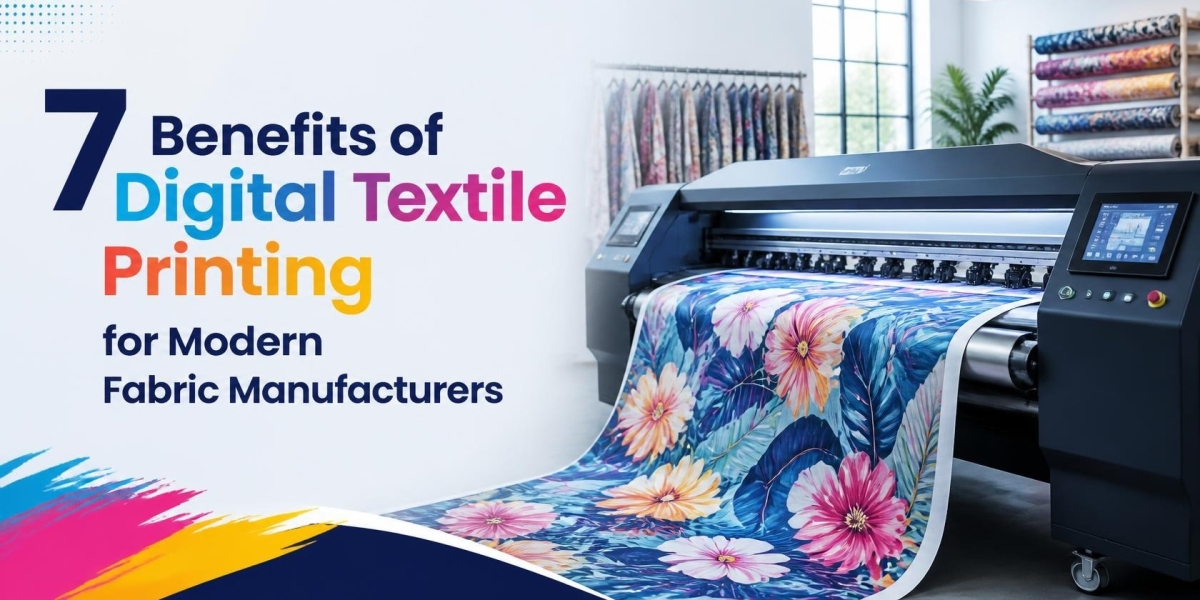

The textile industry is changing as businesses look for faster production, better print quality, and more flexible design options. Traditional fabric printing methods can be effective for large production runs, but they may require more setup time, printing screens, and material preparation. This is where digital textile printing offers a practical alternative.
For fabric manufacturers, fashion brands, interior designers, and textile businesses in Saudi Arabia, digital printing makes it easier to create detailed patterns, vibrant colours, and customized fabric designs. It also supports changing customer preferences and smaller production orders.
Whether you manufacture fabrics for clothing, home furnishings, promotional products, or traditional garments, understanding the benefits of digital textile printing can help you make better production decisions.
1. High-Quality Prints with Detailed Designs
One of the biggest benefits of digital textile printing is its ability to reproduce detailed designs with excellent precision. Modern digital printers can produce complex patterns, fine lines, gradients, and multiple colours directly onto fabric.
This makes digital printing suitable for floral patterns, geometric designs, photographic images, and customized artwork.
For manufacturers serving fashion and interior design markets in Saudi Arabia, detailed printing can help create distinctive products that meet specific customer requirements. The final quality depends on the printer, fabric type, ink system, and printing process.
2. Faster Design Changes and Production Setup
Traditional screen printing often requires separate screens for different colours and designs. Preparing these screens can increase setup time, particularly when a customer requests a new pattern.
Digital textile printing allows designs to be sent directly from a computer to a compatible printer. This reduces the need for screen preparation and makes switching between designs easier.
Manufacturers can respond more quickly to changing fashion trends, customer feedback, and seasonal collections. Faster setup is particularly useful for businesses handling multiple designs or customized orders.
3. Greater Flexibility for Small and Custom Orders
Not every customer needs thousands of metres of fabric featuring the same pattern. Fashion labels, boutique retailers, and design studios may require smaller quantities with unique designs.
Digital fabric printing makes short production runs more practical because manufacturers can change designs without preparing new screens for each job.
For example, a Saudi fashion brand could test several printed fabric designs for a new collection before committing to larger production volumes.
This flexibility helps businesses test market demand, offer personalized products, and reduce the risk of producing large quantities of designs that customers may not prefer.
4. More Efficient Material Usage
Material waste can increase production costs, especially when manufacturers need to prepare samples, test designs, or meet exact customer specifications.
Digital textile printing can support more controlled production by allowing designs to be adjusted and samples to be produced before a larger order is processed.
Producing smaller quantities when needed may also reduce excess inventory of printed fabrics.
However, actual material savings depend on fabric handling, printer calibration, design placement, sampling requirements, and production planning. Manufacturers should evaluate these factors before estimating potential cost reductions.
5. Wide Design Possibilities Across Different Fabrics
Digital textile printing supports a broad range of creative possibilities. Depending on the printing technology and ink system, it can be used on suitable cotton, polyester, silk, and blended fabrics.
Different applications may require different printing methods. For example, reactive inks are commonly used for suitable natural fibres, while disperse inks are widely used for polyester. Pigment printing can be suitable for various fibre types when the fabric and finishing process are compatible.
This versatility helps fabric manufacturers serve different markets, including apparel, scarves, curtains, upholstery, and decorative textiles.
Before choosing a printing method, businesses should confirm fabric compatibility, colour requirements, wash durability, and finishing needs.
6. Supports More Flexible Production Planning
Digital printing allows manufacturers to manage multiple designs without making a separate screen for every pattern. This can simplify workflows for businesses producing varied collections or customized fabric orders.
Manufacturers can also use digital samples to review colours and layouts before starting full production.
For businesses in Saudi Arabia, this flexibility can be valuable when supplying fashion retailers, garment manufacturers, interior design companies, and customers with different design requirements.
Although digital printing can improve workflow efficiency, overall production speed depends on printer capacity, fabric preparation, curing or steaming requirements, and post-print finishing.
7. Helps Businesses Respond to Changing Market Demand
Customers increasingly seek distinctive patterns, customized products, and designs that reflect their brand identity. Digital textile printing gives manufacturers more freedom to develop and update designs without extensive screen preparation.
Businesses can introduce seasonal collections, produce limited-edition fabrics, and experiment with new patterns more easily.
For textile suppliers in Saudi Arabia, this creates opportunities to serve fashion brands, abaya designers, home furnishing businesses, and promotional product companies.
Combining digital printing with effective design development and quality control can help manufacturers build stronger customer relationships and respond to changing market needs.
Conclusion
Digital textile printing offers several benefits for modern fabric manufacturers, including detailed print quality, faster design changes, flexible order quantities, improved production planning, and wider creative possibilities.
For textile businesses in Saudi Arabia, selecting the right printing technology can help meet customer expectations while supporting efficient production. However, the best solution depends on fabric type, order volume, colour requirements, finishing needs, and total production costs.
Looking for professional digital textile printing services in Saudi Arabia? Connect with an experienced fabric printing provider to discuss your design, choose the right printing method, and explore solutions suited to your business requirements.
Frequently Asked Questions (FAQs)
1. What is digital textile printing?
Digital textile printing is a process that uses specialized printers to apply designs directly onto fabric using compatible textile inks. It enables detailed patterns, multiple colours, and customized designs.
2. Which fabrics are suitable for digital textile printing?
Suitable fabrics can include cotton, polyester, silk, and blended materials. The best printing method and ink depend on the fabric composition, desired finish, and durability requirements.
3. Is digital textile printing suitable for small orders?
Yes. Digital printing is often suitable for small batches, samples, and customized orders because it reduces the need for traditional screen preparation. Cost-effectiveness depends on the design, fabric, and production requirements.
4. How can digital textile printing benefit fabric manufacturers in Saudi Arabia?
It can help manufacturers offer customized designs, respond to changing customer demand, produce detailed patterns, and manage varied order quantities for fashion, apparel, and home furnishing applications.