
A vascular procedure does not end when a catheter is removed. Closing the access site safely, controlling bleeding, and helping patients resume movement are important parts of the treatment process. This is where vascular closure devices (VCDs) have become increasingly valuable in modern interventional care.
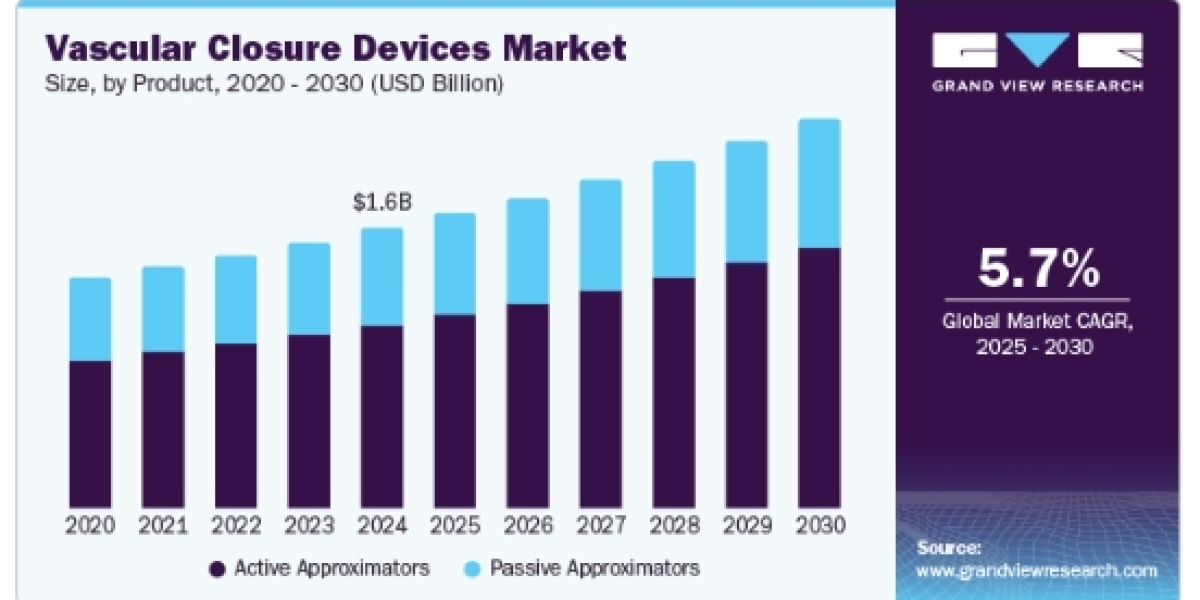
The global Vascular Closure Devices Market was valued at USD 1.6 billion in 2024 and is projected to reach USD 2.2 billion by 2030, expanding at a CAGR of 5.7% from 2025 to 2030. Growing cardiovascular disease prevalence, increased catheterization procedures, and advances in minimally invasive treatment are supporting market expansion.
Why Are Vascular Closure Devices Becoming More Important?
Cardiac catheterization, angioplasty, and other vascular interventions require reliable closure of the blood vessel access site after a procedure. Without effective closure, patients may experience bleeding or hematoma formation.
Vascular closure devices help achieve hemostasis, reduce the time required to control bleeding, and support earlier patient ambulation. These benefits can improve the patient experience while helping healthcare facilities manage procedure workflows more efficiently.
An aging population and the growing prevalence of cardiovascular diseases are adding to the need for vascular interventions. Improvements in device technology and favorable reimbursement policies are also supporting adoption.
What Is Driving Product-Level Demand?
The product landscape is led by active approximators, which accounted for 65.7% of global market revenue in 2024. Their strong position reflects demand for devices used in minimally invasive procedures and frequent catheterization.
Passive approximators represent another important category. This segment is projected to grow at a CAGR of 5.1% through 2030. Ease of use, simplicity, and reduced complication rates support their use across suitable vascular procedures.
Product selection depends on procedural requirements and patient circumstances, creating opportunities for different closure technologies to serve distinct clinical needs.
Which Procedures Are Supporting Market Expansion?
Cardiac interventions represented the leading application segment in 2024. Procedures such as angioplasty and stent placement are closely associated with cardiovascular disease management and commonly require vascular access-site closure.
Peripheral vascular interventions are also gaining importance. The rising incidence of peripheral artery disease and related vascular conditions is increasing the need for procedures such as angioplasty and atherectomy. Vascular closure devices can help reduce recovery time and support shorter hospital stays following these interventions.
Download a free sample report or claim your copy of this full market intelligence report
Why Are Hospitals Not the Only Growth Opportunity?
Hospitals and clinics dominated end-use revenue in 2024 because they perform large volumes of cardiac catheterizations, angioplasties, and other complex vascular procedures. Their established medical infrastructure and specialized clinical teams support widespread device utilization.
Ambulatory surgical centers (ASCs), however, are projected to record the fastest CAGR from 2025 to 2030. These facilities provide a cost-effective option for eligible outpatient procedures. Minimally invasive treatment, shorter recovery periods, favorable reimbursement policies, and the expansion of ASC capabilities are contributing to their growth potential.
As more suitable procedures move toward outpatient settings, demand for devices that support efficient post-procedure recovery may increase.
Where Is Demand Growing Fastest?
North America held 44.4% of global market revenue in 2024, supported by established healthcare infrastructure, high cardiovascular disease prevalence, advanced medical technology adoption, and a substantial volume of catheterization procedures. The U.S. accounted for the largest revenue share within the region.
Asia Pacific offers a strong growth opportunity, with the market projected to expand at a CAGR of 7.1% from 2025 to 2030. Rising healthcare expenditure, improving medical infrastructure, and increased adoption of minimally invasive procedures in countries such as India and China are supporting this outlook.
Europe is also expected to grow steadily, driven by cardiovascular disease prevalence, an aging population, established healthcare systems, and continued adoption of advanced vascular closure technologies.
What Challenges and Opportunities Will Shape the Market?
The market's development depends on the ability of manufacturers to improve procedural efficiency while meeting clinical and regulatory expectations. Device performance, complication reduction, and ease of use remain important considerations for healthcare providers.
At the same time, expanding outpatient care and the rising number of vascular interventions create opportunities for product innovation. As healthcare facilities focus on recovery time, patient throughput, and procedure costs, closure devices that fit these priorities may gain further traction.
Key Companies
- Abbott
- Cardinal Health
- Medtronic
- Merit Medical
- Teleflex Incorporated
What Is the Outlook for the Vascular Closure Devices Market?
The vascular closure devices market is expected to benefit from sustained demand for cardiovascular interventions and the broader shift toward minimally invasive care. Active approximators currently lead product revenue, cardiac interventions remain a major application, and ambulatory surgical centers offer an important growth avenue.
With the global market projected to reach USD 2.2 billion by 2030, continued technological advancement and the expansion of vascular procedures will remain central to industry growth.
Explore Our Research & Intelligence Solutions
Prism AI: Ask. Analyze. Get Cited Market Insights. – Explore Now
U.S. Healthcare Facility Intelligence: Make Better Decisions with Comprehensive Data – Explore the Platform