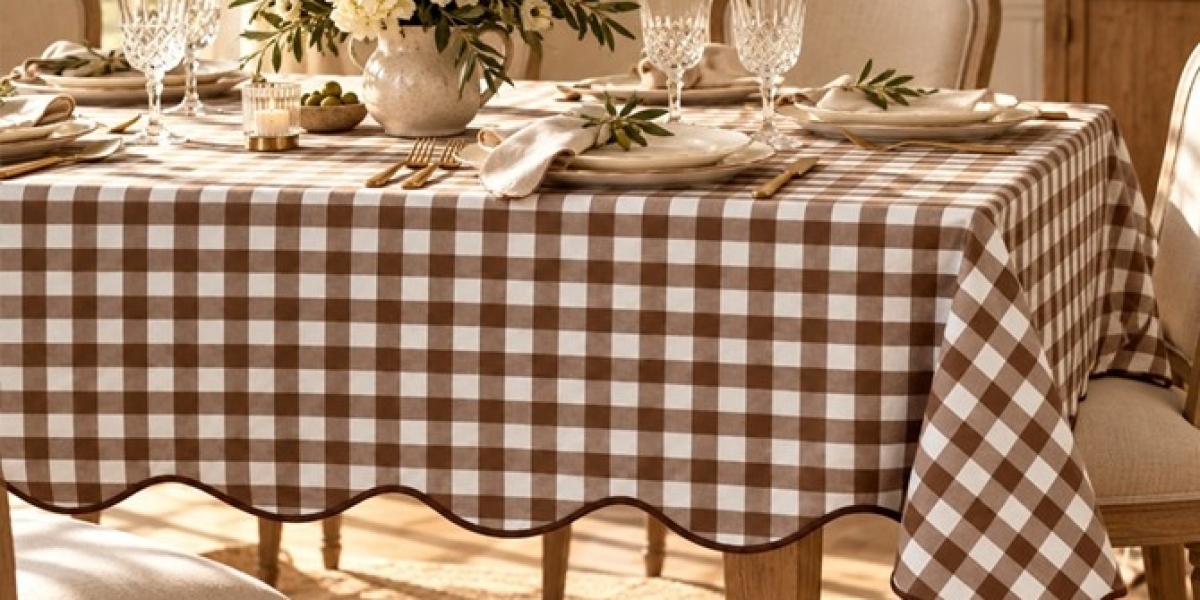

An older home, a cottage, or a room with original flooring may have a floor that is not perfectly level. These small variations can add character, but they may also affect how a dining table looks and feels in the space. A carefully chosen tablecloth can help create a polished dining area, even when the floor has slight slopes or uneven spots.
The important thing is to choose a covering that fits the tabletop correctly rather than trying to use fabric to hide an uneven table or floor. With the right measurements, fabric, and styling choices, you can create a comfortable dining space that feels considered and inviting.
Check the Table Before Choosing a Tablecloth
Before shopping for a table covering, check whether the unevenness comes from the floor or the table itself. Place the table where you intend to use it and check whether it wobbles. A table that rocks or has unstable legs may need its feet adjusted or a suitable furniture-leveling solution.
A tablecloth cannot correct an unstable table. Addressing the wobble first helps prevent glasses, plates, and other items from shifting during meals.
Once the table is stable, measure the tabletop. Record its length and width, or its diameter if it is round. These measurements will help you select a tablecloth that hangs evenly relative to the tabletop, regardless of small variations in the floor.
Choose a Length That Looks Balanced
When a floor slopes slightly, the bottom edges of a hanging tablecloth may appear to sit at different heights above the floor. This does not necessarily mean the tablecloth is the wrong size.
For everyday dining, a shorter drop can be a practical choice because it keeps the fabric away from chair legs and reduces the chance of someone stepping on the material. A cotton table cloth with a modest drop can create a neat finish without drawing attention to small differences in floor height.
If you prefer a longer drape, check the clearance around the entire table rather than measuring from only one side. Make sure the fabric does not touch the floor, catch under chair legs, or create a tripping hazard.
The goal is to achieve a consistent drop from the tabletop edge, not to make the fabric appear perfectly level with an uneven floor.
Select the Right Shape for Your Table
A well-fitted tablecloth starts with the shape of the tabletop. For a rectangular dining table, a rectangle table cloth generally offers the most straightforward fit. Measure both dimensions and allow for the same intended drop on each side.
For a round table, round table cloths create a continuous drape around the edge. If your table is square, square table cloths can provide a balanced finish.
For example, if a rectangular tabletop measures 60 inches long and 36 inches wide, a tablecloth with a 10-inch drop on each side would measure approximately 80 by 56 inches.
Always check the product's stated dimensions before buying. A correctly sized tablecloth will follow the tabletop's shape, even if the floor beneath it is not perfectly level.
Use Colors and Patterns to Complement the Room
Uneven flooring is often found in homes with natural wood boards, stone tiles, or other distinctive surfaces. Rather than trying to conceal every variation, choose a tablecloth that complements the materials already present.
Cream, beige, and muted earth tones work well with natural wood floors. Soft gray or a subtle stripe can complement a more contemporary dining room. A black and white tablecloth can add contrast when the room has neutral walls and simple furniture.
If the flooring has a strong pattern or visible grain, a solid tablecloth can help keep the room from looking too busy. In a simpler space, a small check or understated print can add interest.
Remember that lighting also affects how colors appear. Check the fabric in daylight and under your usual indoor lighting before deciding which shade works best.
Keep Chairs and Walkways Comfortable
In a room with uneven flooring, chair movement deserves extra attention. Pull each chair out and push it back to check whether the tablecloth catches on the seat, legs, or nearby furniture.
Leave enough space for people to sit down and stand up comfortably. Avoid long fabric edges near doorways and narrow walkways, especially where someone could accidentally step on them.
If the dining area is used every day, choose a fabric that is easy to care for. Follow the washing instructions, treat spills promptly, and store the tablecloth only when it is completely dry.
Conclusion
Choosing a tablecloth for a dining table in a home with uneven floors begins with a stable table and accurate measurements. Select the right shape, choose a practical drop, and coordinate the fabric with the room's flooring and furniture. A shorter, well-fitted covering can be especially useful when you want a tidy appearance without fabric interfering with chairs or walkways.
With thoughtful choices, All Cotton and Linen can help you explore table covering styles that complement your home and support comfortable everyday dining.