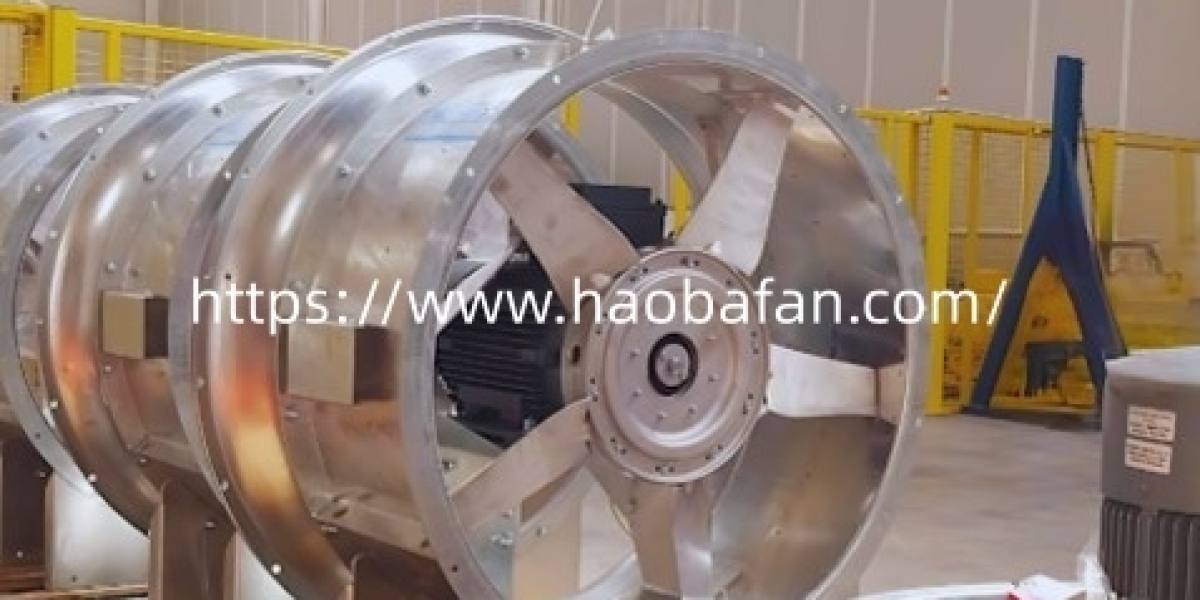

Ventilation equipment must provide sufficient air movement while maintaining acceptable noise levels for the surrounding environment. In offices, commercial buildings, workshops, laboratories, and industrial facilities, excessive sound can interfere with communication, concentration, and workplace comfort. A properly engineered Low Noise Centrifugal Fan can help balance airflow requirements with acoustic performance through careful mechanical construction, suitable aerodynamic design, and correct integration into the ventilation system.
Centrifugal fans move air by drawing it into the central area of a rotating impeller and directing it outward through rotational force. The housing then guides the air toward the discharge outlet. This arrangement is useful in systems where airflow must pass through ducts, filters, or other components that create resistance. However, airflow efficiency and noise levels depend on how the impeller, motor, housing, and connected ductwork work together.
Impeller geometry is one of the main factors affecting aerodynamic noise. Blade shape, curvature, spacing, and rotational speed influence the way air moves through the fan. Poorly matched geometry or unsuitable operating conditions may create turbulence, pressure fluctuations, and additional sound. A well-designed impeller aims to move air smoothly while providing the airflow characteristics required by the application. Material consistency and accurate manufacturing help preserve the intended geometry.
Mechanical vibration is another common source of noise. If the impeller is not balanced correctly, its rotation can create periodic forces that transfer through the shaft, bearings, housing, and mounting structure. These vibrations may produce humming, rattling, or resonance, especially when the fan is attached to a lightweight panel or rigid building structure. Appropriate balancing procedures and accurate assembly can help minimize these effects before the equipment reaches the installation site.
Motor selection and integration also influence acoustic performance. A suitable motor should match the intended workload and operate without unnecessary mechanical stress. Accurate alignment, secure mounting, and appropriate bearing arrangements can reduce friction and vibration. Loose connections or worn components may gradually increase sound levels, so manufacturing quality and routine inspection both contribute to long-term noise control.
The housing must provide sufficient structural rigidity while directing airflow efficiently. If the housing resonates in response to motor or aerodynamic forces, the surrounding structure may amplify otherwise limited noise. Material selection, panel design, fastening methods, and assembly accuracy can influence this behavior. A well-constructed housing should also allow practical access for cleaning and inspection without compromising structural stability.
Installation conditions can have as much influence on noise as the fan itself. Sharp duct bends, abrupt changes in cross-section, restricted inlets, and poorly arranged grilles may increase turbulence. Inadequate support can allow vibration to travel through ductwork and building components. Proper mounting, suitable vibration isolation, and smooth transitions between connected components can help reduce noise transmission and maintain stable airflow.
Operating the equipment within its intended range is equally important. Excessive system resistance or an unsuitable fan selection can lead to inefficient airflow and unwanted sound. Buyers should evaluate required air volume, pressure losses, duct dimensions, installation clearance, and operating schedules before choosing equipment. Matching the fan to the actual system helps prevent the performance problems associated with poor selection.
Maintenance also plays a major role in acoustic consistency. Dust buildup on the impeller can change its mass distribution and increase vibration. Worn bearings, loose fasteners, damaged blades, or obstructed air passages may create abnormal sound. Periodic inspection and cleaning can help maintain stable performance and reveal developing issues before they lead to costly downtime. Maintenance work involving electrical components should always follow appropriate isolation and safety procedures.
For industrial buyers, noise performance should be considered alongside airflow capacity, energy use, durability, service accessibility, and total operating cost. A quiet fan that cannot satisfy ventilation requirements will not provide an effective solution. Similarly, a high-capacity unit that produces excessive sound may be unsuitable for an occupied environment. Evaluating the complete system helps businesses balance acoustic comfort with practical performance.
A reliable manufacturer should maintain consistent production standards for impeller balance, motor assembly, housing construction, and final inspection. Taizhou Haoba Electromechanical Co Ltd. offers ventilation equipment for a range of industrial and commercial applications, with further information available at https://www.haobafan.com/product/mixed-flow-fan/. Selecting a suitable Low Noise Centrifugal Fan and installing it correctly can help businesses achieve dependable ventilation while managing unnecessary noise throughout the equipment lifecycle.