
The global BOPP films market is expanding as manufacturers seek packaging materials that combine product protection, visual appeal, durability, and cost efficiency. Biaxially oriented polypropylene (BOPP) films are widely used in food packaging, adhesive tapes, labels, lamination, and consumer goods because of their clarity, tensile strength, and barrier properties.
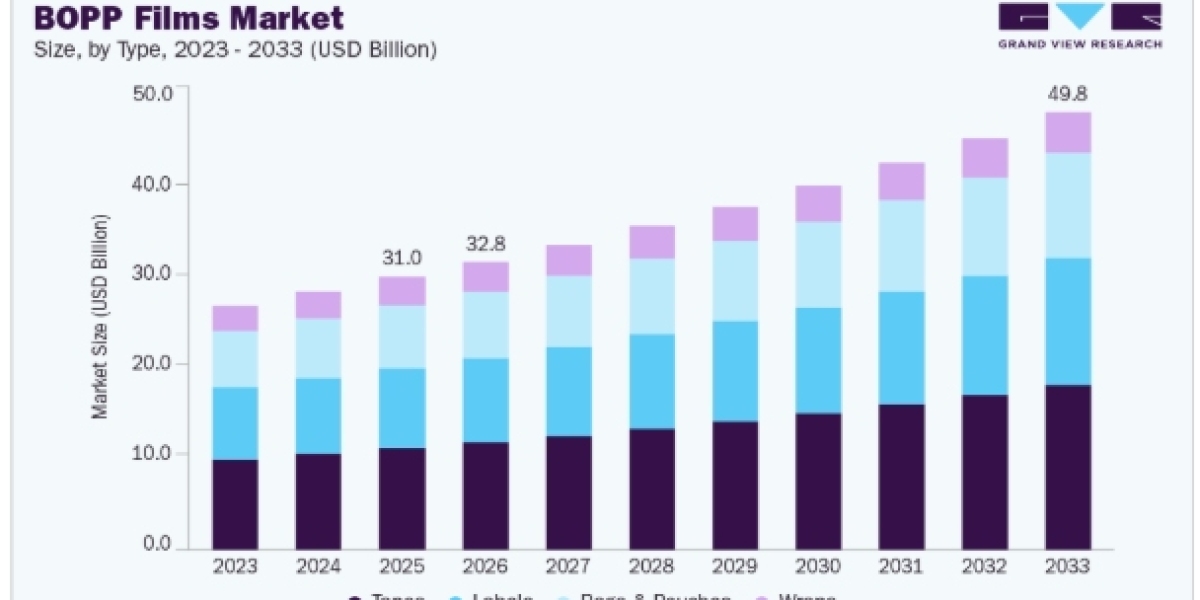
The market was valued at USD 31.0 billion in 2025 and is projected to reach USD 49.8 billion by 2033, growing at a CAGR of 6.2% from 2026 to 2033. Asia Pacific accounted for 32.2% of global revenue in 2025, reflecting the region's strong packaging and manufacturing activity.
What Is Making BOPP Films a Preferred Packaging Material?
The appeal of BOPP films comes from their ability to serve several packaging needs without adding unnecessary weight. Their moisture resistance, printability, and transparency make them suitable for products that need both protection and attractive presentation.
Three developments are reinforcing demand:
- Flexible packaging expansion: Food producers and consumer goods manufacturers require packaging that protects products while remaining lightweight and practical.
- E-commerce distribution: Increasing shipments create demand for durable packaging materials and carton-sealing tapes.
- Recyclability priorities: Greater attention to plastic waste is encouraging manufacturers to develop recyclable film structures and improve material efficiency.
Ready-to-eat foods, snacks, confectionery, and other convenience products are also supporting demand because packaging plays an important role in preserving freshness and extending shelf life.
Which Applications Are Generating the Most Demand?
The market's application mix reflects the versatility of BOPP films across packaging and industrial uses.
Food packaging leads the application landscape. It represented 34.2% of market revenue in 2025. BOPP films are used for snacks, bakery products, confectionery, and other packaged foods, where protection against moisture and contaminants is important.
Adhesive tapes remain a major product category. Tapes accounted for 37.7% of revenue in 2025. Their use in carton sealing, warehousing, logistics, e-commerce, and manufacturing supports demand for films with strong tensile properties and reliable adhesive performance.
Labels add another layer of opportunity. BOPP films offer clarity, moisture resistance, and print quality, making them useful for pressure-sensitive, wrap-around, and in-mold labels across food, personal care, household, and pharmaceutical products.
Bags and pouches are also expected to expand, with the segment projected to grow at a CAGR of 6.6% through 2033.
Download a free sample report or claim your copy of this full market intelligence report
Why Does Film Thickness Matter?
Thickness determines how a film performs in different packaging environments.
- Below 15 microns: Suitable for lightweight packaging where material reduction is important.
- 15–30 microns: Held the largest thickness share at 38.7% in 2025, balancing flexibility, strength, and barrier performance.
- 30–45 microns: Used where packaging requires greater mechanical strength and protection.
- Above 45 microns: Expected to record the fastest growth, at a CAGR of 7.0%, as demand rises for durable packaging of heavier or bulkier products.
This range allows manufacturers to select films according to product weight, protection requirements, and packaging performance.
How Are Manufacturing Technologies Changing the Market?
Production methods influence the consistency, strength, and optical properties of BOPP films.
The tubular process accounted for 52.4% of market revenue in 2025. It forms polypropylene into a tube before stretching the material in two directions, helping improve tensile strength, clarity, and barrier characteristics.
Meanwhile, the tenter process is projected to grow at a CAGR of 6.4% through 2033. It begins with a flat extruded sheet that is stretched in both directions, allowing manufacturers to control thickness and produce films for different packaging and labeling requirements.
Investment in specialty coatings, metallization, high-barrier performance, and downgauging is also helping manufacturers improve functionality while reducing material consumption.
Can Sustainability Become a Competitive Advantage?
Environmental expectations are creating both pressure and opportunity for BOPP film producers. Regulations addressing plastic waste and packaging recyclability are encouraging investment in recyclable mono-material structures and resource-efficient production.
However, sustainability remains a complex challenge. Manufacturers must manage raw material price volatility, especially polypropylene resin costs, while competing with alternatives such as polyethylene, polyethylene terephthalate, and paper-based packaging in selected applications.
Companies that improve recyclability without compromising strength, clarity, printability, or barrier performance may be better positioned to meet changing customer requirements.
Key Companies
The competitive landscape includes established manufacturers investing in product development, capacity expansion, and specialty film solutions.
- Cosmo Films Limited
- Taghleef Industries
- CCL Industries
- Jindal Poly Films
- Innovia Films
Where Is Market Growth Concentrated?
Asia Pacific held the largest regional share at 32.2% in 2025. China and India contribute to demand through expanding packaging industries, growing consumer markets, and manufacturing capacity. India's BOPP films market is projected to grow at a CAGR of 7.2% from 2026 to 2033.
North America benefits from demand for flexible packaging, convenience foods, and high-performance materials. Europe remains significant, with food, beverage, and pharmaceutical packaging needs alongside regulations encouraging improved recyclability.
What Lies Ahead for the BOPP Films Market?
The market's future will depend on how effectively manufacturers balance packaging performance, production economics, and environmental requirements. Food packaging and adhesive tapes provide established demand, while bags and pouches, thicker films, and advanced manufacturing processes offer further growth opportunities.
With the global BOPP films market projected to reach USD 49.8 billion by 2033, continued innovation in barrier properties, recyclability, and material efficiency will remain important to long-term competitiveness.
Explore Our Research & Intelligence Solutions
Prism AI: Ask. Analyze. Get Cited Market Insights. – Explore Now
Grand View Signal: Understand the Factors Shaping Commodity Prices – Explore the Platform