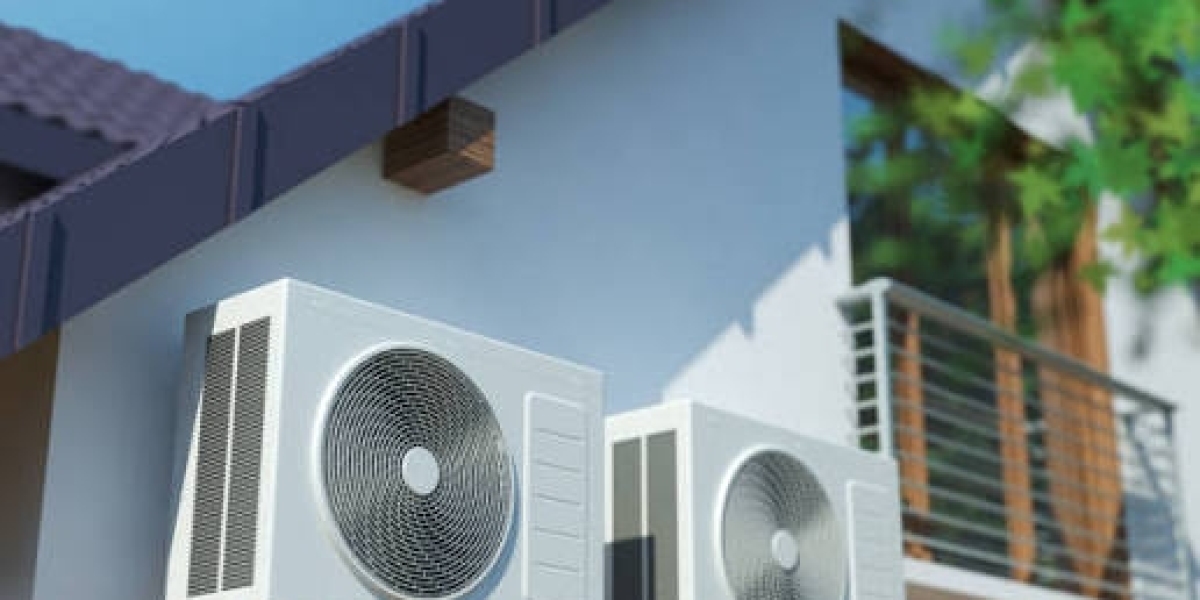

France's heating, ventilation, and air-conditioning (HVAC) landscape is undergoing a significant transformation as rising summer temperatures, building renovation, energy-efficiency requirements, and the transition toward low-carbon technologies influence purchasing decisions. Residential cooling is becoming increasingly important, while commercial buildings, healthcare facilities, hospitality, manufacturing, and data centers are creating additional requirements for advanced climate-control solutions.
A comprehensive Markntel Advisor' France HVAC industry assessment values the sector at USD 4.24 billion in 2026, compared with USD 3.82 billion in 2025, and projects it to reach USD 7.98 billion by 2032, representing a CAGR of 11.1% during 2026–2032. The study identifies room air conditioners as the leading product category and residential applications as the largest end-user segment.
Heatwaves Strengthen Cooling Demand
Increasing exposure to extreme heat is changing the traditional perception of air conditioning in France. Cooling systems are becoming increasingly relevant not only in southern regions but also across urban areas where summer heat can affect residential comfort, workplaces, healthcare environments, and commercial operations.
According to Météo-France's climate information, France has experienced increasingly frequent episodes of extreme heat, reinforcing the need for effective thermal-comfort solutions. Rising temperatures are encouraging households and businesses to consider efficient cooling systems that can provide comfort while limiting electricity consumption.
Room Air Conditioners Lead Product Demand
Room air conditioners represent the leading product category in the Markntel Advisor assessment, accounting for an estimated 46.8% share in 2026. Split air-conditioning systems are particularly important because they can provide efficient cooling while requiring relatively limited installation space.
France's high proportion of apartment living further supports demand for compact wall-mounted systems. Inverter-based technology can also help consumers manage energy consumption while maintaining more consistent indoor temperatures.
Residential Applications Remain Dominant
The residential segment accounts for an estimated 51.6% share in 2026, making households the largest end-user group. Renovation activity and rising awareness of indoor thermal comfort are encouraging homeowners to consider modern HVAC equipment.
Reversible systems are particularly attractive because they can provide both heating and cooling. This multifunctionality can make HVAC investments more practical for households seeking year-round climate control.
Energy Renovation Supports Equipment Replacement
France's building-renovation agenda is closely connected with HVAC modernization. Improving insulation and replacing inefficient heating and cooling systems can reduce energy consumption while improving indoor comfort.
The French Ministry for Ecological Transition's building strategy states that the building sector is central to France's climate transition, with emissions reductions expected to come from abandoning fossil-fuel systems, improving insulation, increasing energy efficiency, and reducing energy consumption.
This policy direction supports opportunities for efficient heat pumps, modern air-conditioning systems, intelligent controls, and other HVAC technologies.
Heat Pumps Gain Strategic Importance
Heat pumps are becoming increasingly important as France moves toward lower-carbon heating and cooling solutions. Air-to-air and air-to-water heat pumps can provide efficient climate control while reducing dependence on conventional fossil-fuel systems.
The French government's energy-saving measures include standardized programs supporting collective air-to-water heat pumps and other heat-pump installations. This regulatory environment can encourage property owners and building managers to consider heat-pump technologies when replacing older systems.
Smart HVAC Technologies Gain Momentum
Connected HVAC systems are increasingly incorporating Wi-Fi connectivity, remote monitoring, intelligent controls, occupancy detection, and energy-management functions.
Smart systems can allow users to adjust temperatures remotely while providing information about energy consumption and equipment performance. For commercial buildings, connected controls can support centralized management and predictive maintenance.
The Markntel Advisor study highlights the growing transition toward intelligent cooling solutions as France strengthens building automation and energy-efficiency requirements.
Data Centers Create Specialized Cooling Demand
France's expanding digital infrastructure is generating additional demand for precision cooling systems. Data centers require highly reliable temperature and humidity management because excessive heat can affect equipment performance and operational continuity.
The development of cloud infrastructure, artificial intelligence, and digital services is therefore creating opportunities for specialized cooling technologies, including high-efficiency chillers, precision cooling, and advanced monitoring systems.
Commercial Buildings Require Efficient Climate Control
Offices, retail centers, hotels, hospitals, educational institutions, and other commercial properties are important HVAC users. These buildings often require systems capable of managing varying occupancy levels and diverse thermal requirements.
Variable refrigerant flow systems, chillers, packaged systems, air-handling units, and fan-coil units can provide different solutions depending on building size and application.
Energy-efficient equipment is becoming increasingly attractive as commercial property owners seek to control operating expenses while meeting environmental objectives.
Refrigerant Transition Encourages Innovation
Environmental regulations are influencing refrigerant choices across the French HVAC industry. The EU's F-Gas framework is accelerating the reduction of high-global-warming-potential refrigerants and encouraging manufacturers to develop alternatives.
The Markntel Advisor assessment covers refrigerants including R32, R410A, R134a, R290, and R1234ze/R1234yf, reflecting the industry's transition toward lower-impact technologies.
Natural refrigerants such as R290 are gaining attention because of their very low global warming potential. Manufacturers are increasingly developing equipment compatible with evolving European environmental requirements.
Energy Efficiency Becomes a Competitive Factor
Energy efficiency is becoming an important purchasing criterion for both residential and commercial customers. Consumers increasingly evaluate systems not only on initial purchase price but also on operating costs and long-term performance.
Inverter technology, intelligent temperature controls, high-efficiency compressors, improved heat exchangers, and smart energy management can help reduce electricity consumption.
This trend is particularly relevant as France continues to pursue energy efficiency and electrification across buildings.
Domestic Manufacturing Strengthens the Supply Chain
France has a substantial HVAC manufacturing ecosystem. The Markntel Advisor study notes that Uniclima represents 69 HVAC manufacturers operating 87 production facilities, including 24 heat-pump manufacturing plants.
Domestic production can support supply-chain resilience while providing manufacturers with opportunities to develop products specifically suited to French and European regulatory requirements.
Distribution Channels Continue to Diversify
HVAC equipment reaches customers through direct sales, authorized dealers and distributors, multibrand stores, and online channels. Authorized dealers remain particularly important for complex systems because installation, maintenance, and technical support influence purchasing decisions.
Online channels can increase product visibility and facilitate comparison, particularly for smaller residential systems. However, professional installation remains essential for many HVAC technologies.
Installation and Skilled Labor Remain Important
The transition toward sophisticated HVAC systems increases the need for qualified installers and technicians. Heat pumps, connected systems, low-GWP refrigerants, and advanced controls can require specialized technical knowledge.
Manufacturers and distributors can strengthen their competitive position by providing installer training, technical support, maintenance services, and after-sales assistance.
Competitive Landscape
The competitive environment includes Haier France SAS, Johnson Controls France SAS, Mitsubishi Electric Europe B.V., LG Electronics France, Samsung Electronics France, Daikin Airconditioning France SAS, Midea France, Carrier France SAS, Trane France SAS, Groupe Atlantic, FläktGroup France, BDR Thermea France, Systemair France, Vaillant Group France, Lennox EMEA, and Panasonic Heating & Cooling Solutions France, among others.
The top five companies collectively account for approximately 42% of the sector in 2026, according to Markntel Advisor. Competition is increasingly centered on energy efficiency, smart connectivity, low-carbon technologies, product reliability, dealer networks, and after-sales service.
Recent Product Innovation
Manufacturers are continuing to introduce integrated and connected HVAC solutions for French consumers. Daikin France expanded its Multi+ product range in January 2025, combining heating, cooling, and domestic hot-water production through a single outdoor unit.
Such integrated solutions can appeal to households seeking compact equipment capable of addressing multiple climate-control requirements while improving energy efficiency.
Conclusion
France's HVAC landscape is being reshaped by rising temperatures, residential renovation, energy-efficiency requirements, heat-pump adoption, refrigerant regulations, smart technologies, and growing cooling requirements in commercial and digital infrastructure.
With the sector projected by Markntel Advisor to increase from USD 4.24 billion in 2026 to USD 7.98 billion by 2032 at a CAGR of 11.1%, opportunities are emerging across residential air conditioning, heat pumps, smart controls, commercial HVAC, data-center cooling, and low-GWP technologies.
Manufacturers and service providers that combine energy efficiency, connected functionality, low-carbon refrigerants, reliable installation, and strong after-sales support can benefit from France's ongoing transition toward more efficient and climate-resilient buildings.










