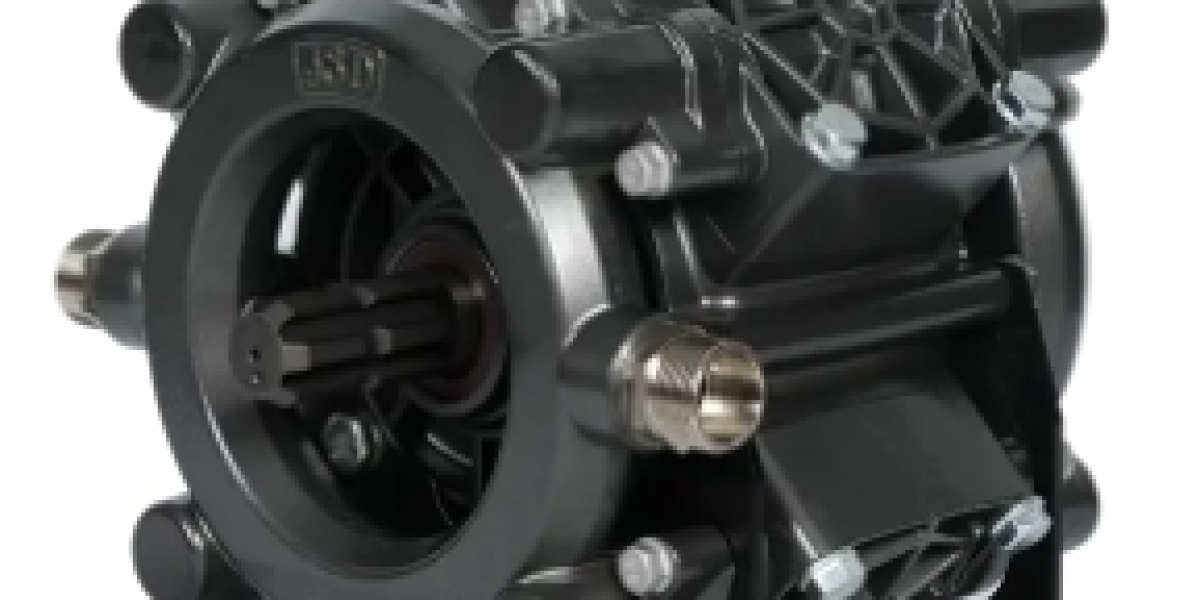

Agricultural sprayers depend on a coordinated pumping system to move treatment liquids from the tank to the distribution network. The equipment must handle repeated operating cycles, varying liquid properties, and changing demand from spray nozzles while maintaining dependable performance. A diaphragm agricultural sprayer pump uses a flexible membrane to displace liquid through a pumping chamber, with valves controlling the direction of flow. This arrangement can suit agricultural fluid handling applications when the pump materials, pressure range, and operating conditions are selected appropriately. For equipment manufacturers and distributors, understanding these design factors helps support reliable integration into commercial spraying machinery.
The diaphragm operates by changing the volume inside the pumping chamber. As the membrane moves outward, the chamber expands and draws liquid through the inlet valve. When it moves inward, the chamber contracts and pushes liquid through the outlet valve. Repeated cycles create the flow needed to supply hoses, spray booms, and nozzle assemblies. The efficiency of this process depends on diaphragm movement, valve response, chamber geometry, and the mechanical drive system. Consistent component dimensions and reliable assembly help maintain stable fluid transfer during extended use.
The diaphragm material must withstand both repeated flexing and contact with the intended liquid. Agricultural formulations may contain active chemicals, surfactants, solvents, and other additives that can affect elastomers differently. EPDM, NBR, and other specialized materials may be suitable for specific applications, but no material should be assumed compatible with every agricultural chemical. Selection should account for chemical composition, concentration, operating temperature, and exposure time. Proper evaluation helps reduce swelling, hardening, cracking, and loss of sealing performance.
The housing and internal fluid passages also contribute to operational reliability. A rigid housing supports the pumping assembly and helps maintain alignment during pressure cycles. Materials may include aluminum alloys, engineering polymers, or other suitable options, depending on weight, strength, corrosion resistance, and application requirements. Internal surfaces and passages should support effective flow without creating unnecessary restrictions or areas where residue can accumulate. Careful manufacturing and inspection can help reduce dimensional variation that may affect valve seating or fluid movement.
Valve performance is central to consistent output. Inlet and outlet valves must respond correctly to pressure changes while preventing unwanted reverse flow. If residue or particles prevent proper sealing, the pump may experience reduced delivery, unstable pressure, or difficulty maintaining the required flow. Valve materials should withstand repeated movement and remain compatible with the liquid. Filtration can help protect the valve assembly, although the filter must be selected according to the fluid and maintained to prevent blockage.
Hydraulic system integration determines how effectively the pump performs in the complete sprayer. The required flow depends on the number and type of nozzles, the application rate, working width, and operating speed. Hoses, fittings, filters, regulators, and manifolds introduce resistance that must be considered during pump selection. Pressure regulation helps keep the system within its intended range as spraying demand changes. Correctly rated connections and suitable protective devices further reduce the risk of leakage or excessive loading on the pumping components.
Mechanical durability is another important consideration for agricultural equipment. Continuous diaphragm movement produces repeated flexing, while the drive mechanism, bearings, seals, and mounting structure experience mechanical loads. Excessive vibration, misalignment, dry running, or operation outside the recommended range can accelerate wear. Manufacturers can assess product reliability through pressure-cycle testing, endurance trials, vibration checks, and inspections for leakage or material deterioration. These evaluations help determine whether the design can meet the expected operating demands.
Routine servicing helps maintain performance throughout the spraying season. Operators should inspect hoses, clamps, filters, valves, and visible seals before use. After application, the system should be flushed according to the chemical label and the pump manufacturer's maintenance instructions. This reduces residue buildup and helps prevent contamination when switching between treatments. Cleaning agents should be compatible with the pump materials, and storage procedures should account for the equipment's expected temperature and environmental conditions. Replacing worn components promptly can help prevent unexpected downtime.
For agricultural machinery manufacturers, OEM suppliers, wholesalers, and distributors, pump selection should consider serviceability, component availability, material documentation, and compatibility with the complete spraying assembly. A well-matched diaphragm agricultural sprayer pump can support dependable liquid delivery when combined with suitable filtration, pressure controls, and nozzles. SHUANG DIN Co Ltd. provides agricultural diaphragm pump solutions for fluid handling applications, and buyers can review relevant products at https://www.agriculturaldiaphragmpump.com/product/diaphragm-pumps/ when assessing options for agricultural sprayer equipment.









