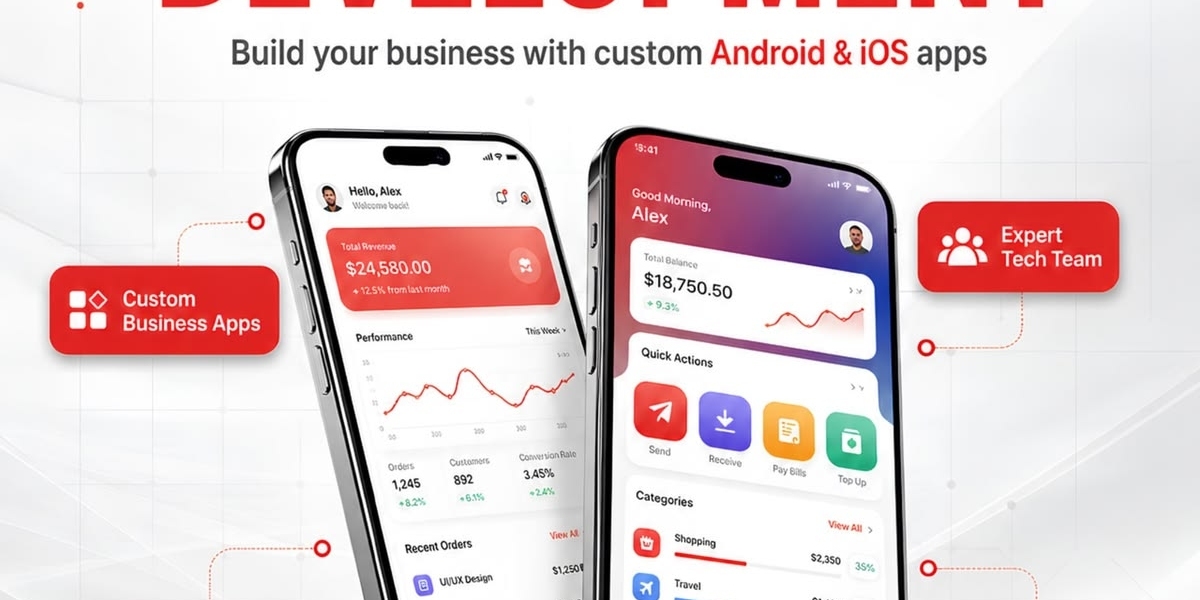

Building a custom mobile application is a major decision for any business. Choosing the right mobile app development company in Abu Dhabi can help you turn your idea into a practical digital product that meets customer expectations, supports business operations, and remains adaptable as your company grows.
The challenge is not simply finding a team that can write code. You need a development partner that understands your business model, communicates clearly, makes sound technical decisions, and provides support beyond the initial launch.
Here is how to evaluate potential partners before committing to a mobile app project.
1. Start With Your Business Requirements
Before contacting development companies, define what you want the application to accomplish. A clear scope makes it easier to compare proposals and identify teams that understand your needs.
For example, a retail business may want an application for product browsing and purchases, while a service provider may need appointment booking, customer accounts, and automated notifications.
Prepare a short project brief covering:
The main problem your application should solve
Your intended users and target market
Essential features for the first release
Required integrations with existing systems
Your preferred launch timeline
Plans for future updates and expansion
You do not need a complete technical specification at this stage. A clear explanation of the business objective is enough to begin meaningful discussions with potential partners.
2. Review Relevant Portfolio Projects
A development company's portfolio can reveal how it approaches different products, user requirements, and technical challenges.
Look beyond attractive screenshots. Examine whether the company has worked on applications with similar functionality, complexity, or operational requirements.
Ask to see examples involving features relevant to your project, such as payment processing, booking systems, real-time tracking, dashboards, or enterprise integrations.
Where possible, review publicly available applications and assess their navigation, responsiveness, performance, and overall usability.
If a company cannot share confidential client work, ask whether it can provide anonymized case studies or explain its role in completed projects.
The objective is to determine whether the team has relevant experience rather than relying on portfolio size alone.
3. Check Technical Capabilities
The technology chosen for your application affects its performance, maintenance, scalability, and development requirements.
A capable partner should explain the available options and recommend an approach based on your business needs.
Native development may be appropriate when an application requires extensive platform-specific functionality or highly customized performance.
Cross-platform development can be suitable when you want to support iOS and Android through a shared codebase.
Backend development is important when the application requires user accounts, data processing, payments, administrative dashboards, or integrations with other systems.
Ask potential partners how they will manage application architecture, testing, security, and future upgrades. Their explanations should be understandable and connected to your actual requirements.
Avoid selecting a technology simply because it is popular. The right choice depends on what your application needs to do.
4. Evaluate User Experience and Interface Design
A mobile application should make essential tasks easy to complete. Even a technically advanced product can struggle if users cannot navigate it comfortably.
Ask how the design team researches user expectations, organizes information, and validates interface decisions before development begins.
For businesses serving Abu Dhabi's diverse audience, Arabic and English support may also be important. Arabic interfaces require proper right-to-left layouts, including navigation, forms, and content alignment.
Review whether the proposed design accounts for:
Clear navigation and readable content
Consistent layouts across screens
Accessible buttons and form controls
Straightforward registration and onboarding
Appropriate language and localization support
Request wireframes or clickable prototypes before approving the full development scope. Early feedback is generally easier to incorporate than major design changes after implementation.
5. Understand the Development Process
A professional development partner should explain how the project will move from initial requirements to launch.
A typical process includes discovery, planning, design, development, testing, deployment, and ongoing maintenance.
Ask whether the company uses milestones, demonstrations, regular progress updates, and documented approval procedures.
You should also understand how changes will be handled if your requirements evolve during the project.
A transparent process helps you identify potential delays early, review progress, and maintain control over important decisions.
Before signing an agreement, confirm who will manage communication, how frequently updates will be shared, and what deliverables are expected at each stage.
6. Ask About Security and Regulatory Requirements
Security should be considered from the planning stage, particularly if your application collects personal information, processes payments, or connects with internal business systems.
Your development partner should explain how it approaches authentication, access permissions, data protection, secure integrations, and vulnerability testing.
Businesses should also identify the legal and regulatory requirements relevant to their application. Applicable obligations depend on the industry, the information being processed, and the services being provided.
For example, a financial services application may have different compliance requirements from a retail shopping application.
If the project involves sensitive information or a regulated activity, obtain appropriate legal or compliance guidance rather than assuming that a standard security checklist is sufficient.
7. Compare Proposals Beyond the Initial Price
Development proposals can differ significantly in scope. One company may include interface design, testing, backend development, deployment, and support, while another may quote only for application development.
Compare proposals based on the deliverables and responsibilities included.
Check whether the quoted scope covers:
Research and interface design
iOS and Android development
Backend systems and integrations
Quality assurance and security testing
App store submission support
Documentation and source code handover
Maintenance and post-launch assistance
Also clarify payment milestones, third-party service charges, change requests, and ownership of intellectual property.
The lowest initial quote may not represent the lowest overall cost if essential services are excluded.
8. Confirm Ownership and Post-Launch Support
Your relationship with a development company should not end automatically when the application is published.
Operating systems change, security vulnerabilities emerge, and customers may request improvements as they use the product.
Before starting, clarify who owns the source code, designs, documentation, and other project assets. Confirm how credentials and access to relevant accounts will be transferred.
Discuss the availability of technical support, response expectations for critical issues, maintenance arrangements, and the process for adding new features.
A clear handover plan helps prevent unnecessary dependence on one provider and gives your business more flexibility as the product evolves.
9. Look for Clear Communication and Accountability
Technical expertise matters, but communication also has a direct effect on project delivery.
During initial discussions, notice whether the team asks useful questions, explains trade-offs, and identifies potential risks. A partner should be willing to challenge an unrealistic requirement when doing so protects your project's objectives.
Ask who will be your primary contact and whether you will communicate directly with the people responsible for design and development.
Written documentation, realistic timelines, regular demonstrations, and clear responsibility for decisions can help prevent misunderstandings.
Choose a company that treats your application as a business project rather than simply a list of development tasks.
How Apptunix Can Support Your Mobile App Project
Apptunix Abu Dhabi works with startups, enterprises, and organizations to develop digital products aligned with their business requirements. The company brings 13+ years of experience and has delivered 3,000+ projects globally.
Its approach to application projects can involve planning, interface design, development, testing, and ongoing product improvements, depending on the agreed scope.
When evaluating a mobile app development company in Abu Dhabi, businesses should assess the proposed solution against their own goals, technical requirements, and support expectations. A suitable partner should be able to explain how its development process will address these needs and what deliverables will be provided.
Before moving forward, discuss your application idea, intended users, essential features, integrations, and long-term plans with the team.
Conclusion
Finding the right development partner requires more than comparing prices or reviewing attractive portfolios. Businesses should evaluate relevant experience, technical capabilities, design quality, security practices, project communication, and post-launch support.
Taking time to assess these areas helps establish realistic expectations and reduces the risk of selecting a provider that cannot meet the project's requirements.
Choosing the right mobile app development company in Abu Dhabi starts with understanding your business objectives and finding a team capable of translating them into a reliable, maintainable product.
If you are planning a custom application, prepare your requirements and request a detailed proposal before committing to development.