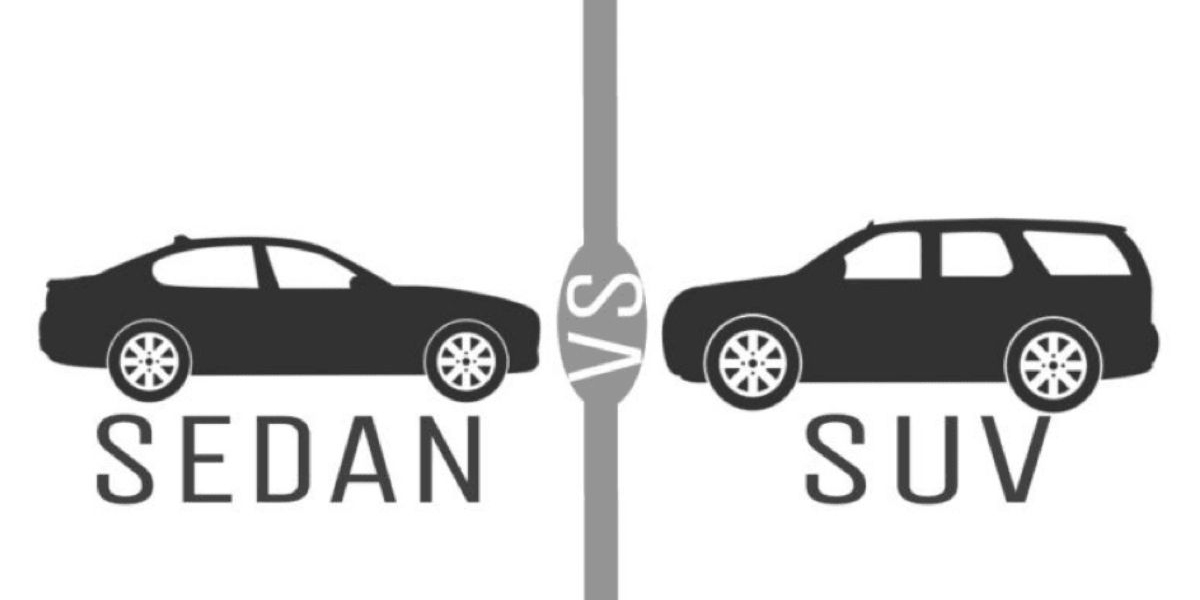

Choosing between a sedan and an SUV depends on how you drive, who travels with you, and how much space you need. Sedans generally suit commuters, solo drivers, couples, and business travellers who value comfortable road handling and practical fuel consumption. SUVs appeal to families, outdoor enthusiasts, and drivers who need more cargo space, a higher seating position, or additional ground clearance. This guide compares both body styles across comfort, fuel economy, safety, maintenance, luggage capacity, and everyday driving to help you choose the right vehicle for your needs.
What Is the Difference Between a Sedan and an SUV?
A sedan is a passenger car with a separate engine compartment, passenger cabin, and rear luggage compartment. Most sedans have four doors and a relatively low driving position. Popular examples include the Toyota Corolla, Honda Civic, Nissan Altima, and Toyota Camry.
An SUV, or sport utility vehicle, combines a taller body with a higher seating position and a more versatile cabin. Many SUVs offer flexible rear seats, larger cargo areas, and greater ground clearance than comparable sedans. Examples include the Toyota RAV4, Nissan X-Trail, Hyundai Tucson, and Toyota Land Cruiser.
However, these categories include many different sizes and designs. A compact SUV can be easier to park than a large sedan, while a full-size SUV can consume considerably more fuel than a small economy car. Compare specific models rather than assuming every vehicle in one category performs the same way.
Sedan vs SUV: Quick Comparison
Feature | Sedan | SUV |
Body design | Lower, streamlined body | Taller body with a higher seating position |
Passenger comfort | Comfortable for individuals, couples, and small families | Useful for families and passengers who prefer easier entry and exit |
Luggage capacity | Separate boot with limited opening flexibility | Often offers a larger, more flexible cargo area |
Fuel economy | Often better among comparable petrol models | Varies by size, engine, weight, and powertrain |
Driving experience | Usually lower centre of gravity and less body roll | Higher driving position and potentially more body movement in corners |
Ground clearance | Usually lower | Often higher, depending on the model |
Parking | Generally easier to fit into tight spaces | Depends on vehicle dimensions; large SUVs need more room |
Family use | Suitable for everyday family travel | Often more practical for bulky luggage and larger families |
Long-distance travel | Comfortable and efficient in many models | Comfortable for longer journeys when cabin space is a priority |
Running costs | Often lower for comparable models | Can be higher, depending on fuel use, tyres, and servicing |
Best suited to | Commuting, city driving, and business travel | Family trips, varied road conditions, and carrying bulky items |
These comparisons describe common characteristics rather than universal rules. Vehicle design, equipment, engine type, and model year can significantly change the experience.
1. Which Is Better for Daily City Driving?
Sedans often suit everyday city driving because their lower profile, manageable dimensions, and predictable handling make them practical for commuting. A compact sedan can fit into many parking spaces and navigate busy streets without requiring the driver to manage the size of a large vehicle.
Models such as the Toyota Corolla, Nissan Sunny, and Honda Civic appeal to drivers who regularly travel between home, work, shopping centres, and appointments.
SUVs can also work well in cities, especially compact models such as the Hyundai Tucson or Toyota RAV4. Their higher seating position may help drivers see traffic ahead, although visibility still depends on window design, mirrors, and blind spots.
Consider these factors before choosing:
Choose a sedan if you usually travel alone or with one or two passengers and want a practical commuter car.
Choose a compact SUV if you prefer a higher seating position and need additional flexibility for shopping bags, luggage, or child equipment.
Check parking dimensions if you frequently use underground garages or narrow residential parking spaces.
Compare turning circles and visibility because vehicle dimensions alone do not determine how easy a car is to manoeuvre.
For regular commuting, a compact sedan usually provides a sensible balance of comfort, space, and operating costs. A compact SUV becomes more appealing when you regularly carry passengers or bulky items.
2. Sedan vs SUV for Family Travel
Family travel requires enough passenger space, suitable child-seat arrangements, and room for everyday essentials. Both body styles can meet these needs, but their layouts offer different advantages.
When a sedan suits your family
A midsize sedan can accommodate a small family comfortably when its rear-seat space and boot meet your requirements. Its separate luggage compartment also keeps bags enclosed and away from the passenger cabin.
A Toyota Camry or Honda Accord may suit families who travel mainly on paved roads and carry a moderate amount of luggage.
When an SUV suits your family
An SUV often makes family travel easier when you carry a stroller, several suitcases, sports equipment, or outdoor gear. Its rear hatch usually provides a wider opening, while folding rear seats can create additional cargo space.
Some SUVs also offer three rows of seating. These models may accommodate larger families, although the third row can reduce the available luggage area.
Before selecting either body style, check:
The number of passenger seats and seat-belt positions.
Rear-seat space for adults and growing children.
Child-seat compatibility and the availability of suitable anchor points.
Boot dimensions when the family carries a stroller or several suitcases.
The ease of installing child seats and loading children safely.
In the UAE, drivers must also follow local child-restraint requirements. Review the UAE Government's official road safety guidance before travelling with children.
An SUV is not automatically safer for every family. A vehicle's crash protection, child-seat fit, safety technology, and condition matter more than body style alone.
3. Fuel Economy and Everyday Running Costs
Fuel economy can make a noticeable difference when you drive regularly. Sedans often use less fuel than larger SUVs because many have lower body profiles, less weight, and engines designed for everyday passenger transport.
However, modern SUVs vary widely in efficiency. A compact hybrid SUV may use less fuel than an older or powerful sedan. Electric and plug-in hybrid versions also change the comparison.
Your actual fuel consumption depends on several factors:
Engine size and power output.
Vehicle weight and aerodynamic design.
Petrol, hybrid, plug-in hybrid, or electric powertrain.
Traffic congestion and average driving speed.
Air-conditioning use, tyre pressure, and driving habits.
The US Environmental Protection Agency's fuel economy resources provide useful guidance for comparing official fuel-economy information. For the UAE, check the specifications of the exact model available locally because engine options and testing figures can differ between markets.
Example: How fuel consumption affects your budget
Suppose you drive 2,000 kilometres each month. A sedan averaging 7 litres per 100 kilometres would use approximately 140 litres of fuel. An SUV averaging 10 litres per 100 kilometres would use approximately 200 litres.
Monthly driving | Sedan example | SUV example |
Distance | 2,000 km | 2,000 km |
Average fuel consumption | 7 L/100 km | 10 L/100 km |
Estimated fuel used | 140 litres | 200 litres |
The SUV uses 60 additional litres per month under these assumptions. Multiply that difference by your local price per litre to estimate the additional fuel cost.
These figures are illustrative, not guaranteed consumption rates for every sedan or SUV.
Fuel is only one part of the total cost. Insurance, registration, servicing, tyres, financing, depreciation, and parking can also affect your budget. Larger SUVs may require more expensive tyres and replacement parts, although costs vary by brand and model.
4. Comfort and Driving Experience
A vehicle's comfort depends on more than its body style. Seat design, suspension tuning, cabin insulation, wheel size, and interior space all influence how it feels on the road.
Sedan comfort
Sedans generally provide a lower seating position and a relatively low centre of gravity. These characteristics can help them feel stable through corners and reduce body movement compared with taller vehicles.
Many midsize and luxury sedans also offer supportive seats, quiet cabins, and smooth suspension systems. These qualities make them suitable for daily commuting and extended highway journeys.
SUV comfort
SUVs provide a higher seating position that some drivers find more comfortable when entering or leaving the vehicle. Their taller cabins can also create a more open feeling, although headroom and legroom vary by model.
Large SUVs often provide generous passenger space, but their taller bodies can produce more body roll in corners. Some models also feel firm over rough roads, particularly when equipped with large wheels and low-profile tyres.
For UAE driving, test the vehicle's air-conditioning performance, seat comfort, cabin noise, and rear-passenger space. These factors can influence your experience more than the vehicle's height or exterior size.
5. Luggage Space and Practicality
Cargo capacity is one of the clearest differences between sedans and SUVs.
A sedan provides a separate boot that usually protects luggage from direct view. This layout works well for groceries, briefcases, small suitcases, and everyday shopping.
An SUV often provides a larger opening and a more flexible cargo area. Drivers can load bulky items more easily and fold the rear seats when they need extra space.
Travel requirement | Suitable body style | Why it may fit |
Work bag and daily essentials | Sedan | A separate boot keeps items out of the passenger cabin |
Weekly shopping | Sedan or compact SUV | Both can provide sufficient space for ordinary groceries |
Several large suitcases | SUV or spacious sedan | Check actual boot volume and luggage dimensions |
Stroller and child equipment | Often an SUV | The wider rear opening can simplify loading |
Camping equipment or bulky gear | SUV | Flexible cargo space helps accommodate irregular items |
Business meetings and light luggage | Sedan | A comfortable cabin and enclosed boot suit many business trips |
Do not rely on advertised boot volume alone. Manufacturers may measure cargo space differently, and an SUV's sloping rear roof can limit the height of items you can carry. Check whether the luggage fits with all required passengers seated.
6. Safety: Is a Sedan Safer Than an SUV?
Neither body style guarantees better safety. The outcome depends on the vehicle's engineering, crash-test performance, safety equipment, maintenance, and the circumstances of a collision.
SUVs often sit higher and may provide an advantage in ground clearance. However, their higher centre of gravity can increase rollover risk in certain circumstances, particularly during abrupt manoeuvres.
Sedans generally have a lower centre of gravity, which can support stable handling. However, a lower body does not automatically make a sedan safer in every type of crash.
When comparing vehicles, examine these features:
Automatic emergency braking: Helps detect certain potential collisions and may apply the brakes.
Electronic stability control: Helps the driver maintain directional control during some emergency manoeuvres.
Airbags: Check the number and coverage of the installed airbags.
Blind-spot monitoring: Can warn drivers about vehicles in hard-to-see areas.
Rear-view cameras and parking sensors: Help with reversing and low-speed manoeuvres.
Crash-test results: Compare results from a recognised testing programme for the exact model and generation.
Families should also confirm that child seats fit correctly and that every passenger can use an appropriate seat belt.
For either body style, responsible driving, proper tyre maintenance, and working safety systems remain essential.
7. Ground Clearance and Different Road Conditions
Ground clearance measures the distance between the road surface and the vehicle's lowest relevant component. It matters when driving over steep entrances, uneven surfaces, speed bumps, and rough tracks.
SUVs often provide more ground clearance than sedans. This can help drivers navigate certain uneven surfaces without scraping the underside of the vehicle.
However, not every SUV is designed for serious off-road driving. Some use front-wheel drive and road-focused tyres, while others offer all-wheel drive, four-wheel drive, or specialised off-road equipment.
Sedans usually work well on paved urban roads and highways. Their lower clearance can become a limitation on deeply rutted tracks, steep ramps, or uneven surfaces.
If your plans involve desert driving, remember that ground clearance alone does not make a vehicle suitable for sand. Tyres, drivetrain, traction systems, recovery equipment, and driver experience also matter. Use a vehicle specifically equipped for the terrain and follow local access rules.
For ordinary city driving and highway trips across the UAE, either body style can work well when the vehicle matches the road conditions.
8. Parking and Manoeuvrability
Parking can influence your choice if you regularly visit busy commercial areas, apartment buildings, shopping centres, or office towers.
Compact sedans often have manageable exterior dimensions and a lower profile. These features can make them convenient for drivers who use tight parking spaces or older parking facilities.
SUVs range from small crossovers to large seven-seat vehicles. A compact SUV may park easily, while a full-size SUV may require more space and careful manoeuvring.
Before choosing, compare:
Overall vehicle length and width.
Turning radius.
Front and rear visibility.
Rear-view camera quality and parking sensors.
Garage height restrictions.
The width of your usual parking space.
A test drive in a familiar parking area can reveal practical differences that specifications do not fully explain.
9. Which Body Style Is Better for Business Travel?
Business travellers often prioritise punctuality, comfort, luggage space, and a professional appearance.
A sedan can suit airport transfers, client meetings, daily commuting, and solo business trips. Executive models may offer a quiet cabin and comfortable rear seating for passengers.
An SUV may be more practical when business travel involves several colleagues, multiple suitcases, equipment, or travel between different locations.
For a short business visit, an economy or midsize sedan can help keep transport costs manageable. For a group travelling with presentation materials or bulky luggage, a larger SUV may provide more flexibility.
If you need a vehicle temporarily rather than purchasing one, compare the available sedan rentals with the company's other vehicle categories. Choose based on passenger numbers, luggage requirements, rental terms, and the routes you expect to drive.
10. Buying or Renting: How Should You Choose?
The best approach depends on how frequently you need a vehicle and whether your requirements change throughout the year.
Buying a sedan or SUV
Buying can make sense when you need consistent access to a vehicle over several years. Before committing, estimate the full ownership cost rather than focusing only on the purchase price.
Consider:
Purchase price and financing costs.
Insurance and registration.
Fuel or charging expenses.
Scheduled servicing and unexpected repairs.
Tyre replacement and depreciation.
Parking and other recurring expenses.
A sedan may reduce some running costs, while an SUV may provide practical benefits that justify its additional expense for your household.
Renting a sedan or SUV
Renting can suit visitors, temporary residents, business travellers, and people who need a vehicle only during particular periods. It also allows you to select a different body style when your travel needs change.
For example, a sedan may suit a solo work trip, while an SUV may be more practical for a family holiday with several suitcases.
When comparing offers, review mileage limits, insurance coverage, excess amounts, deposits, fuel policies, permitted drivers, and any additional charges. Confirm the vehicle category and actual model before booking.
Great Dubai provides a starting point for comparing available car rentals Dubai. Availability, vehicle specifications, and rental terms can vary, so confirm the details for your intended dates.
11. Sedan vs SUV: Which One Fits Your Driving Needs?
Use the following guide to narrow down your choice.
Your driving needs | Body style to consider | Main reason |
Daily commuting with low luggage needs | Sedan | Practical dimensions and potentially lower fuel use |
Frequent highway travel | Sedan or SUV | Both can offer comfort and stability when well designed |
Family trips with a stroller and suitcases | SUV | A flexible cargo area can simplify loading |
Driving in busy city centres | Compact sedan or compact SUV | Choose a model that suits your parking and manoeuvring needs |
Carrying several passengers and bulky items | Larger SUV | More cabin flexibility in suitable models |
Executive transport and client meetings | Midsize or luxury sedan | Comfortable seating and a professional cabin |
Uneven roads and higher-clearance requirements | SUV with suitable clearance | Better clearance can reduce the risk of scraping |
Occasional travel without long-term ownership | Either, through rental | Match the vehicle to each trip's requirements |
Treat this guide as a starting point. Compare individual vehicles because size, comfort, fuel consumption, and safety equipment can differ significantly within each category.
Frequently Asked Questions
Is a sedan more fuel-efficient than an SUV?
Many sedans consume less fuel than comparable petrol SUVs because they tend to have lower bodies and less weight. However, hybrid SUVs and efficient compact models can outperform some sedans. Compare official figures for the exact vehicles you are considering.
Is an SUV better for a family?
An SUV may suit families who need flexible luggage space, a higher seating position, or additional seating rows. A sedan can also accommodate a small family comfortably when its rear-seat and boot dimensions meet their needs.
Which is easier to drive in Dubai, a sedan or an SUV?
Both can work well on Dubai's urban roads and highways. A compact sedan may suit drivers who prioritise parking convenience and fuel economy, while a compact SUV may appeal to those who prefer a higher seating position and more cargo flexibility.
Are SUVs safer than sedans?
Not necessarily. Safety depends on crash protection, active safety systems, vehicle condition, and driving behaviour. Compare crash-test results and safety equipment for the specific models rather than relying on body style alone.
Which is cheaper to maintain, a sedan or an SUV?
A sedan often costs less to run when it uses less fuel and requires smaller tyres. However, maintenance costs depend on the make, model, parts availability, engine, warranty, and service schedule.
Can a sedan handle long-distance highway driving?
Yes. Many sedans provide comfortable seating, stable handling, and good fuel economy for long journeys. Choose a model with suitable seat support, effective air-conditioning, and the safety features you need.
Should I rent a sedan or an SUV for a UAE road trip?
Choose a sedan if you mainly travel on paved roads with a small amount of luggage. Consider an SUV if you need additional cargo space, more passenger flexibility, or higher ground clearance. For off-road trips, confirm that the vehicle is specifically suitable for the terrain.
Does every SUV have four-wheel drive?
No. Many SUVs use front-wheel drive or rear-wheel drive, while others offer all-wheel drive or four-wheel drive. Check the exact vehicle specification before driving on difficult terrain.
Final Thoughts
The choice between a sedan and an SUV comes down to your daily routine, passenger needs, luggage, driving conditions, and budget. A sedan often suits commuters and business travellers who want practical road manners and potentially lower running costs. An SUV can provide more flexible cargo space, a higher seating position, and useful ground clearance for certain journeys.
Before making a decision, compare specific models, check their safety equipment, and calculate the costs you will actually incur. If you only need a vehicle temporarily, compare rental options that match your trip instead of paying for space or features you rarely use. The right body style is the one that meets your real driving needs without adding unnecessary expense.









