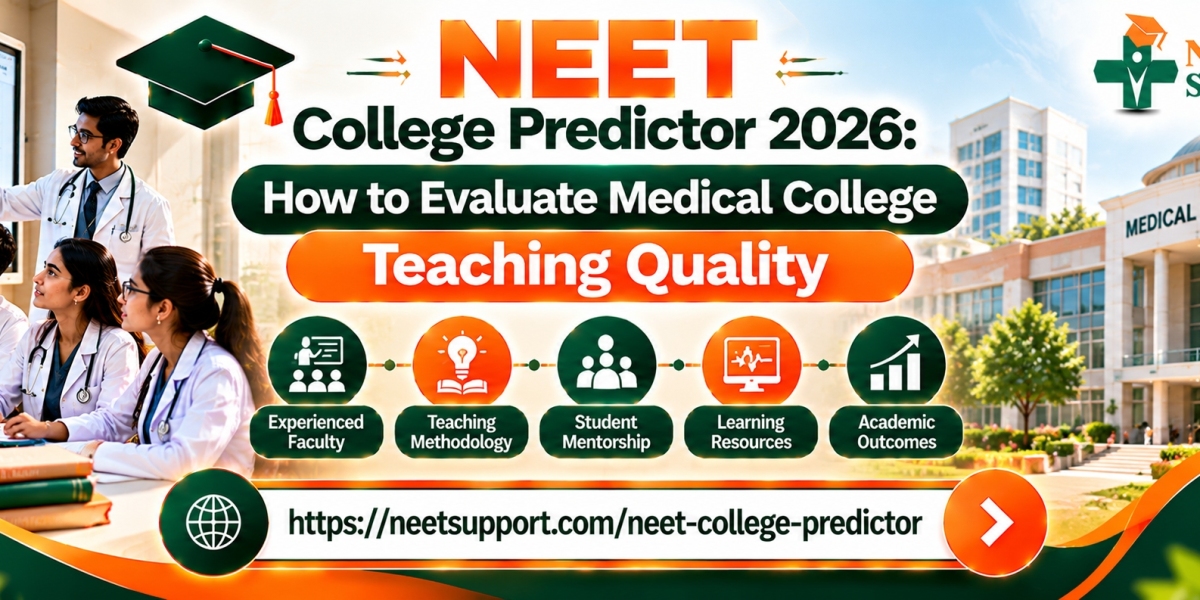

The NEET College Predictor 2026 helps medical aspirants explore potential colleges based on their expected rank, category, and applicable eligibility requirements. However, finding a college within a predicted admission range is only the first step. Understanding how an institution delivers medical education can help students make a more informed decision about their academic future.
Teaching quality influences how students approach complex medical subjects, develop conceptual understanding, and prepare for practical learning. Some students benefit from structured lectures, while others value interactive discussions, demonstrations, and regular feedback. By combining a neet college predictor with careful research into teaching methods and academic support, aspirants can compare colleges according to their educational needs rather than relying on admission predictions alone.
Why Teaching Quality Matters When Choosing a Medical College
Medical education requires students to understand scientific concepts, connect theoretical knowledge with practical applications, and develop skills progressively throughout their course.
A supportive teaching environment can help students identify learning difficulties, clarify complicated topics, and prepare for assessments. Clear academic expectations and constructive feedback can also help students understand where they need to improve.
However, teaching quality cannot be established through a college's reputation or promotional statements alone. Students should examine available evidence, understand the academic structure, and ask specific questions about how learning takes place.
How to Use a NEET College Predictor to Build Your Research List
A college prediction tool can help identify institutions worth investigating. It cannot independently measure faculty effectiveness or guarantee a particular educational experience.
Review Your Predicted College Options
Enter your relevant examination and eligibility details into the predictor. Depending on the tool, these may include your NEET score or rank, category, and domicile details.
Treat the results as preliminary estimates. Actual admission depends on applicable eligibility rules, seat availability, counselling procedures, preferences, and official allotment decisions.
Investigate the Teaching Environment
Once you have a shortlist, review official curriculum information, departmental descriptions, academic regulations, and published student resources.
Look for information about teaching schedules, practical sessions, assessment methods, faculty guidance, and academic assistance. If the available information is incomplete, contact the institution to clarify the arrangements.
Compare Colleges Using Consistent Criteria
Apply the same questions to every shortlisted college. This makes it easier to distinguish verified information from assumptions and prevents one institution's promotional claims from dominating your decision.
Include teaching quality alongside essential factors such as recognition, eligibility, fees, clinical learning arrangements, and admission feasibility.
Six Teaching Quality Factors to Investigate
1. Faculty Qualifications and Subject Expertise
Faculty members help students understand medical concepts and develop a foundation for further learning. When researching a college, examine the publicly available information about its teaching departments and faculty qualifications.
Useful questions include:
Are faculty roles and academic qualifications clearly documented?
Are subject-specific departments identified?
Is information about faculty appointments reasonably current?
Can students find appropriate channels for academic questions?
Faculty qualifications are useful indicators of academic preparation, but they do not independently establish teaching effectiveness. Consider them alongside other available information about the learning environment.
2. Teaching Methods and Conceptual Learning
Medical subjects often require students to understand mechanisms, interpret information, and apply knowledge to practical situations.
Investigate whether the curriculum includes appropriate lectures, tutorials, demonstrations, group discussions, and other learning activities. The precise format will vary by subject and programme requirements.
Ask how students are encouraged to clarify doubts and connect theoretical concepts with practical learning. Avoid assuming that a particular teaching method is automatically superior in every situation. What matters is whether the teaching approach supports the course's learning objectives.
3. Practical Instruction and Clinical Integration
Medical education involves more than classroom learning. Laboratory activities, demonstrations, and supervised clinical teaching help students develop practical understanding as their training progresses.
Research how the college integrates practical activities into its curriculum and how students receive guidance during these sessions.
For clinical instruction, investigate the available teaching arrangements and the level of supervision provided. Students should not assume that a college's hospital facilities alone establish the quality or extent of undergraduate teaching.
4. Assessment Methods and Constructive Feedback
Assessment helps students identify whether they understand the material and where additional preparation may be necessary.
Review the institution's published assessment structure, including applicable internal assessments, practical examinations, and feedback arrangements.
Ask how students receive information about their performance and whether there are established processes for discussing academic difficulties.
Clear assessment expectations can help students plan their studies. However, the frequency of examinations alone should not be treated as proof of teaching quality.
5. Academic Mentoring and Learning Support
Students may need additional guidance when adjusting to medical education or studying demanding subjects.
Investigate whether the college documents faculty mentoring, academic consultation, remedial teaching, or other support arrangements.
Find out how students can request help, whom they should contact, and whether support is available when academic difficulties arise.
Do not assume that every institution offers the same mentoring structure. Confirm the services relevant to your priorities through official information or direct enquiries.
6. Learning Resources and Academic Communication
Effective learning depends partly on access to suitable educational resources and clear academic communication.
Check whether the institution provides access to libraries, textbooks, digital learning resources, laboratory facilities, and official academic notices. Investigate how timetable changes, examination instructions, and other important updates are communicated.
A college's facilities should be assessed in terms of their availability and relevance to students, not simply the number of resources mentioned in promotional material.
How to Verify Claims About Medical College Teaching
When comparing institutions, use a structured verification process.
Review official documents. Read the latest available prospectus, curriculum details, academic regulations, and departmental information.
Ask focused questions. Contact the institution about faculty guidance, teaching methods, practical instruction, and academic support where details are unclear.
Speak with current students when possible. Ask about how students access academic guidance, receive feedback, and clarify difficult topics. Remember that personal experiences may differ.
Check the date of the information. Faculty details, academic arrangements, and available resources may change over time.
Separate confirmed facts from opinions. A student's positive experience can be informative, but it should not be treated as universal evidence about an entire institution.
This process provides a more reliable foundation for comparing colleges than rankings, rumours, or isolated online reviews.
Create a Medical College Teaching Comparison Table
Use a simple table to organise your findings after reviewing the results from your NEET college predictor.
| Assessment factor | What to investigate |
|---|---|
| Faculty expertise | Published qualifications and departmental information |
| Teaching methods | Lectures, tutorials, demonstrations, and discussions |
| Practical instruction | Laboratory sessions and supervised clinical learning |
| Assessment | Published examination structure and feedback procedures |
| Academic support | Mentoring and arrangements for additional guidance |
| Learning resources | Library access and relevant study materials |
| Communication | Access to official academic notices and instructions |
Mark each item as confirmed, needs clarification, or not found. Missing information should not automatically be interpreted as evidence of poor teaching.
Use the comparison as one part of your broader college research rather than treating it as a definitive ranking.
Common Mistakes to Avoid
Choosing a College Based Only on Reputation
Reputation does not guarantee that every student will have the same learning experience. Investigate the actual teaching arrangements relevant to your course.
Assuming Qualified Faculty Always Means Effective Teaching
Academic qualifications matter, but students should also examine teaching methods, guidance arrangements, and opportunities to clarify doubts.
Relying Entirely on Online Reviews
Reviews may be outdated or based on individual circumstances. Verify important claims using official information and multiple perspectives where possible.
Ignoring Practical Learning
Classroom teaching is only one part of medical education. Investigate laboratory and clinical learning arrangements alongside theoretical instruction.
Treating Prediction Results as Admission Guarantees
A predicted college list does not confirm a seat. Follow the applicable admission process and verify current eligibility requirements before making final choices.
How NEET Support Can Help With College Planning
NEET Support can help aspirants organise college research around predicted admission possibilities and personal educational priorities. Students can use prediction results to identify institutions for further investigation and compare teaching-related information systematically.
A college predictor cannot independently verify every teaching claim or guarantee admission. Aspirants should confirm institution-specific details and applicable admission requirements through reliable sources before finalising preferences.
Combining realistic admission planning with careful academic research can help students make decisions based on evidence, personal needs, and long-term educational goals.
Frequently Asked Questions
1. What is the NEET College Predictor 2026?
The NEET College Predictor 2026 estimates potential medical college options using relevant examination and eligibility details. The results are intended for planning and do not guarantee admission.
2. How can I assess medical college teaching quality?
Review faculty information, teaching methods, practical learning arrangements, assessment procedures, academic support, and available learning resources. Verify important details through official sources.
3. Do faculty qualifications guarantee good teaching?
No. Qualifications indicate academic preparation, but teaching effectiveness also depends on communication, teaching methods, student guidance, and the learning environment.
4. Should current students be consulted before choosing a college?
Speaking with current students can provide useful perspectives on academic routines and access to support. Their experiences should be considered alongside official information rather than treated as conclusive evidence.
5. Can a college predictor identify the best teaching institution?
A typical college predictor focuses on admission-related estimates. Students need separate research to assess teaching arrangements, academic resources, and personal suitability.
6. What should I prioritise when comparing medical colleges?
Consider eligibility, admission feasibility, recognition, affordability, teaching arrangements, practical learning, and academic support. Weigh these factors according to your circumstances and educational priorities.
Conclusion
Choosing a medical college requires more than identifying institutions within an expected rank range. Understanding faculty expertise, teaching methods, practical instruction, assessment procedures, and academic support can help aspirants evaluate their potential learning environment. The NEET College Predictor 2026 provides a starting point for identifying colleges to research, while NEET Support can help students organise their comparisons around individual priorities. Use the neet college predictor as a planning tool, verify important details independently, and make a balanced decision based on realistic admission expectations and reliable academic information.









