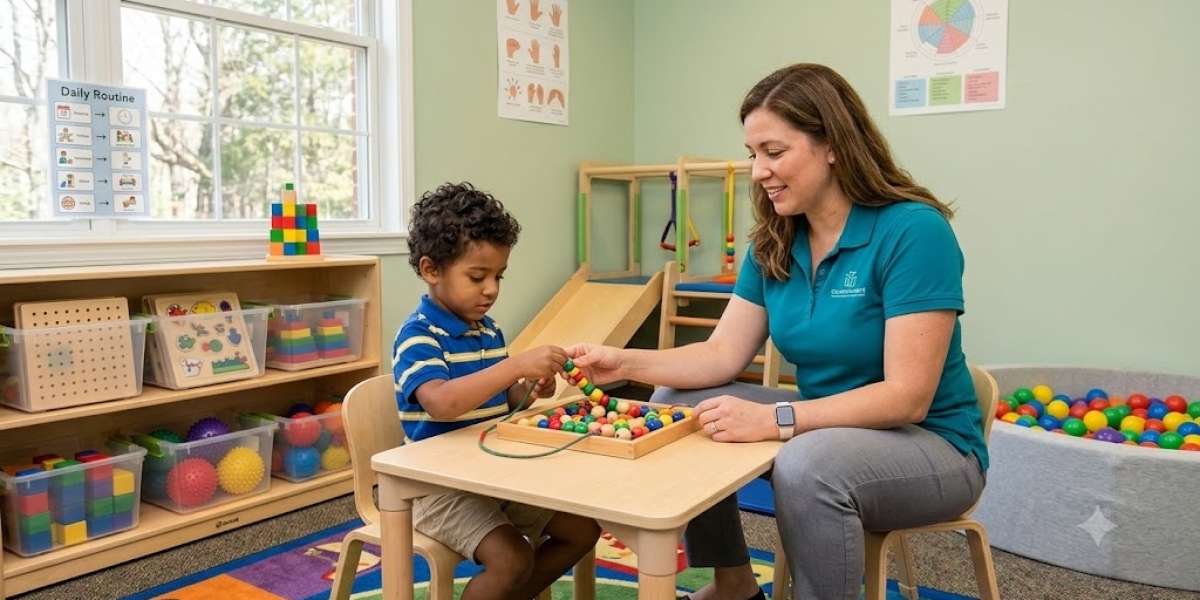

Everyday activities help children learn about the world around them. Getting dressed, holding a spoon, playing with toys, and participating in classroom activities may seem simple, but each task involves a combination of movement, attention, coordination, and sensory processing.
Some children need additional support to develop these skills or participate comfortably in daily routines. Occupational therapy focuses on helping individuals build practical abilities that support greater participation in everyday activities, taking into account their age, strengths, and individual needs.
What Does Occupational Therapy Involve?
Occupational therapy supports the development of skills needed for daily living, learning, play, and participation in familiar environments. For children, this may include activities involving fine motor coordination, hand control, sensory experiences, and age-appropriate self-care tasks.
For example, a child who finds it difficult to hold a pencil may benefit from activities that practise hand strength and coordination. Another child may need support with tasks such as using cutlery, managing clothing fasteners, or participating in structured play.
An occupational therapist considers the child's abilities, challenges, and daily routines before identifying suitable activities. The aim is to support meaningful participation rather than expecting every child to develop skills in exactly the same way or at the same pace.
Recognising When a Child May Need Additional Support
Children develop at different rates, and occasional difficulty with a new task is not necessarily a cause for concern. However, parents may notice that certain activities remain challenging or that their child needs more assistance with everyday routines than expected.
Some children may experience difficulty with hand-eye coordination, handling small objects, managing clothing, or participating in activities that involve different textures and sensory experiences. Others may find transitions between activities or busy environments challenging.
Families exploring occupational therapy Ajman can learn more about occupational therapy services and how professional guidance may help address children's everyday functional needs.
A professional assessment can help identify a child's strengths and areas where support may be useful. Parents can share observations about home routines, play, school participation, and activities their child finds difficult. These details help professionals understand the child's needs in context.
Occupational Therapy and Autism
Autistic children can have different sensory, communication, movement, and daily living needs. Some may find certain sounds, textures, or busy environments difficult to manage, while others may need support with dressing, eating-related routines, handwriting, or organising everyday tasks.
Occupational therapy for autism uae is a relevant area for families seeking information about support for autistic children who experience challenges with daily activities.
Occupational therapy approaches are individualised rather than based on a single set of activities for every child. Depending on an assessment, support may focus on fine motor skills, self-care, participation in play, or adapting everyday activities to better suit the child's needs.
The emphasis is on practical skills, comfort, participation, and individual priorities. Collaboration with parents and other relevant professionals may also help ensure that the child's needs are understood across different settings.
Everyday Ways to Encourage Skill Development
Parents can create opportunities for children to practise everyday skills through familiar activities.
Encourage independence: Allow children to try manageable parts of dressing or tidying up, with help when needed.
Include hands-on play: Building blocks, drawing, and simple puzzles can provide opportunities to practise coordination.
Keep routines predictable: Consistent steps can help children understand what to expect during daily activities.
Observe sensory preferences: Notice which environments or textures a child finds comfortable and which may require adjustments.
Celebrate participation: Recognise effort and engagement instead of focusing only on completing a task perfectly.
These activities can encourage practice at home, while professional advice can help determine whether more tailored support is appropriate.
Finding Appropriate Occupational Therapy Support
Al Soor Specialist Clinic, established in 2011, provides occupational therapy as part of its multidisciplinary services. Located on Mina Road in Al Soor, the clinic offers support within its range of mental health and developmental services.
Every child has individual strengths and needs. Understanding these differences, identifying practical goals, and seeking professional guidance when appropriate can help families explore suitable ways to support children's participation in everyday life.