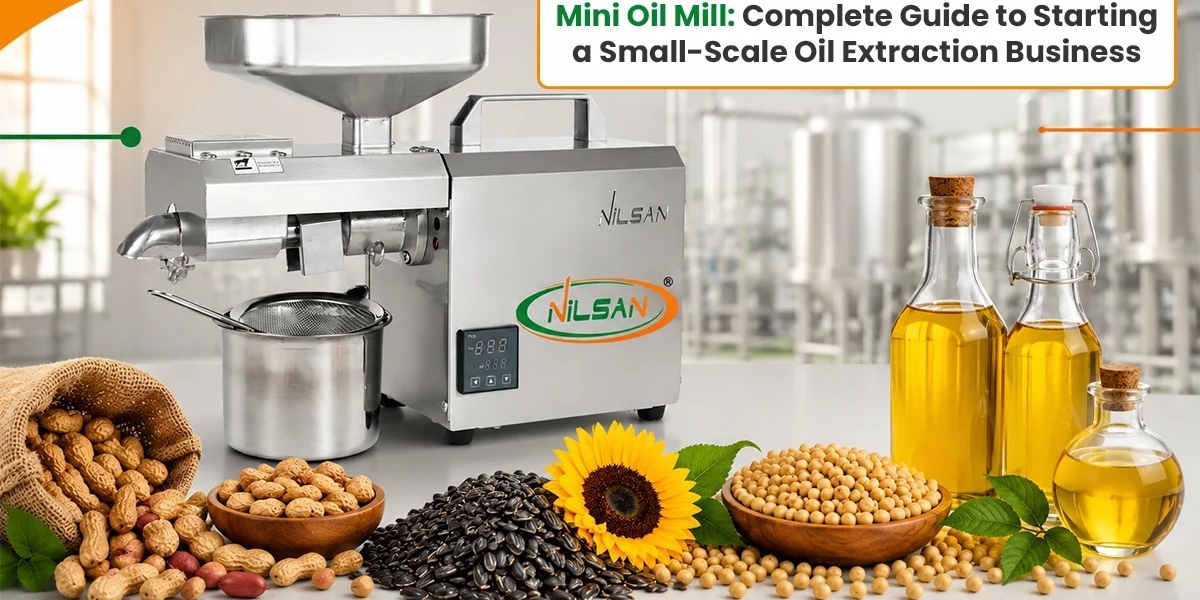

Mini Oil Mill: Benefits, Working Process, and Business Setup Guide
A Mini Oil Mill is a practical option for entrepreneurs and small businesses looking to enter the oil extraction industry. It helps process oilseeds such as groundnuts, mustard, sesame, and sunflower seeds into oil for local markets, retail sales, and other commercial applications. With the right equipment and proper planning, a small oil processing unit can serve customers who want locally produced edible oils.
Starting an oil extraction business requires more than purchasing a machine. You need to understand the working process, select suitable equipment, prepare the raw materials, and plan for filtration, storage, and packaging. This guide explains the essential aspects of a mini oil mill to help you make an informed decision for your business.
What Is a Mini Oil Mill?
A Mini Oil Mill is a small-scale oil processing setup designed to extract oil from suitable seeds and nuts. Depending on the setup, it may include an oil press machine, filtration equipment, seed cleaning arrangements, and oil storage containers.
Unlike a large industrial oil processing plant, a mini oil mill is intended for businesses with relatively modest production requirements. It can be suitable for new entrepreneurs, local oil producers, agricultural businesses, and small food processing units.
The exact setup depends on the type of oilseeds being processed, the expected daily output, and the level of automation required. Some businesses begin with a basic pressing machine and add filtration or packaging equipment as their operations grow.
How Does a Mini Oil Mill Work?
Understanding the oil extraction process helps business owners plan their equipment and daily operations.
1. Cleaning and Preparing the Seeds
The first step is to remove dust, stones, and other unwanted materials from the oilseeds. Depending on the seed variety and processing method, drying, dehulling, or conditioning may also be necessary.
Proper preparation supports smooth machine operation and helps maintain the quality of the extracted oil.
2. Feeding the Seeds into the Machine
The prepared seeds are loaded into the oil press through its feeding hopper. The quantity and feeding rate should follow the manufacturer's recommendations to avoid overloading the machine.
3. Extracting the Oil
The pressing mechanism applies mechanical pressure to the seeds, separating oil from the solid material. The extraction method and operating conditions depend on the machine design and the type of seed being processed.
4. Filtering the Extracted Oil
Freshly extracted oil may contain small particles of seed material. An appropriate filtration system helps remove these suspended solids before the oil is stored or packaged.
Additional processing may be required depending on the intended product and applicable food safety requirements.
5. Storing and Packaging the Oil
The filtered oil should be transferred into suitable, clean containers. Businesses selling packaged oil should maintain proper hygiene, use appropriate food-contact packaging, and follow applicable labelling and storage regulations.
The remaining solid material, commonly called oil cake, may also have value depending on its composition and suitability for the intended use.
What Are the Benefits of a Mini Oil Mill?
A well-planned mini oil mill can offer several practical advantages for small-scale oil producers.
Suitable for Small Businesses
Mini oil mills allow entrepreneurs to select equipment according to their initial production requirements. This can make it easier to plan a smaller operation before investing in a larger facility.
Processes Different Oilseeds
Depending on machine specifications, a mini oil mill may process groundnuts, sesame, mustard, sunflower seeds, and other compatible oil-bearing materials. Businesses should confirm seed compatibility before purchasing equipment.
Supports Local Oil Production
A small oil processing unit can serve nearby households, retailers, grocery stores, and other customers. Local sourcing and a clear product offering can help businesses develop a regular customer base.
Flexible Equipment Options
Businesses can choose between different machine capacities and configurations. A basic setup may focus on pressing and filtration, while a more developed unit may include additional equipment for cleaning, storage, and packaging.
Potential Value from By-Products
Oil cake can provide an additional commercial opportunity when it meets the quality and safety requirements for its intended use. Its value depends on the seed type, processing method, and local market demand.
What Equipment Is Required for a Mini Oil Mill?
The equipment needed depends on your production goals and the type of oil you plan to manufacture.
Oil press machine: Extracts oil from prepared seeds through mechanical pressing.
Seed cleaning equipment: Removes unwanted particles before processing.
Oil filter machine: Helps remove suspended solids from extracted oil.
Storage containers or tanks: Keep the finished oil in suitable conditions before packaging.
Weighing equipment: Helps measure incoming seeds and finished products.
Packaging equipment: Supports filling and sealing when selling bottled or packaged oil.
Not every small unit requires all these machines from the beginning. Review your workflow and budget to determine which equipment is essential for your initial setup.
How to Choose the Right Mini Oil Mill Machine
Selecting the right machine is important for maintaining consistent production and managing operating costs. Consider the following factors before making a purchase.
1. Production capacity: Estimate how many kilograms of seeds you need to process daily. Select a machine that matches your realistic requirements.
2. Seed compatibility: List the seeds you plan to process and confirm that the machine is suitable for each one.
3. Power requirements: Check the motor power, voltage, phase, and electricity supply available at your premises.
4. Filtration requirements: Determine whether filtration is integrated into the machine or needs to be purchased separately.
5. Cleaning and maintenance: Ask about routine cleaning, spare parts, servicing, and the expected maintenance schedule.
6. Available space: Allow enough room for the press, filtration equipment, seed storage, finished oil, and safe movement around the machinery.
7. Total investment: Consider the cost of the machine, installation, electrical work, raw materials, packaging, labour, and other operating expenses.
Comparing these factors will help you choose equipment that fits your production plan instead of paying for capacity or features you may not need.
Is a Mini Oil Mill Business Suitable for Beginners?
A mini oil mill can be an option for new entrepreneurs, but its suitability depends on market demand, raw material availability, investment capacity, and operating costs.
Before starting, research the types of oil preferred by customers in your target area. Identify potential buyers, compare seed prices, and estimate how much oil can realistically be recovered from each type of seed.
You should also calculate electricity, labour, maintenance, filtration, packaging, transport, and marketing expenses. Oil recovery varies according to seed quality, moisture, preparation, and machine settings, so avoid assuming that every batch will produce the same quantity of oil.
If you plan to expand beyond a compact setup, explore the available oil mill machinery options to compare equipment suited to different processing requirements.
Mini Oil Mill Maintenance Tips
Regular maintenance helps keep the machine in good working condition and reduces avoidable interruptions.
Clean the pressing chamber after operation according to the manufacturer's instructions.
Inspect the screw shaft, bearings, and other wear parts at recommended intervals.
Lubricate moving components as specified in the maintenance manual.
Check electrical connections and safety guards regularly.
Replace worn or damaged components when necessary.
Keep the surrounding workspace clean and dry.
Following the recommended maintenance schedule can help support safe operation and consistent production.
Conclusion
A Mini Oil Mill can provide a practical starting point for businesses interested in extracting and selling edible oils. By understanding the working process, identifying the necessary equipment, and evaluating production requirements, entrepreneurs can plan a setup that matches their budget and business goals.
Before purchasing a machine, compare its capacity, seed compatibility, power requirements, filtration options, and maintenance needs. Careful planning and proper operation are essential for building a reliable oil processing business.
Nilsan India offers oil press machines and related equipment for different production requirements. Explore the available Mini Oil Mill options to identify a suitable solution for your oil extraction business.









