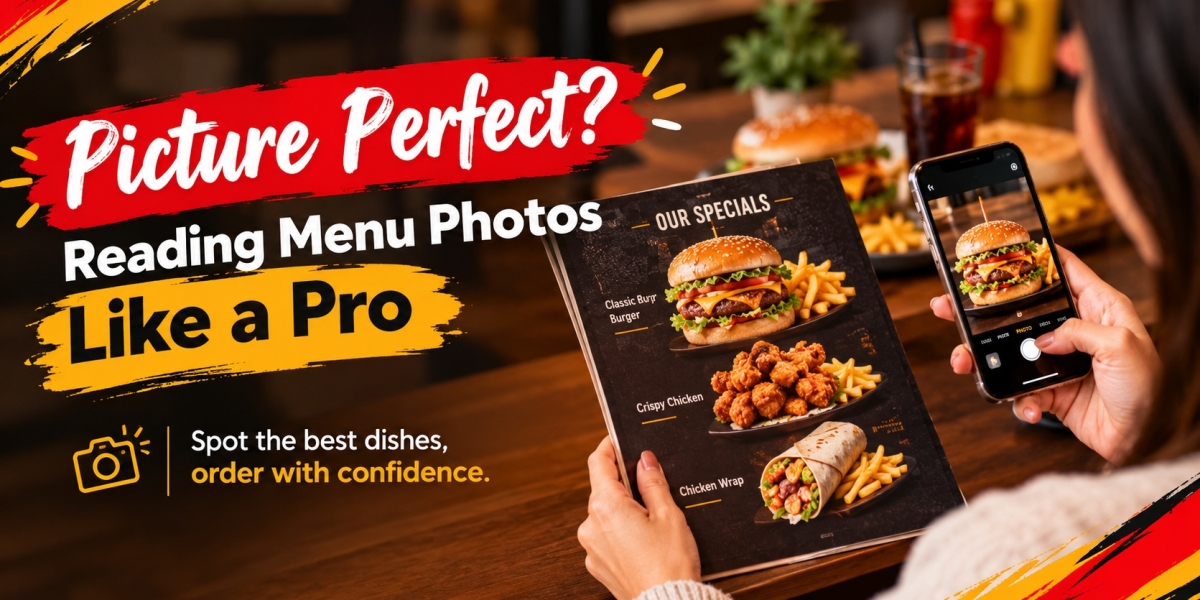

Menu photos have a quiet power. A glossy burger, a pizza with stretching cheese or a basket of golden fries can settle a decision in seconds. The picture looks delicious, so the order is placed, and only later does the question arise: is that what will arrive?
Photos are useful, but they are only one clue among several. Understanding what they show, and what they leave out, helps customers order with more confidence and fewer surprises.
Why Photos Pull So Hard
Humans are visual eaters. Colour, shine and shape trigger appetite before a single bite is tasted, and restaurants know it.
When scrolling through fast food near me on a phone, the photo is often the first thing noticed and the strongest reason to tap. It communicates quickly: a rich red sauce, a crisp edge, a generous topping. For busy people with little time to read, that speed is valuable.
That is also why photos need a little care. They are designed to attract, so reading them as a guide to the dish, rather than a promise about it, gives a more accurate picture.
What Food Photographers Do
Professional food photos are carefully produced, and that is standard practice, not a trick.
The food is usually cooked fresh and photographed within minutes, while it is at its best. Lighting is chosen to make colours richer, and angles are picked to show the most attractive layers. Garnishes are placed with tweezers, and steam or shine may be enhanced to suggest freshness. The result is the best possible version of the dish.
This does not mean the real food will disappoint. It simply means that the photo shows the dish at its peak, in ideal conditions, while a delivered meal has travelled, rested and been opened at a table. The difference is natural, and knowing about it sets realistic expectations.
What a Photo Can Tell You
A good photo still contains plenty of useful information.
It shows the style of the dish: whether a pizza has a thick or thin base, whether a burger is stacked or simple and whether a wrap is tightly rolled. It shows the main toppings and fillings, and often the general colour of the seasoning. A glance can reveal whether a dish is meant to be saucy, crisp, cheesy or dry.
A few things a photo is good at showing:
- The overall style and presentation of the dish
- The main ingredients and toppings
- The colour and texture of the coating or crust
- How the dish is usually served
These details are enough to narrow a choice. They just should not be asked to answer every question.
What a Photo Cannot Tell You
Some of the most important details are invisible in a picture.
Size is the biggest one. Without something familiar in the frame, a burger can look large or small regardless of its real dimensions. Portion size, weight and number of pieces are almost impossible to judge. Taste and spice level are also hidden, as are temperature and texture after a delivery journey.
Context is missing too. A photo rarely shows how the food looks after ten minutes in a delivery bag, or how it compares with the same dish at another restaurant. A burger photographed beside a coin or a hand tells far more about its size than the same burger on a plain plate.
Photos also tend to show a single item, not the whole order. They do not show how crisp food holds up in a closed box, or how much sauce arrives alongside it. For those questions, other sources are more reliable.
Clues That Matter More
A few other details usually give a more accurate picture of what will arrive.
The most useful are the written ones: the item name, the description, the size and the number of pieces. Customer photos and recent reviews add real-world evidence. A menu that clearly states portions is a good sign, since it shows the restaurant wants customers to know what they are getting.
Hungrie's menu pairs each item with a photo and a name, and several items include the piece count, such as Mozzarella Sticks and Chicken Nuggets in five pieces, Peri Peri Bites in six and Chicken Tenders in three. Its Injected Broast is listed in quarter, half and full portions under the name Nom Nom. Reviews of Hungrie's pizza on foodpanda also praise the crust and toppings, giving a customer a second source to check alongside the picture. Having piece counts, portion names and reviews all in one place makes it easier to judge a dish before ordering, and it turns the photo into one helpful clue among several.
Taking a Good Review Photo
Customers can help other diners by sharing honest photos of what actually arrived.
A real photo is one of the most valuable things a review can include. It shows the food as it appears at a normal table, with normal lighting, and it gives future customers a realistic reference. A few simple habits make a review photo useful:
- Take it soon after the food arrives, before anything is moved
- Use natural light, if possible, and keep the background simple
- Include something familiar, such as a hand or a plate, to show the size
- Show the food as it was served, without filters
When searching for fast food restaurants in Lahore, a mix of official photos and honest customer photos gives the fullest picture. Together, they show both what a dish can look like at its best and what it looks like in real life.
Conclusion
Menu photos are helpful guides, not guarantees. They show style, colour and ingredients beautifully, but they say little about size, taste or how the food travels. Combining them with written details, piece counts, honest reviews and customer photos gives a much clearer picture. A little care before ordering usually turns a pleasant surprise into a reliable expectation.