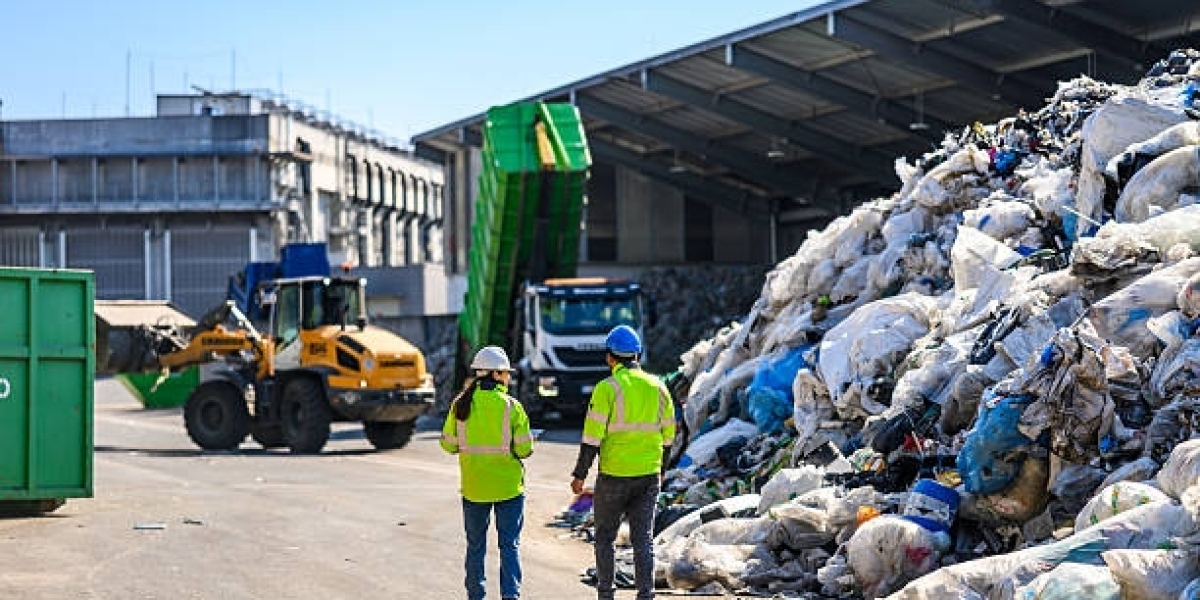

Waste generation across the Gulf Cooperation Council (GCC) has increased alongside urbanization, industrial activity, infrastructure development, and population growth. Managing industrial, municipal, hazardous, electronic, and other waste streams requires coordinated collection, transportation, sorting, treatment, recycling, and disposal systems. As environmental priorities strengthen across the region, waste management is increasingly moving toward integrated approaches that emphasize resource recovery and more efficient disposal.
A comprehensive assessment by Markntel Advisor’ GCC Waste Management Market report projects the market to expand at a CAGR of around 6.25% during 2021–2026. The study links this growth to increasing waste generation, government regulations, integrated waste-management initiatives, recycling, waste segregation, treatment, and waste-to-energy opportunities.
Rising Waste Generation Creates Infrastructure Requirements
Rapid urbanization and industrial development are increasing the volume and diversity of waste generated across GCC countries. Industrial waste represents an important segment because of the region's extensive industrial and infrastructure activities, while municipal waste remains a major concern for densely populated urban areas.
As waste volumes rise, conventional disposal systems face capacity and environmental constraints. This is encouraging governments and waste-management operators to improve collection networks, expand sorting and recycling facilities, and evaluate treatment technologies capable of reducing the amount of material sent to landfills.
Collection Services Remain Central to Waste Management
Collection services represent a significant part of the GCC waste-management value chain. Efficient collection is essential because waste must be gathered from dispersed residential, commercial, industrial, and construction locations before it can be transported for sorting, recycling, treatment, or disposal.
The market also encompasses collection and transportation, storage and handling, sorting, disposal, landfilling, recycling, and composting or anaerobic digestion. Greater integration among these services can improve material recovery and support more systematic waste-management operations.
Recycling and Circular Economy Practices Gain Attention
Recycling is becoming increasingly important as GCC countries seek to reduce dependence on disposal and make greater use of recovered materials. Paper and paperboard, plastics, metals, glass, and food waste represent different streams that can be separated and processed through specialized systems.
Saudi Arabia's waste-recycling and circular-economy initiatives highlight the country's focus on resource reuse and recycling as part of its broader environmental agenda. Such initiatives illustrate the policy direction supporting more circular approaches to waste management.
Waste-to-Energy Provides an Alternative to Landfilling
Waste-to-energy and incineration technologies are also becoming relevant as GCC authorities consider alternatives to conventional landfill disposal. Incineration can reduce the physical volume of waste requiring disposal, while energy recovery can provide an additional use for suitable waste streams.
The report identifies incineration as the disposal method expected to record the fastest growth during the forecast period. Its relatively lower land requirement compared with landfilling and potential for energy recovery contribute to its relevance in regions where land availability and waste volumes create long-term disposal challenges.
Technology Supports Sorting and Resource Recovery
Modern waste management increasingly depends on technologies that improve sorting, material recovery, treatment, and operational monitoring. Automated sorting systems can separate different material categories, while digital tools can support collection planning and improve visibility across waste-management networks.
These developments align with broader circular-economy objectives. In the UAE, the official waste-management framework identifies recycling, waste-to-energy, improved separation and collection systems, and new technologies as components of the country's waste-management efforts.
Qatar and Other GCC Markets Create Growth Opportunities
The GCC market includes Saudi Arabia, the UAE, Qatar, Kuwait, Oman, and Bahrain, with each country developing waste-management infrastructure according to its population, industrial structure, urbanization level, and environmental policies.
Qatar, for example, has been developing infrastructure aimed at increasing material recovery and reducing reliance on landfills. Its Ministry of Commerce and Industry waste-management projects include material-recovery and bulky-waste sorting facilities as well as waste-to-energy infrastructure.
Challenges Across the Waste-Management Value Chain
Despite investment opportunities, waste collection and processing remain operationally challenging. Collection from scattered sources can be labor-intensive, while heterogeneous waste streams make sorting and treatment more complex. Establishing advanced treatment and recycling facilities can also require significant upfront investment.
Effective source segregation is another important consideration because mixed waste can reduce the quality of recyclable materials and increase processing requirements. Strengthening collection infrastructure and encouraging segregation at the source can therefore support more efficient downstream treatment.
Outlook for the GCC Waste Management Market
The GCC Waste Management Market is being shaped by rising waste generation, urbanization, industrialization, environmental regulations, and the transition toward more integrated waste-management systems. Recycling, sorting, treatment, composting, anaerobic digestion, and waste-to-energy are broadening the range of approaches available beyond traditional landfill disposal.
The combination of public-sector initiatives, private-sector participation, and technology adoption is expected to influence the sector through 2026. Greater emphasis on resource recovery and circular-economy principles is also likely to keep waste segregation, recycling infrastructure, and efficient treatment systems central to the region's waste-management development.









