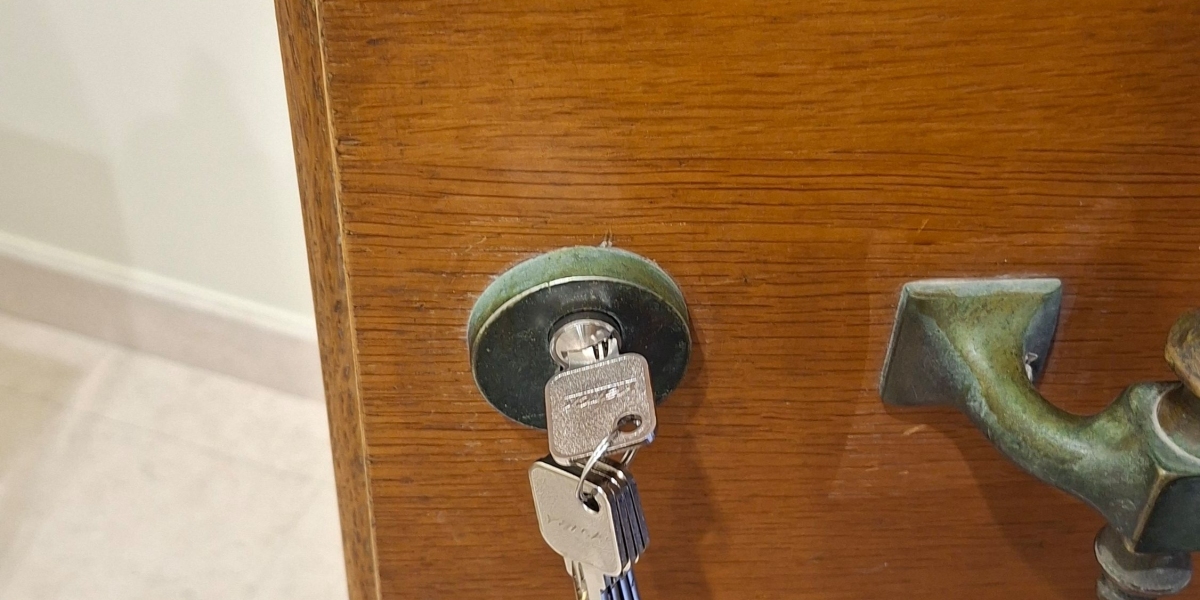

Replacing a door lock can seem like a simple job. You remove the old lock, find another one that looks similar, and expect it to fit the same opening.
In practice, door locks are not universally interchangeable.
Two locks can look almost identical from the outside while having different dimensions, mounting arrangements, cylinder sizes, latch positions, or internal mechanisms. A replacement may therefore fail to fit correctly even when it appears to be the same type of lock.
Understanding these differences can help homeowners, landlords, tenants, and businesses avoid purchasing unsuitable hardware and can make the replacement process much easier.
Similar Appearance Does Not Mean Compatibility
The first mistake people often make is choosing a replacement based mainly on appearance.
A lock may have the same colour, general shape, and handle style as the existing hardware but still be incompatible with the door.
The parts hidden inside the door are often more important than what can be seen from the outside.
Dimensions, fixing points, cylinder configuration, latch size, and the distance between components can all determine whether a replacement will fit.
This is why compatibility should be checked before purchasing or installing new hardware.
Door Thickness Matters
One of the basic measurements to consider is the thickness of the door.
Different locks are designed for different door thickness ranges.
If the replacement hardware is not suitable for the thickness of the door, the lock may not sit correctly or the fixing components may not engage properly.
This can be particularly relevant when replacing hardware on older doors, custom-built doors, or doors made from materials with unusual dimensions.
Measuring the door before selecting a replacement can help avoid an unnecessary purchase.
What Is Backset?
Backset is another important measurement.
It generally refers to the distance between the edge of the door and the centre of the lock or handle spindle, depending on the lock design.
Two locks may look similar but have different backsets.
If the backset does not correspond with the existing door preparation, the replacement may not align correctly with the opening.
This is one reason simply comparing the front appearance of two locks is not enough.
The Faceplate Size Can Be Different
The faceplate is the visible plate positioned along the edge of the door on many lock designs.
Its length and width can vary.
A replacement lock with a different faceplate size may leave an exposed area where the old hardware was installed or may not sit correctly within the existing recess.
In some cases, modifications to the door may be required.
However, changing the door unnecessarily is not always desirable, particularly with finished or expensive doors.
Latch Dimensions Also Matter
The latch needs to extend into the corresponding opening in the door frame.
If the replacement latch has different dimensions from the existing one, it may not align with the strike plate.
This can prevent the door from closing or locking correctly.
A latch that is slightly different in length or position can create problems that are not obvious until installation begins.
This is why latch measurements should be considered before selecting replacement hardware.
The Cylinder May Be Different
For locks using cylinders, the cylinder itself can have different dimensions and configurations.
A replacement cylinder that is too long or too short may not sit correctly within the door hardware.
The type of cylinder also matters.
Different locking systems may use different profiles and mechanisms.
If you are replacing only the cylinder rather than the complete lock, compatibility becomes especially important.
Mounting Holes Need to Line Up
Locks are secured to the door using specific mounting points.
A replacement lock may have fixing holes in different positions from the existing hardware.
Even a small difference can prevent the new lock from being installed without modifying the door.
Drilling additional holes or enlarging existing openings may sometimes be possible, but it should not be done casually.
Incorrect modifications can weaken the door or create alignment problems.
The Strike Plate Is Part of the System
The lock does not work independently from the door frame.
The strike plate needs to correspond with the latch or bolt coming from the lock.
If the new lock has a different latch position, the existing strike plate may no longer align.
This can result in a door that closes poorly or requires excessive pressure before the lock engages.
Sometimes the strike plate can be adjusted or replaced, but this should be considered as part of the complete installation rather than as an afterthought.
Door Material Can Influence the Choice
The type of door can affect which locking hardware is appropriate.
Wooden doors, aluminium doors, metal doors, composite doors, and other constructions may have different preparation requirements.
A lock designed for one type of installation may not be suitable for another.
For example, a replacement that works well on a standard wooden door may require a completely different fitting approach on an aluminium entrance.
The existing door construction should therefore be considered before selecting replacement hardware.
Older Doors Can Be More Complicated
Older doors sometimes have lock openings and hardware dimensions that are no longer common.
Modern replacement locks may not directly match the existing preparation.
This does not automatically mean that the entire door needs to be modified.
Depending on the situation, a compatible lock may be available, or a professional may be able to determine an appropriate alternative.
The key is to measure and assess the existing hardware rather than purchasing a replacement based solely on appearance.
Handles and Locks May Be Connected
On some doors, the handle and locking mechanism are closely connected.
Replacing one component without considering the other can create compatibility problems.
For example, a new lock may require a particular spindle arrangement or handle configuration.
If the existing handle is not compatible, the customer may discover that additional hardware needs to be changed.
Before buying a replacement, consider whether the lock is independent or part of a larger door-hardware system.
Why DIY Replacement Can Become Complicated
A replacement lock may appear straightforward until the old hardware is removed.
Once the door is opened up, differences in dimensions or mounting points may become obvious.
Attempting to modify the door without the appropriate measurements can create permanent damage.
There is also the question of alignment.
Even if a replacement physically fits into the opening, the latch and strike plate still need to work together correctly.
For an important entrance, professional installation can help reduce the risk of these problems.
What Should You Measure Before Buying?
Before purchasing replacement hardware, useful measurements can include:
Door thickness
Backset
Faceplate dimensions
Latch dimensions
Existing cylinder dimensions
Handle or spindle position
Distance between relevant fixing points
Strike plate dimensions
The exact measurements required depend on the type of lock.
If you are uncertain about what needs to be measured, it can be better to have the existing hardware assessed rather than guessing.
What If You Cannot Find an Exact Match?
An exact visual match may not always be necessary.
A suitable replacement can sometimes have a different appearance while still being technically compatible.
The important factors are whether it fits the door preparation, works with the surrounding hardware, and provides the required locking function.
If the original model is discontinued, a professional can help determine whether an alternative design can be installed without creating unnecessary problems.
Repair or Replacement May Be Another Question
Sometimes the lock does not actually need to be replaced.
If the existing hardware is generally sound but has developed a minor issue, repair or adjustment may be possible.
For example, the problem could involve loose fittings, door alignment, a strike plate, or another component.
Before purchasing a completely new lock, it can therefore be useful to establish what is actually wrong with the existing system.
This can save both time and unnecessary expense.
What Should You Check After Installation?
A replacement lock should be tested thoroughly after installation.
Check that the key enters smoothly.
Operate the lock several times.
Open and close the door normally.
Check the latch and strike plate.
Make sure the door does not need excessive force to close before locking.
If the lock includes a handle, test that as well.
The goal is to confirm that all components are working together rather than simply checking whether the new lock is physically attached to the door.
Choosing a Replacement Service in Dubai
When searching for door lock replacement near me, consider whether the service can assess the existing door before recommending hardware.
This is particularly useful when the lock is unusual, the door is older, or the replacement needs to work with existing handles and other components.
Explain what has happened and provide information about the door if possible.
If the existing lock is still installed, having it inspected can often provide more useful information than trying to identify a replacement from photographs alone.
Frequently Asked Questions
Why does a replacement lock that looks identical not fit?
It may have different dimensions, backset, latch size, cylinder configuration, or mounting points.
Does door thickness affect lock compatibility?
Yes. Locks are designed for particular door thickness ranges, so the replacement needs to be suitable for the specific door.
Can I replace only the lock cylinder?
In some situations, yes. Whether this is possible depends on the existing locking system and the compatibility of the replacement cylinder.
Does the strike plate need to be changed?
Not always. If the new lock's latch aligns correctly, the existing strike plate may remain. If the position differs, adjustment or replacement may be required.
Should I replace a lock myself?
Simple hardware may be straightforward, but unusual doors, complex locking systems, and important entrances can benefit from professional assessment and installation.
Final Thoughts
A replacement door lock may look almost identical to the existing one and still fail to fit correctly.
The reason is that appearance represents only a small part of lock compatibility. Door thickness, backset, faceplate dimensions, latch size, cylinder configuration, fixing points, handle arrangements, and strike-plate alignment can all affect whether the replacement works properly.
This is particularly important with older doors, unusual hardware, commercial entrances, and doors made from different materials.
Before purchasing a replacement, measure the existing hardware where appropriate and consider the complete door system. If you are unsure, professional assessment can help identify the correct hardware before any modifications are made.
For homeowners and businesses searching for door lock replacement near me, choosing a service that checks compatibility rather than simply supplying a similar-looking lock can make a significant difference.
A successful replacement is not just about getting the new lock onto the door. The lock should sit correctly, align with the frame, operate smoothly, and work properly with the key, handle, latch, and strike plate.
Taking the time to confirm these details before installation can prevent avoidable fitting problems and help ensure that the replacement provides reliable everyday access.