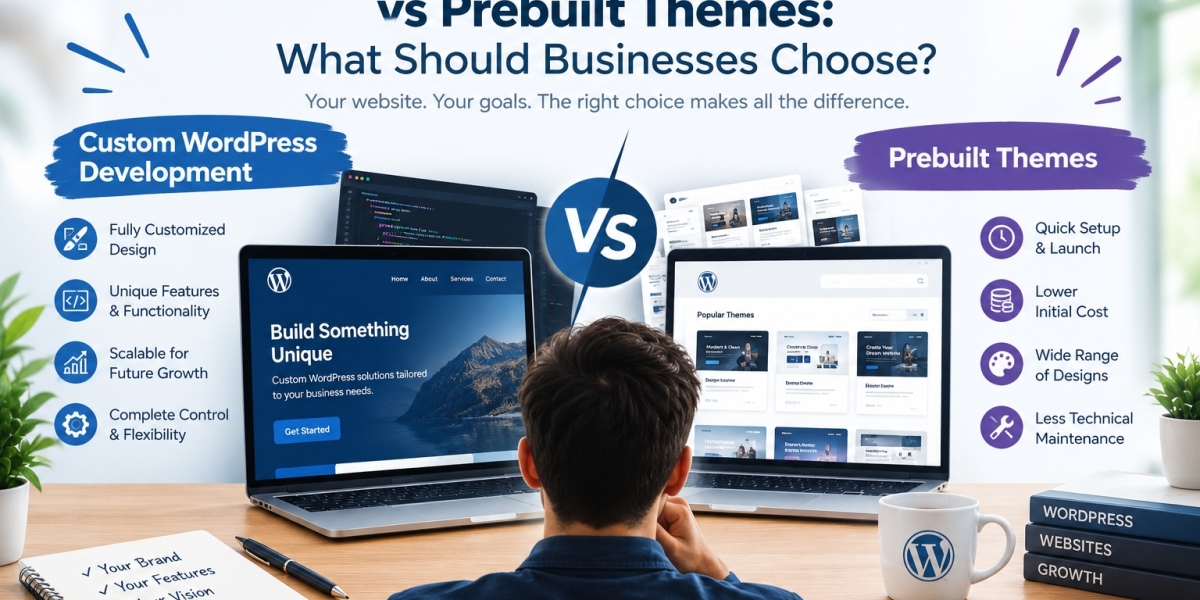

Choosing the right website development approach is an important decision for any business planning to establish or improve its online presence. WordPress offers two popular options: custom website development and prebuilt themes. Both approaches can create professional websites, but they differ in flexibility, cost, performance, maintenance, and long term scalability.
A website should do more than look attractive. It should support business goals, provide a smooth user experience, and help visitors find relevant information. Understanding the differences between custom WordPress development and ready made themes can help businesses choose a solution that meets their current needs and future plans.
Understanding Custom WordPress Development
Custom WordPress development involves building a website around specific business requirements. Developers create tailored layouts, features, templates, and functionality rather than relying entirely on an existing theme.
This approach provides greater control over website structure and user experience. Businesses can create unique service pages, custom navigation systems, booking features, and integrations that match their operations.
Custom development is particularly useful for organizations with complex requirements or plans for future expansion. However, it generally requires a larger initial investment and more development time than installing a prebuilt theme.
What Are Prebuilt WordPress Themes?
Prebuilt WordPress themes are ready made website designs that businesses can install and customize. Many include page templates, navigation layouts, responsive designs, and compatibility with popular plugins.
These themes are commonly used by small businesses, startups, bloggers, and organizations that need a functional website within a limited budget.
One major advantage is faster implementation. Instead of developing every element from the beginning, businesses can customize an existing structure with their content, images, and preferred colors.
However, customization options depend on the theme. Some designs may require additional plugins or development work to support advanced business requirements.
Comparing Development Costs and Budget Requirements
Budget is often the first consideration when choosing between custom development and a prebuilt theme. Ready made themes typically involve lower initial costs because much of the design and functionality already exists.
Businesses may still need to pay for hosting, premium plugins, content creation, and professional customization. These expenses should be considered when calculating the total project cost.
Custom WordPress development usually requires a greater upfront investment because developers must plan, design, build, and test the website according to specific requirements.
However, initial price should not be the only deciding factor. Businesses should consider maintenance, future modifications, plugin subscriptions, and potential redesign expenses. A solution that costs less initially may become expensive if significant changes are required later.
Design Flexibility and Brand Identity
Website design plays an important role in how customers perceive a business. Custom development allows organizations to create distinctive layouts, visual elements, and interactive features that reflect their identity.
Businesses investing in logo and branding often benefit from a website design that consistently applies their visual identity across navigation, typography, colors, and page layouts. Custom development provides greater freedom to achieve this consistency without unnecessary design restrictions.
Prebuilt themes can also support professional branding, particularly when they offer flexible customization settings. However, businesses may encounter limitations when attempting to create highly distinctive layouts.
The right choice depends on whether the business needs a unique digital experience or can achieve its goals through an existing design framework.
Website Performance and Loading Speed
Website speed affects usability, customer satisfaction, and search performance. Both custom websites and prebuilt themes can perform well when developed and maintained properly.
Custom development allows developers to include only the functionality required for the website. This can reduce unnecessary code and improve loading efficiency.
Some multipurpose themes contain additional scripts, styling options, and features that may increase page weight. However, lightweight prebuilt themes can also deliver excellent performance.
Image optimization, caching, reliable hosting, and efficient plugins remain important regardless of the development approach. Businesses should evaluate actual performance rather than assuming that custom development is always faster.
Search Engine Optimization Capabilities
Search engine optimization should be considered during website planning. WordPress supports important SEO features, including editable page titles, meta descriptions, structured content, and search friendly URLs.
Custom development can provide greater control over technical elements such as page structure, schema implementation, and internal linking systems. Prebuilt themes can also support strong SEO when they follow modern coding standards.
Businesses working with the best local seo agency should prioritize a website that supports location specific landing pages, clear navigation, mobile usability, and accurate business information.
Neither development approach guarantees higher search rankings. Content quality, technical performance, website architecture, and ongoing optimization have a greater influence on long term visibility.
Maintenance, Security, and Updates
Every WordPress website requires regular maintenance to remain secure and functional. This includes updating WordPress, reviewing plugins, monitoring performance, and maintaining reliable backups.
Prebuilt themes often receive updates from their developers. However, businesses depend on the theme provider to maintain compatibility and address security issues.
Custom websites offer greater control over functionality but may require ongoing support from experienced developers. Poorly documented custom code can also make future maintenance more difficult.
Businesses should consider who will manage the website after launch. Reliable maintenance arrangements are essential regardless of the chosen development method.
Scalability and Future Business Growth
Business requirements often change as organizations expand. A website that initially provides basic information may eventually need ecommerce functionality, customer portals, appointment systems, or advanced integrations.
Custom WordPress development can make these changes easier when the website architecture is designed for expansion. Developers can build features around specific operational needs without being restricted by existing theme structures.
Prebuilt themes can also accommodate growth through plugins and customization. However, extensive modifications may introduce compatibility problems or increase maintenance requirements.
Businesses expecting significant future development should consider scalability during the initial planning stage rather than waiting until limitations become apparent.
Which Option Should Businesses Choose?
The best approach depends on business objectives, available resources, technical requirements, and expected growth.
Prebuilt themes are often suitable for startups, small businesses, and organizations that need a professional website quickly. They provide an affordable starting point when standard layouts and functionality meet business needs.
Custom WordPress development is generally more appropriate for businesses requiring unique functionality, complex integrations, or highly tailored user experiences.
A hybrid approach is another possibility. Businesses can begin with a lightweight theme and introduce carefully developed custom features where necessary.
Before making a decision, organizations should identify their essential requirements, estimate long term costs, and evaluate the level of flexibility they need.
Conclusion
Custom WordPress development and prebuilt themes both offer practical solutions for building professional business websites. Custom development provides greater flexibility, control, and opportunities for tailored functionality, while prebuilt themes offer affordability, convenience, and faster implementation.
Neither option is automatically better for every organization. The right decision depends on business goals, budget, maintenance capabilities, and future development plans.
By considering performance, design flexibility, SEO requirements, and scalability, businesses can choose a WordPress solution that supports their operations and delivers lasting value.










