
When a fire breaks out aboard a boat, extinguishing the flames is the immediate priority. However, the water used during firefighting can introduce additional problems that remain after the visible fire damage has been addressed. Water may enter enclosed compartments, soak insulation, reach electrical equipment, and collect beneath floors or behind interior panels.
These effects can be difficult to identify because much of a boat's construction contains spaces that are not readily accessible. Even after visible surfaces dry, moisture may remain inside materials or enclosed areas. If it is not identified and managed appropriately, the resulting deterioration can complicate repairs and increase the overall cost of restoring the vessel.
Understanding how firefighting water affects different parts of a boat helps owners recognize why post-fire assessments should examine more than burned surfaces and damaged equipment.
How Firefighting Water Reaches Enclosed Spaces
Water used to extinguish a boat fire does not necessarily remain near the area where it was applied. It can flow through openings, pass beneath equipment, enter lockers, and collect in bilges or other low points. Damaged seals, melted fittings, open access panels, and compromised hull or deck penetrations may allow water to reach spaces that would normally remain dry.
A boat's layout can make this problem more complicated. Bulkheads, stringers, liners, and internal compartments may restrict drainage or create areas where water accumulates. Some spaces have limited access, making it difficult to confirm whether they have dried completely.
The amount of water entering the vessel depends on the firefighting method, the duration of the response, the boat's construction, and the location of the fire. In some cases, water may be removed relatively easily. In others, it can spread into several compartments or remain trapped within materials.
After the fire is extinguished, owners should not assume that pumping out the bilge or drying visible surfaces resolves every moisture-related concern. A systematic assessment can help identify areas where water may have traveled and determine whether further inspection is needed.
Why Trapped Moisture Can Cause Lasting Damage
One of the main concerns after firefighting is trapped moisture. Water can remain inside enclosed spaces, beneath flooring, behind liners, or within materials that do not dry quickly. These locations may be difficult to inspect without removing selected panels or obtaining access through existing openings.
Persistent moisture can contribute to corrosion, deterioration of some materials, unpleasant odors, and damage to electrical or mechanical equipment. The risks depend on the materials involved, the length of exposure, ventilation, temperature, and whether contaminants are present.
In a fiberglass boat, moisture may become a concern if water reaches a damaged laminate or enters a cored structure through compromised surfaces or joints. The effect depends on the core material, construction method, and condition of the surrounding laminate. Water exposure does not automatically mean that a composite structure has failed, but suspected intrusion should be evaluated rather than ignored.
Moisture may also affect timber components, insulation, upholstery, and interior fittings. Some materials can be dried and restored, while others may need cleaning, repair, or replacement depending on their condition.
The important distinction is between a surface that feels dry and an enclosed area that has been adequately assessed. A dry exterior does not establish that hidden materials have also dried or remained unaffected.
Effects on Electrical Systems and Electronics
Electrical equipment is particularly vulnerable when water enters places that are not designed to get wet. Firefighting water may reach distribution panels, wiring connections, battery compartments, charging systems, navigation equipment, and electronic controls.
Water exposure can affect connectors and terminals, while contaminants left behind after evaporation may contribute to corrosion. If the water contains dissolved salts or other conductive substances, the potential for electrical problems may increase. Smoke residue and heat damage can create additional concerns when they affect the same equipment.
A device that powers on after a fire is not necessarily in good condition. Moisture or contamination may cause intermittent faults, unstable connections, or deterioration that becomes apparent later. Electrical damage may also exist in wiring insulation or connections that are hidden behind panels.
Owners should avoid energizing equipment that may be wet or contaminated until an appropriate evaluation has been completed. A qualified marine electrician or electronics technician can determine which components require inspection, cleaning, testing, repair, or replacement.
The assessment should also consider the supporting wiring and connections, not only the visible devices. Replacing a damaged display, for example, will not resolve an underlying problem in its power supply or connecting cables.
Corrosion in Metal Components and Connections
Metal components can experience additional deterioration when exposed to water, particularly if the water contains salts or other contaminants. In a marine environment, corrosion may affect electrical terminals, fasteners, brackets, machinery components, and other exposed metal surfaces.
Heat from the fire may have already damaged protective coatings or altered nearby materials. When water reaches these areas, the combination of compromised protection and moisture can create further maintenance concerns.
Not all metals react in the same way, and the risk depends on the alloy, surface condition, exposure, and surrounding environment. A visible corrosion mark may be superficial, while deterioration in a critical connection or load-bearing component may require closer examination.
Owners should document affected areas and determine whether cleaning, protective treatment, repair, or replacement is appropriate. Components associated with steering, propulsion, fuel systems, and structural connections deserve attention according to their condition and function.
Corrosion should not automatically be attributed to the fire or firefighting water without considering the vessel's previous condition. Existing corrosion may have been present before the incident, so maintenance records and earlier photographs can help establish useful context.
Moisture in Fiberglass and Cored Structures
Many boats use fiberglass composites in hulls, decks, bulkheads, and other structural components. Some areas use a solid laminate, while others contain a lightweight core between fiberglass skins. The behavior of these structures after water exposure depends on their design, materials, and existing condition.
If firefighting water reaches damaged joints, openings, or compromised laminate, moisture may enter areas that are difficult to dry. In a cored panel, water intrusion can raise concerns about the core material and the bond between the core and the surrounding skins.
The possible effects vary. Some materials may tolerate limited exposure without significant damage, while others may deteriorate if moisture remains for an extended period. Water entry does not by itself prove that delamination or structural weakness has occurred.
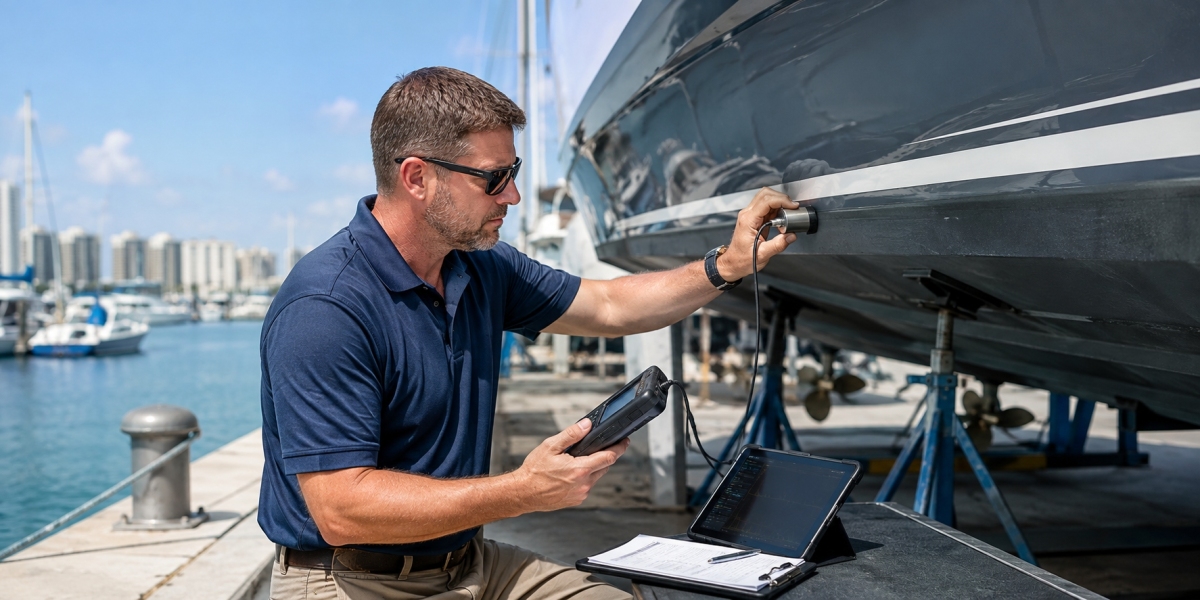
A suitable assessment may involve visual examination, moisture measurements where appropriate, sounding, or other non-destructive testing methods. Each method has limitations, and results should be interpreted in relation to the vessel's construction and the location of the suspected problem.
Where structural integrity is uncertain, further investigation by a qualified composite specialist or other appropriate professional may be necessary. Cosmetic repairs should not conceal suspected moisture intrusion before its significance has been considered.
Damage to Insulation, Upholstery, and Interior Materials
Firefighting water can soak materials that are not intended to remain wet, including upholstery, carpets, foam, insulation, cabinetry, and interior panels. These materials may retain moisture after the surrounding surfaces appear dry, especially in poorly ventilated compartments.
Depending on the material and the extent of exposure, moisture may contribute to staining, odors, material breakdown, or microbial growth. Smoke and soot can also contaminate porous surfaces, making cleaning more complicated than simply removing water.
Some items may be cleaned and dried using suitable methods. Others may require replacement if they are heavily contaminated, deteriorated, or unable to dry adequately. Decisions should account for the material's condition, the nature of the contamination, and whether the item plays a role in fire protection or another safety-related function.
Insulation deserves particular attention because it may be hidden behind walls, ceilings, and liners. If it becomes wet or contaminated, drying and inspection may require access to concealed spaces.
Owners should avoid closing up affected compartments or reinstalling interior panels before the condition of the underlying materials has been evaluated. Doing so can make later problems harder to identify and address.
Why Drying the Boat Requires a Planned Approach
Removing standing water is an important first step, but complete drying can take longer. The appropriate approach depends on how far the water spread, the materials involved, the ambient conditions, and whether the vessel has electrical or structural concerns that must be resolved first.
Pumping out bilges, improving ventilation, removing wet items, and opening accessible compartments may help. However, drying equipment should be used with appropriate caution around potentially damaged electrical systems, fuel vapors, and other hazards following a fire.
Some enclosed areas may need to be opened to assess the extent of water intrusion. Where moisture has entered cored structures, insulation, or other materials that dry slowly, specialist advice may be necessary to determine whether drying is sufficient or whether affected material must be removed.
A single moisture reading may not establish that a compartment is fully dry. Measurements can vary with the material, instrument, surface condition, and location. Repeated checks and an understanding of the construction may be needed when the consequences of retained moisture are significant.
A documented drying plan can help owners track which areas were examined, what actions were taken, and whether additional work remains outstanding.
The Importance of a Post-Fire Inspection
A boat that has experienced a fire should be assessed for the combined effects of heat, smoke, and firefighting water. Focusing only on the most visibly damaged area may overlook problems in adjacent compartments, electrical systems, or structural components.
A marine survey can document observable conditions and identify areas that may need further attention within the agreed scope. Depending on the findings, additional evaluation by a marine electrician, mechanic, composite specialist, or other qualified professional may be appropriate.
The scope of a general survey does not automatically include detailed testing of every electrical device, concealed structural area, or internal mechanical component. Owners should review any stated limitations and follow up on significant recommendations.
Photographs, incident details, repair records, and information about water removal can help support the assessment. It is useful to distinguish between confirmed damage, suspected moisture intrusion, and areas that could not be fully examined.
A careful inspection provides a more reliable basis for planning restoration than assuming that the boat is ready for repair simply because the flames are out and visible surfaces have dried.
Conclusion
Firefighting water can create additional problems inside a boat by entering enclosed spaces, damaging electrical equipment, contributing to corrosion, and affecting materials that remain wet after the incident. These effects may develop away from the original fire and may not be obvious during a quick visual check.
Owners should consider the vessel's construction, identify where water may have traveled, and determine whether hidden compartments and affected systems require further evaluation. Drying, cleaning, and replacement work should be based on the actual condition of the materials rather than appearance alone.
A documented post-fire assessment helps establish what is known, which areas remain uncertain, and what repairs or specialist evaluations may be needed. Addressing moisture-related concerns early can help reduce the chance of additional deterioration and support more informed restoration decisions.