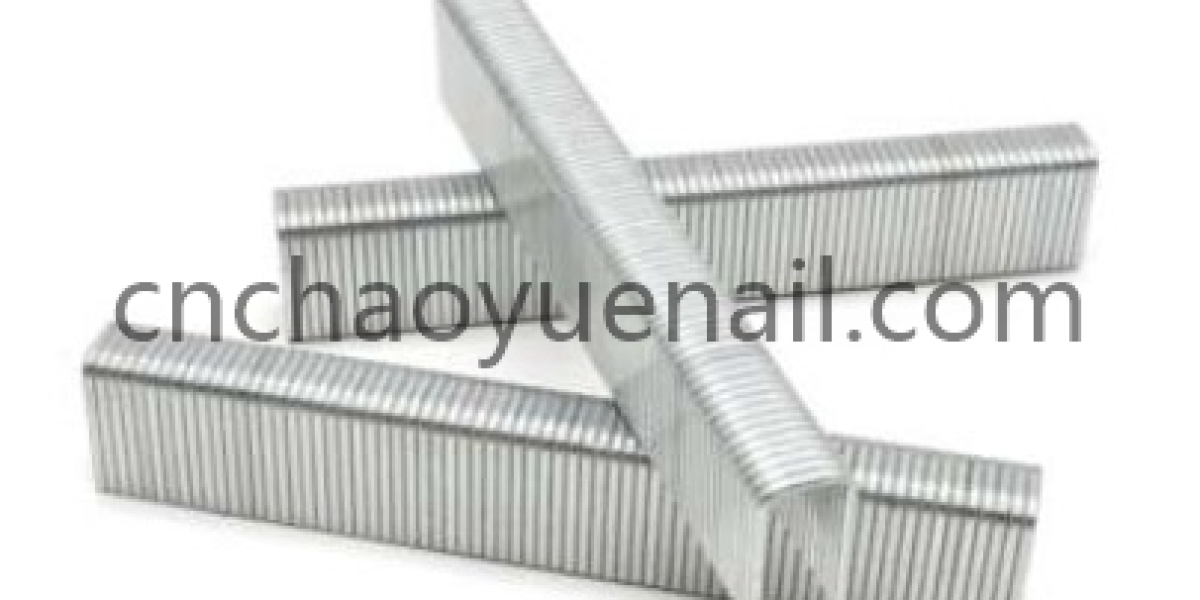

Reliable fastening products support the efficiency of woodworking, furniture manufacturing, packaging, and many other assembly operations. For buyers evaluating N100 Staples, material consistency, forming accuracy, and compatibility with the intended fastening equipment are important factors in determining whether a product suits a particular workflow. A dependable manufacturing process combines appropriate steel selection with controlled wire preparation, repeatable forming operations, and inspection procedures that help maintain consistent quality across production batches.
Steel wire selection influences both production stability and finished-product performance. Manufacturers need to consider material composition, surface condition, tensile behavior, and consistency between incoming batches. Wire that varies significantly in its properties may be more difficult to feed and form, potentially increasing machine interruptions or creating irregular finished shapes. Incoming inspection can identify visible surface defects and material inconsistencies before the wire enters production. This early control helps reduce avoidable waste and supports more predictable manufacturing results.
Wire preparation establishes the foundation for accurate staple forming. Drawing operations help achieve a consistent wire profile, while straightening equipment prepares the material for controlled feeding. Appropriate lubrication can reduce friction during processing and help maintain stable movement through production equipment. Automated feeding systems then deliver the wire to cutting and forming stations, where coordinated operations create the staple crown and legs. Consistent machine settings are essential because irregular cutting, uneven bending, or poor alignment may affect the way the finished fastener enters the workpiece.
Tooling design and maintenance contribute significantly to repeatability. Forming dies, cutters, guides, and feeding components experience wear during continuous operation. Over time, worn tooling can produce burrs, distorted shapes, or inconsistent alignment that may interfere with fastening equipment. A preventive maintenance program should include routine cleaning, inspection, alignment checks, and replacement of components when necessary. Monitoring production patterns can help operators recognize developing problems early, reducing the likelihood of extended downtime or large quantities of rejected products.
Surface finish should reflect the conditions in which the fasteners will be stored and used. Bright steel may be appropriate for certain indoor applications, while coated or galvanized finishes can provide additional corrosion resistance when exposure conditions justify them. Finish selection should consider moisture, substrate characteristics, storage practices, and the requirements of the final product. No coating should be assumed to provide unlimited protection under every environment. Clear product identification and suitable packaging help preserve surface condition before the fasteners reach the production floor.
Compatibility with fastening tools is particularly important for commercial users. The fastener profile, crown configuration, leg shape, collation method, and feeding arrangement must correspond to the equipment being used. Products that do not match tool requirements may lead to feeding interruptions, misfires, or inconsistent placement. Buyers should verify compatibility with the equipment manufacturer and communicate the intended application during procurement. For high-volume operations, stable feeding and predictable placement can help maintain production rhythm and reduce time spent clearing equipment problems.
Quality control should be integrated throughout the manufacturing process. Incoming material checks establish whether wire meets purchasing requirements, while in-process monitoring helps detect changes in feeding, cutting, and forming behavior. Final inspection can assess appearance, shape consistency, surface condition, and other characteristics relevant to the agreed product requirements. Automated counting and vision-based inspection may support repeatability where appropriate, while batch records improve traceability. These controls help manufacturers investigate reported issues, identify potential process causes, and implement corrective actions based on documented evidence.
Packaging is another part of product quality. Fasteners should be packed in a way that limits contamination, moisture exposure, and mixing between product types. Inner bags, cartons, or bulk containers can be selected according to order quantities, transportation conditions, and customer handling practices. Labels should provide clear identification and relevant batch details, helping distributors maintain organized inventory. For international shipments, packaging should also be suitable for warehouse storage, repeated handling, and extended transportation without unnecessary damage to the product.
Efficient production can support both supply reliability and resource management. Accurate feeding and well-maintained forming equipment reduce material losses, while segregated steel scrap can be collected for appropriate recycling. Better production planning also helps limit unnecessary changeovers and packaging waste. These practices contribute to a more controlled manufacturing operation without compromising the importance of product inspection and process consistency.
When sourcing N100 Staples, professional buyers should evaluate material quality, forming consistency, equipment compatibility, surface finish, packaging arrangements, and supplier communication together. Providing clear information about the intended application and fastening equipment helps manufacturers assess the most suitable product configuration. Businesses seeking steel fasteners for woodworking, furniture production, packaging, or related assembly processes can review available product options at https://www.cnchaoyuenail.com/product and discuss their purchasing requirements with the supplier.









