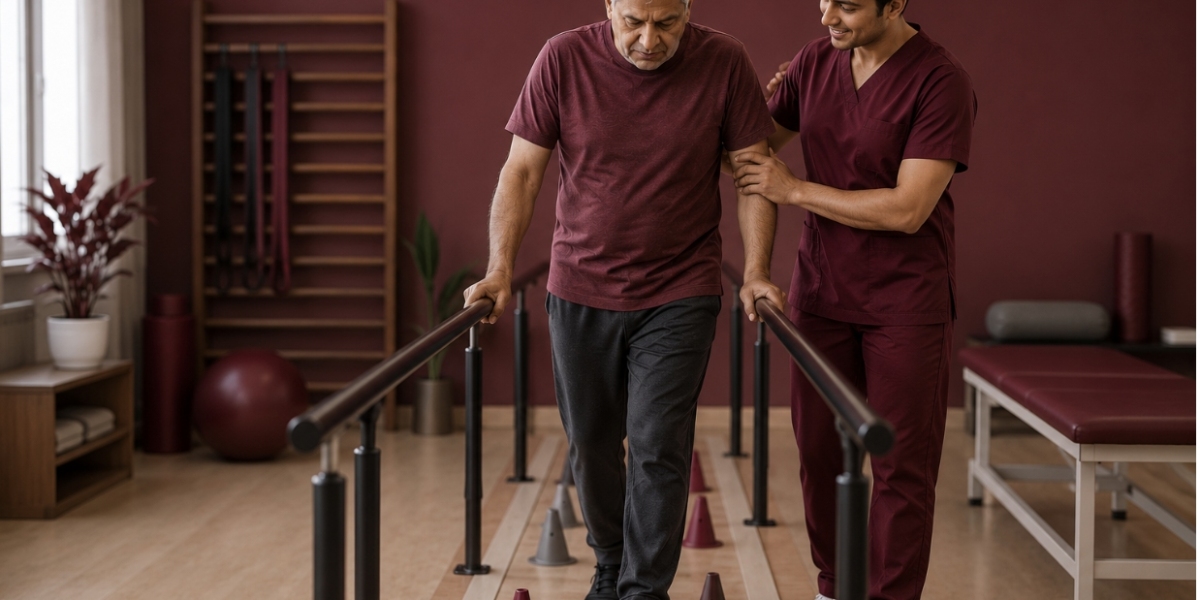

Balance training after orthopaedic injury can help address these functional difficulties as part of a structured rehabilitation programme. By improving balance, lower-body strength, coordination, and movement control, rehabilitation can support safer mobility and help older adults return to everyday activities.
Why Balance Can Change After an Orthopaedic Injury
Balance depends on several systems working together, including muscle strength, joint movement, vision, sensation, and coordination. An injury or period of inactivity can affect one or more of these components.
Older adults may experience:
Reduced leg strength
Joint stiffness
Changes in walking pattern
Reduced flexibility
Difficulty shifting weight
Reduced confidence while walking
Slower reactions to changes in balance
Greater dependence on walking aids
These factors can make everyday movements more challenging.
How Orthopaedic Injuries Affect Balance
Muscle Weakness
After an injury or surgery, activity levels often decrease. Reduced use of the legs can lead to muscle weakness, particularly in the hips, thighs, and lower legs.
Weak muscles may make it harder to maintain stability while standing, walking, or changing direction.
Joint Stiffness
Limited joint movement can affect how a person places their foot, shifts their weight, or takes a step.
For example, ankle stiffness may affect walking mechanics and make it more difficult to respond to changes in the walking surface.
Altered Walking Patterns
Pain or weakness can cause a person to change how they walk. They may take shorter steps, avoid putting weight on one side, or rely more heavily on a walking aid.
These changes can influence balance and movement confidence.
What Is Balance Training After Orthopaedic Injury?
Balance training after orthopaedic injury involves exercises and functional activities designed to improve postural control and stability.
A physiotherapist may gradually introduce exercises based on the person's condition, such as:
Supported standing exercises
Weight-shifting activities
Sit-to-stand practice
Step training
Heel-to-toe walking
Lower-limb strengthening
Controlled changes of direction
Functional mobility exercises
The level of difficulty should be adjusted according to the individual's abilities and safety needs.
How Balance Rehabilitation Supports Recovery
1. Improves Postural Control
Balance exercises help individuals practise maintaining a stable position while standing or moving.
Better postural control can make everyday movements more manageable.
2. Strengthens the Lower Body
Many balance exercises also involve the muscles of the hips, thighs, ankles, and core.
Improved strength can provide greater support during standing and walking.
3. Improves Weight-Shifting Ability
After an injury, some older adults may avoid placing weight on the affected side.
Controlled weight-shifting exercises can help individuals gradually become more comfortable distributing their weight appropriately, when medically permitted.
4. Supports Safer Walking
Balance rehabilitation can incorporate walking and stepping activities that resemble everyday movement.
Training may focus on maintaining stability while:
Starting and stopping
Turning
Stepping over small obstacles
Changing direction
Moving between different surfaces
5. Builds Confidence With Movement
Fear of falling can cause some older adults to become less active. Reduced activity can then contribute to further weakness and deconditioning.
A supervised rehabilitation programme can provide opportunities to practise movement in a controlled environment and gradually build confidence.
Balance Exercises for Older Adults
The appropriate exercises depend on the injury and stage of recovery. Common rehabilitation activities may include:
Sit-to-Stand
Repeatedly standing up from a chair and sitting down can work the lower-body muscles while practising a common everyday movement.
Supported Weight Shifts









