
Why Do Knees And Joints Feel Stiffer During Indian Winters?
Cold mornings, long sitting hours and reduced movement can make knees, shoulders and lower back feel stiff. An ayurvedic oil for joint pain is traditionally used to support external comfort, relaxation and easier movement during such days. Many Indian households already follow the habit of massaging painful areas with warm oil, especially in winter.
Joint stiffness can affect anyone—elderly parents, homemakers who stand for long hours, office workers who sit all day, or people who carry heavy bags while commuting. The discomfort may be mild at first, but ignoring it can make daily activities such as climbing stairs, squatting or walking difficult.
An ayurvedic pain relief oil is commonly used for external massage in traditional wellness routines. It may help the area feel warm and relaxed, but persistent or severe joint pain needs proper medical assessment.
What Is Ayurvedic Oil For Joint Pain?
Ayurvedic oil for joint pain is an external-use oil made with traditional herbs and a base oil such as sesame, coconut or mustard oil. It is traditionally used to massage stiff joints, sore muscles and tired body areas.
These oils are commonly used for:
- Knee stiffness and mild joint discomfort
- Shoulder and neck tension
- Lower back soreness after long sitting
- Muscle tiredness after physical work
- Cold-weather stiffness
- General body massage for relaxation
They support comfort from outside. They do not replace medicines, physiotherapy or medical treatment for arthritis, injury or nerve-related pain.
Which Ayurvedic Herbs Are Used For Joint Comfort?
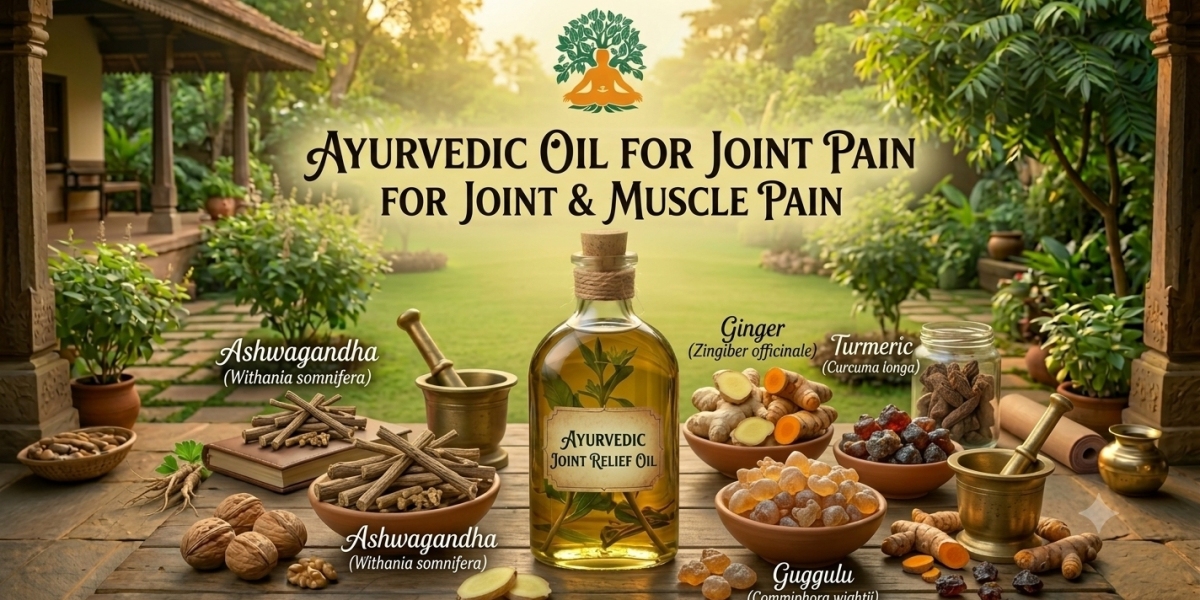
Traditional Ayurvedic pain-care oils may include herbs known for warming, soothing and circulation-supporting properties.
- Nirgundi: Traditionally used for joint and muscle discomfort
- Rasna: Used in Ayurveda for joint stiffness and inflammation-related discomfort
- Shallaki: Traditionally used to support joint comfort and mobility
- Guggulu: A classic resin used in joint-care formulations
- Ginger: Known for its warming nature
- Ajwain: Traditionally used for body stiffness and digestive comfort
- Sesame oil: A common Ayurvedic base oil for massage
The right oil depends on whether your discomfort feels cold and stiff, hot and inflamed, or related to muscle tiredness.
How To Use Ayurvedic Oil For Knee Pain And Stiffness?
To use ayurvedic oil for knee pain and stiffness, warm a small quantity of oil, apply it over the knee and surrounding area, and massage gently for five to ten minutes. Use it once or twice daily, or as directed on the product label.
A safe and simple method:
- Wash and dry the affected area.
- Warm a small amount of oil slightly, if comfortable.
- Apply a thin layer over the knee or joint.
- Massage gently in circular motions.
- Cover the area with light clothing if the weather is cold.
- Avoid sudden pressure or deep forceful massage.
- Wash hands after use.
Do not apply oil on broken skin, wounds, rashes or infected areas. If you feel burning, itching or a rash, stop using it and wash the area.
Can Ayurvedic Pain Relief Oil Help With Arthritis?
Ayurvedic pain relief oil may help manage stiffness and everyday discomfort associated with arthritis, but it cannot cure arthritis or replace prescribed treatment. It can be used as supportive external care along with medical advice, movement and a healthy lifestyle.
For arthritis-related discomfort, a balanced routine may include:
- Gentle movement such as walking or stretching
- Physiotherapy exercises advised by a professional
- Maintaining a healthy body weight
- Avoiding long periods of sitting or standing
- Using warm oil massage for comfort
- Eating an anti-inflammatory, balanced diet
Never stop prescribed arthritis medicines without consulting your doctor.
Why Is OstoCure Pain Care Oil A Practical Choice?
OstoCure Pain Care Oil from Soham Siddhatatvam is an Ayurvedic pain relief oil designed for external massage of joints, muscles and stiff body areas. It can be a useful part of a daily comfort routine for people with knee stiffness, shoulder tension or general body aches.
It fits well into a winter routine, especially for elderly family members or people with long working hours. For more options, visit the Pain Care collection
View the product here: OstoCure Pain Care Oil
What Does Ayurveda Say About Joint Pain?
In Ayurveda, joint discomfort is often linked to Vata dosha, which governs movement, dryness and the nervous system. When Vata increases, joints may feel dry, stiff, cracking or painful, especially in cold and dry weather.
Ayurveda also considers Ama, or incomplete digestion, as a factor in joint discomfort. Poor digestion and heavy, oily or processed food can contribute to heaviness and stiffness in the body.
Traditional joint care includes:
- Warm, freshly cooked and easily digestible meals
- Regular but gentle movement
- Oil massage with suitable herbs
- Avoiding exposure to cold wind and dampness
- Managing weight and avoiding joint overuse
- Using spices such as ginger, turmeric and ajwain in moderation
Indian Lifestyle Tips For Better Joint Comfort
Small daily habits can make joints feel more comfortable over time.
- Start the morning with gentle stretching before getting out of bed.
- Avoid sitting cross-legged for very long periods if it causes knee pain.
- Use a chair with proper back support while working.
- Take a short walk after meals instead of sitting continuously.
- Wear comfortable footwear with good support.
- Keep your lower back and knees covered during winter.
- Avoid lifting heavy buckets or bags suddenly; bend your knees and lift carefully.
- Include turmeric, ginger, garlic and seasonal vegetables in everyday cooking.
When To See A Doctor?
See a doctor if joint pain is severe, sudden, accompanied by swelling, redness, warmth, fever, numbness or inability to move the joint. Also consult a doctor if pain follows an injury or continues despite rest and basic care.
Ayurvedic oil can support comfort, but it cannot replace diagnosis or treatment for fractures, infections, nerve problems or advanced arthritis.
Quick Answers / FAQ
Can ayurvedic oil reduce knee pain?
Ayurvedic oil may help manage mild knee stiffness and discomfort through external massage. It may not be enough for injury, infection or advanced arthritis, which need medical care.
How often should I massage joints with Ayurvedic oil?
Many people massage once or twice daily, especially during winter. Follow the product label and avoid excessive pressure.
Can I use ayurvedic pain relief oil on swollen joints?
Avoid applying oil on hot, swollen, red or injured joints without medical advice. Swelling with fever or severe pain needs prompt medical attention.
Is warm oil massage good for joint stiffness?
A gentle warm oil massage can feel comforting and may help stiffness caused by cold weather or muscle tension. Avoid very hot oil and forceful massage.
Can I use ayurvedic joint oil with physiotherapy?
Yes, external oil massage can often be used alongside physiotherapy, but inform your physiotherapist or doctor. Do not replace prescribed exercises or medicines with oil alone.
Conclusion
Ayurvedic oil for joint pain can be a helpful part of everyday comfort, especially for knee stiffness, cold-weather aches and muscle tiredness. Regular gentle massage, movement and a balanced Indian diet can support easier mobility. Soham Siddhatatvam’s OstoCure Pain Care Oil is a practical ayurvedic pain relief oil for those seeking traditional external joint care.








