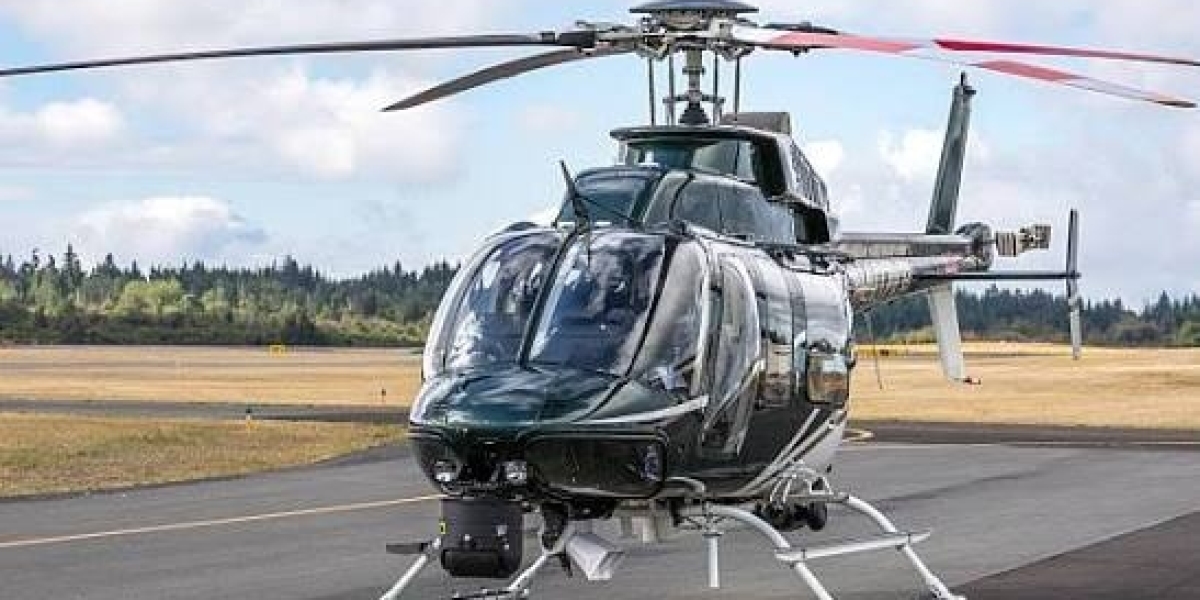

Helicopters continue to play an important role across defense, emergency medical services, offshore transportation, law enforcement, search and rescue, corporate aviation, and utility operations. Their ability to operate from confined locations, access remote terrain, and perform missions without conventional runways makes them valuable across both military and civil applications. At the same time, aging fleets, new procurement programs, autonomous flight technologies, and digitally integrated avionics are reshaping rotorcraft development and lifecycle support.
A comprehensive market assessment by Markntel Advisor reveals that the Global Helicopter Market was valued at USD 35.19 billion in 2025 and is projected to grow from USD 37.49 billion in 2026 to USD 51.82 billion by 2032, registering a CAGR of approximately 5.6% during 2026–2032. The global helicopter industry analysis indicates that Military Helicopters accounted for more than 70% of revenue in 2026, Twin Engine Helicopters held the leading position by engine type, and North America represented approximately 36% of global revenue.
Defense Modernization Remains a Major Growth Driver
Defense modernization is one of the strongest forces supporting helicopter procurement worldwide. Military forces continue to require rotorcraft for tactical mobility, reconnaissance, maritime surveillance, combat support, logistics, search and rescue, and operations in areas where conventional aircraft infrastructure may be unavailable.
The source study notes that global military expenditure reached approximately USD 2.72 trillion in 2024, representing a 9.4% year-on-year increase. More than 100 countries increased military spending during the year, supporting procurement and modernization programs across utility, attack, reconnaissance, and maritime helicopter fleets.
Major economies, including the United States, India, China, Japan, and South Korea, are advancing rotorcraft replacement and modernization programs. These initiatives are increasing demand for advanced avionics, integrated mission systems, autonomous flight assistance, and network-enabled capabilities.
The Stockholm International Peace Research Institute provides additional context on the rise in global defense spending and the continuing modernization of military capabilities.
Military Helicopters Maintain the Leading Position
Military Helicopters represented more than 70% of global revenue in 2026, making them the leading type segment.
Their strong position is supported by continued procurement of attack, transport, reconnaissance, maritime, and multi-role platforms. Helicopters provide military forces with capabilities including low-altitude operations, rapid troop movement, tactical logistics, border surveillance, amphibious support, and combat search and rescue.
The source study highlights the U.S. Future Long Range Assault Aircraft program as an important modernization initiative. The program is designed to support the long-term replacement of aging military utility helicopter fleets.
India is also expanding its indigenous rotorcraft capabilities through Light Combat Helicopter procurement programs, supporting both military modernization and domestic aerospace manufacturing.
Twin Engine Helicopters Dominate Engine Demand
Twin Engine Helicopters captured the majority of global revenue in 2026. Their position is supported by operational redundancy, safety requirements, and suitability for demanding missions across offshore transportation, emergency medical services, defense, corporate aviation, and public-sector operations.
Twin-engine configurations are particularly important in offshore and overwater operations where operational reliability is critical. Offshore oil and gas activities, offshore wind development, and emergency-response networks therefore continue to create requirements for these platforms.
Manufacturers are also incorporating improved fuel efficiency, digital avionics, advanced flight controls, and lower-maintenance technologies into newer twin-engine rotorcraft.
Autonomous Flight Technology Is Advancing
Autonomous flight technologies are becoming an important area of helicopter development. Manufacturers and technology companies are testing systems capable of assisting or performing selected flight functions with reduced pilot intervention.
In June 2025, Honeywell and Near Earth Autonomy completed an autonomous flight of a Leonardo AW139 helicopter under the U.S. Marine Corps Aerial Logistics Connector program. The aircraft operated without pilot input using onboard autonomy software.
Similarly, Airbus U.S. Space & Defense and Shield AI completed an autonomous H145 flight in August 2025 using HiveMind autonomy software. The demonstration included autonomous takeoff, landing, and mission execution.
These developments indicate a growing focus on autonomous rotorcraft for logistics, reconnaissance, emergency response, and other applications where automated flight capabilities can increase operational flexibility.
Connected Avionics Improve Rotorcraft Capabilities
Digital avionics are becoming increasingly integrated into modern helicopters. Advanced cockpit architectures, connected mission systems, autonomous navigation, and integrated flight-management technologies can improve situational awareness and operational efficiency.
Military operators are particularly interested in network-enabled rotorcraft that can share information with other aircraft, ground units, ships, and command networks.
Civil operators are also benefiting from improved digital systems. Emergency medical, offshore, corporate, and public-safety operators increasingly require reliable navigation, communication, monitoring, and flight-management capabilities.
The combination of connected avionics and autonomous assistance is consequently creating a more digitally integrated helicopter ecosystem.
Supply Chain Constraints Encourage Fleet Modernization
Supply-chain disruptions remain an important challenge for helicopter manufacturers and operators. Shortages involving engines, avionics, semiconductor components, and specialized aerospace materials can extend delivery timelines for new rotorcraft.
The source study reports that delivery lead times for several helicopter categories during 2025–2026 extended to approximately 24–42 months amid procurement activity and component availability constraints.
These delays are simultaneously creating opportunities for aftermarket providers. Operators are increasingly considering avionics retrofits, lifecycle-extension programs, pre-owned helicopters, and maintenance services to maintain fleet availability while waiting for new aircraft.
Consequently, supply-chain constraints are supporting demand for both new helicopter production and the broader aftermarket ecosystem.
Offshore Wind Creates Additional Commercial Opportunities
The expansion of offshore wind infrastructure is creating new applications for helicopters. Offshore wind farms require transportation, inspection, emergency response, and maintenance services, particularly as installations move farther offshore.
The source study indicates that global offshore wind capacity reached approximately 83.2 GW in 2024. Continued development of offshore wind projects is creating opportunities for medium and heavy helicopters capable of supporting personnel and equipment movements.
Helicopter operators can provide rapid access to offshore installations where marine transportation may be slower or constrained by weather conditions.
Emergency Medical Services Support Civil Demand
Emergency medical services remain an important application for helicopters because air ambulances can transport patients rapidly across long distances and from areas where ground transportation may be impractical.
Demand is supported by the need for faster emergency response, particularly in rural and geographically dispersed regions. Helicopters equipped for medical evacuation can provide access to specialized healthcare facilities while reducing transportation time.
Law enforcement, search and rescue, firefighting, and disaster response also contribute to demand for specialized civil and government-operated rotorcraft.
Aging Fleets Create Aftermarket Opportunities
The modernization of aging helicopter fleets is creating opportunities across maintenance, repair, overhaul, avionics upgrades, component replacement, and lifecycle-extension programs.
Operators may choose to upgrade existing aircraft rather than immediately replace them, particularly when new helicopter deliveries are constrained by long lead times.
Digitally integrated maintenance systems and performance-based service contracts are also gaining importance. These technologies can support predictive maintenance, improve aircraft availability, and help operators manage lifecycle costs.
As fleets age, aftermarket services are expected to remain an important component of the broader helicopter ecosystem.
North America Leads Regional Demand
North America accounted for approximately 36% of global revenue in 2026, making it the leading regional market. The United States is the primary contributor, supported by its extensive military and civil helicopter fleet, established aerospace manufacturing ecosystem, and substantial MRO infrastructure.
The U.S. Department of Defense operates more than 5,500 military helicopters across the Army, Navy, Air Force, and Marine Corps, according to the source study.
The United States also has more than 8,000 registered civil helicopters, with demand spanning emergency medical services, law enforcement, search and rescue, corporate transportation, and offshore energy.
The Federal Aviation Administration's rotorcraft resources provide the regulatory and certification framework supporting continued operation and development of U.S. rotorcraft.
Commercial and Offshore Applications Continue to Expand
While defense represents the largest segment, civil and commercial helicopter applications are also developing steadily. Offshore oil and gas operations, emergency medical services, corporate transportation, utility work, and law enforcement create recurring requirements for specialized rotorcraft.
Airbus Helicopters recorded 544 gross helicopter orders across more than 50 countries in 2025, while maintaining approximately 51% of the global civil and para-public helicopter segment, according to the source study.
The diversity of civil applications provides manufacturers with opportunities to develop helicopters optimized for specific missions, including passenger transport, emergency response, offshore logistics, and utility operations.
Competitive Landscape Remains Moderately Consolidated
The global helicopter sector is moderately consolidated, with the top five companies collectively accounting for approximately 65% of global revenue in 2026.
Major companies identified in the source study include Airbus Helicopters, The Boeing Company, Bell Textron Inc., Leonardo S.p.A., and Lockheed Martin Corporation (Sikorsky).
Other participants include Russian Helicopters, MD Helicopters, Kawasaki Heavy Industries, Korea Aerospace Industries, Hindustan Aeronautics Limited, Robinson Helicopter Company, Enstrom Helicopter Corporation, Kaman Corporation, AVIC, Mitsubishi Heavy Industries, and NHIndustries.
Competition is shaped by military procurement programs, platform capabilities, fleet modernization, aftermarket support, technological innovation, and long-term relationships with government and commercial operators.
Recent Procurement Reinforces Industry Momentum
Government procurement programs continue to support helicopter production and modernization. In March 2025, India's Ministry of Defence signed contracts with Hindustan Aeronautics Limited for 156 Light Combat Helicopters (LCH Prachand), comprising 66 aircraft for the Indian Air Force and 90 for the Indian Army.
The program is expected to achieve more than 65% indigenous content and involve more than 250 domestic suppliers and MSMEs, according to the source study.
In December 2025, Spain also ordered 100 Airbus helicopters under its national helicopter modernization program, covering H135, H145M, H175M, and NH90 platforms.
These procurement programs demonstrate continued government investment in rotorcraft modernization across both established and emerging aerospace markets.
Outlook for Helicopters
The Global Helicopter Market is projected to reach USD 51.82 billion by 2032, expanding at a 5.6% CAGR during 2026–2032. Growth is being supported by defense modernization, fleet replacement programs, offshore aviation, emergency medical services, infrastructure development, and sustained procurement across military and civil applications.
Military Helicopters are expected to remain the leading type segment, while Twin Engine Helicopters should continue holding a strong position because of their operational redundancy and suitability for mission-critical applications. North America is also expected to retain its regional leadership.
Looking ahead, autonomous flight assistance, connected avionics, AI-enabled mission systems, predictive maintenance, fleet modernization, and advanced rotorcraft architectures are likely to shape the sector's development. At the same time, supply-chain constraints and long delivery timelines may continue encouraging operators to invest in MRO, retrofit, and lifecycle-extension programs, creating opportunities across both new aircraft production and the helicopter aftermarket.









