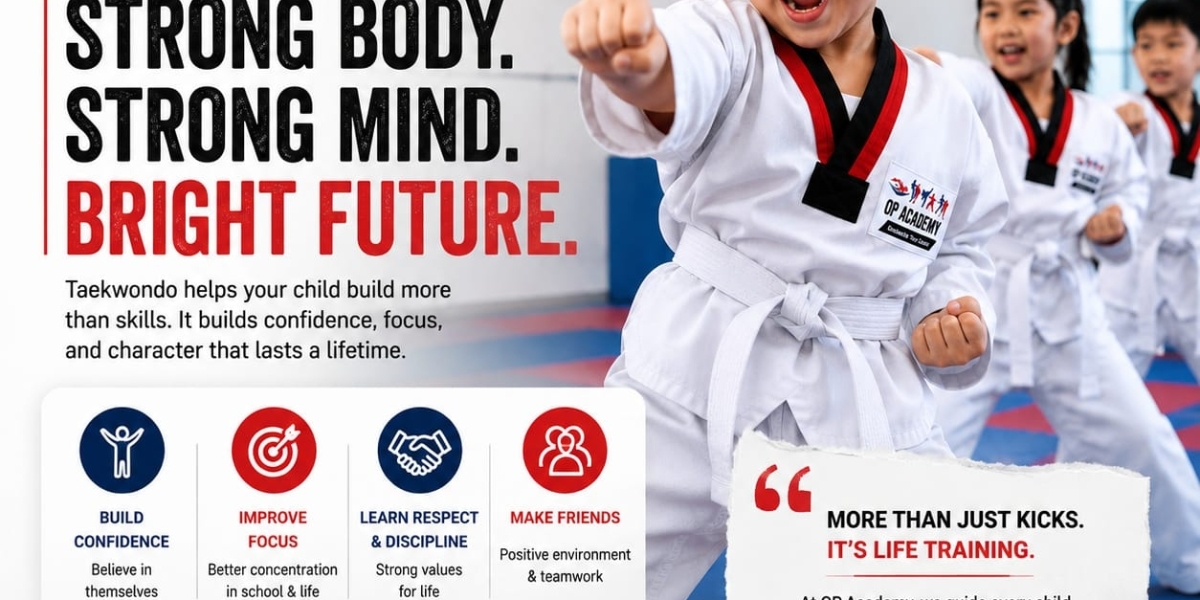

Between school assignments, tuition, online learning, and entertainment on mobile devices, children can easily spend a large part of their day sitting down. Although technology is part of modern childhood, parents still need to create opportunities for movement, outdoor activities, and meaningful face-to-face interaction. Finding an activity that children genuinely enjoy can be challenging, especially when they already have a busy weekly schedule. This is why taekwondo classes for kids are worth considering for families who want to introduce more structured physical activity into their children’s routine.
Taekwondo offers something different from passive entertainment. Children have to move, listen, remember techniques, and respond to instructions throughout a session. They practise footwork, kicking movements, balance and coordination while learning how to participate respectfully in a group. For parents looking for a practical martial art for kids, this combination of physical activity and structured learning can make Taekwondo an appealing addition to a balanced childhood.
Why Physical Activity Deserves a Place in Every Child’s Routine
Children need opportunities to move their bodies, explore different physical skills, and develop confidence in everyday activities. Regular movement supports general fitness and gives young learners a break from activities that require prolonged sitting. It also creates opportunities to interact with other children in a setting where participation involves more than watching or listening.
The challenge for parents is not simply finding an activity, but finding one that keeps children interested enough to attend consistently. Some children enjoy swimming; others prefer football, dance or cycling. Taekwondo may appeal to children who like learning techniques, practising movements and working towards achievable skill milestones.
More Movement Through Varied Exercises
A Taekwondo lesson can include warm-ups, stretching, footwork, kicking practice, hand techniques and coordinated movement drills. These activities encourage children to use different movement patterns rather than repeating a single physical action throughout the entire session.
Over time, practising these movements can help children develop balance, flexibility, coordination and physical awareness. The objective is not to turn every child into a competitive athlete, but to provide a positive environment where movement becomes a regular part of their routine.
A More Purposeful Alternative to Passive Screen Time
Screen time is not automatically harmful, and digital learning can be useful when managed appropriately. However, children also need experiences that involve physical participation, communication, and practical problem-solving. A martial arts class gives them a specific activity to look forward to and a reason to step away from their devices for a period of time.
Instead of telling children repeatedly to stop using their phones or tablets, parents can introduce an activity that competes positively for their attention. When children enjoy their training, they may begin to see physical activity as something rewarding rather than another obligation imposed by adults.
What Makes Taekwondo Different From Ordinary Exercise Classes?
Traditional exercise sessions often focus mainly on physical movement. Taekwondo adds a technical learning element because children are not simply asked to move; they are learning how to perform particular techniques with control and accuracy.
Learning to Coordinate Different Movements
A basic kicking technique involves more than lifting a leg. Children need to understand their standing position, maintain balance, coordinate their body movements, and return to a stable position afterwards. These details provide an ongoing challenge that changes as their skills develop.
Hand techniques, blocks and footwork introduce additional movement patterns. As children become more familiar with the basics, instructors can introduce combinations and sequences that require them to remember the order of different movements.
Building Concentration Through Practical Tasks
Children need to pay attention when learning a new technique. They must watch demonstrations, listen to explanations, and attempt the movement themselves. This creates repeated opportunities to practise concentration in a practical setting.
It is important not to claim that Taekwondo automatically improves school grades. Academic performance depends on many factors. However, learning to listen, follow instructions and complete a structured task can reinforce habits that are useful in different environments.
Making Taekwondo Work Around a Busy Singapore Family Schedule
For many families, the biggest barrier to extracurricular activities is time. Parents may have work commitments, school pick-ups, tuition arrangements, and other household responsibilities. An activity can be beneficial, but it also needs to be realistic enough to maintain.
Look at Location Before Committing
A convenient training location can make regular attendance easier. OP Academy’s published information lists training locations in Yishun, Bedok and Jurong West. Parents should check the latest venue details and class availability before deciding which programme fits their family.
Travel time matters because a long journey after a full school day may leave children tired before training even begins. Choosing a suitable location and time can make the experience more manageable for both children and parents.
Choose a Sustainable Training Frequency
More training is not always better, particularly for children who already have several commitments. Parents should consider the child’s age, energy levels, recovery needs, and interest before deciding how frequently they should attend.
A balanced weekly routine should leave enough time for schoolwork, sleep, family activities, and unstructured play. Discuss suitable attendance with the academy instead of assuming that every child needs the same training schedule.
Make Consistency More Important Than Intensity
Children do not need to train at maximum intensity every time to develop useful skills. Consistent participation, proper technique, and gradual progression are more sustainable foundations for long-term learning.
Parents can encourage progress by asking what their child learnt rather than focusing only on how many kicks they performed. This helps shift attention from short-term performance to the learning process itself.
How OP Academy Introduces Children to Martial Arts Training
OP Academy offers taekwondo classes for children across different age groups and experience levels. Its published programme information identifies a foundation group for younger children, junior training for school-age learners and further development for teenagers.
The academy’s wider training philosophy highlights the development of the heart, mind and body through martial arts and self-defence. Its programmes also include beginner-friendly and personalised learning approaches, making it worthwhile for parents to discuss their child’s interests and current abilities before choosing a class.
Frequently Asked Questions About Active Childhood and Taekwondo
Can Taekwondo Replace All Other Physical Activities?
No. Taekwondo can be part of a balanced activity routine, but children should still have opportunities for free play, different sports, and other forms of movement.
Is Taekwondo Suitable for Children Who Are Not Very Athletic?
Beginners can develop foundational skills gradually. Parents should explain any specific concerns to the instructor so that an appropriate starting level can be considered.
Will My Child Have to Compete?
Not every child needs to pursue competition. Parents should ask about recreational training, grading opportunities, and competitive pathways to understand which options are available.
How Can I Encourage My Child to Attend Regularly?
Choose a suitable class time, maintain a manageable routine, and recognise improvements in effort and participation. Avoid turning every lesson into a test of performance.
Give Your Child More Opportunities to Move With OP Academy
An active childhood is built through everyday choices, and the right enrichment activity can make those choices easier to maintain. If your child spends too much time sitting down and needs a more engaging way to develop physical skills, consider introducing them to taekwondo classes for kids in Singapore. OP Academy offers structured Taekwondo programmes that allow children to explore movement, practise techniques and develop positive training habits. Visit OP Academy or contact +65 9106 6242 to enquire about current class schedules, training locations and enrolment. Make the next addition to your child’s weekly routine one that encourages them to move, learn and grow with greater confidence.